
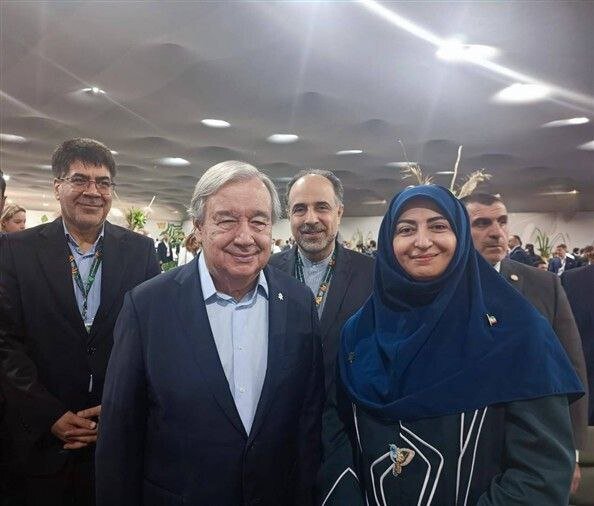
TEHRAN – Department of Environment (DOE) Secretary-General Shina Ansari and United Nations Secretary-General Antonio Guterres emphasized the importance of climate justice in the face of mandatory sanctions.
Officials met on the sidelines of the 2025 United Nations Climate Change Conference, known as the 30th Conference of the Parties (COP30), scheduled to be held in Belem, Brazil, from November 6 to 21.
According to the IRIB news agency, Ansari referred to the unilateral and cruel sanctions against Iran and said that the environmental sector needs to be protected from coercive measures and that international cooperation focused on the world’s common interests needs to be pursued without any restrictions.
Guterres agreed with a similar view. The official stressed the importance of understanding the impact of climate change on countries and said climate justice and equitable solutions to address the harms of climate change are among the United Nations agencies’ main priorities.
The DOE Secretary also met with Brazil’s First Lady Rosangela Lula da Silva, known as Janja. Mr. Lula da Silva emphasized the role of both countries on the regional and global stage and called for expanded relations between Brazil and Iran, especially in the social and environmental fields.

The Prime Minister expressed his hope that Iran’s participation in COP30 will be a turning point in expanding relations between the two countries.
Noting the vast potential for cooperation, Mr. Ansari expressed Iran’s readiness to share its experience and knowledge in combating climate change. He said strengthening ties in the environmental field as well as in other fields would foster constructive exchanges between the two countries. The official also emphasized the role of women and indigenous knowledge in environmental conservation.
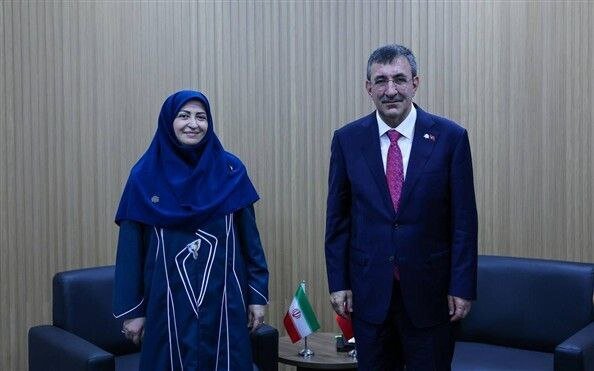
During the meeting between Turkish Vice President Cevdet Yilmaz and Ansari, the two officials reviewed the agreements reached so far during the World Zero Waste Forum held in Istanbul, Turkey from October 17 to 19, and emphasized that promoting ties in the environmental field is an effective element for improving the region’s environment.
COP30 brings together world leaders, scientists, non-governmental organizations and civil society to discuss priority actions to tackle climate change.
It will focus on the efforts needed to limit global temperature rise to 1.5°C, the presentation of new National Action Plans (NDCs), and progress on financial commitments made at COP29.
The COP30 action agenda will be organized around six key areas that reflect the breadth and urgency of action needed to fulfill the collective commitments under the Paris Agreement and previous COPs. Forest, ocean and biodiversity management. Transforming agriculture and food systems. Building resilience in cities, infrastructure and water. Promote human and social development. Cross-cutting enablers and accelerators.
environmental diplomacy
Because they are transnational, many complex environmental issues can be addressed through environmental diplomacy, or negotiations between two or more countries.
IRNA reports that environmental diplomacy is used globally to resolve issues such as conflicts over energy sources, water, and climate change.
The fact that all countries share the same environment makes it necessary to promote environmental diplomacy to resolve conflicts over water resources, environmental pollution, and the effects of climate change.
Environmental diplomacy is an effective tool needed to reduce and eliminate serious impacts by allocating responsibility fairly among the countries involved as they present their national interests and solutions.
Dust storms (DSDs) are a typical example of a meteorological disaster in West Asia, involving many countries, with some countries originating and others affected.
SDS attacked countries such as Saudi Arabia, Iraq, Syria, Turkey, and Iran, and at times affected parts of Azerbaijan, Turkmenistan, and even Afghanistan and Pakistan.
These dust particles have a devastating impact on respiratory health and ecosystems. As a result, airports, schools, and offices are closed, power transmission infrastructure is affected, and economic losses result.
Removing pollution from the Aras River and securing water rights and some wetlands in the Hilmand River are also examples of how environmental policy has been used to resolve conflicts.
The Tehran Treaty is a major achievement for the Caspian Sea coastal states to protect the Caspian Sea environment from all sources of pollution, but it also covers the conservation, restoration and protection of Caspian Sea species and habitats.
Therefore, to mitigate the effects of climate change and achieve the Sustainable Development Goals, we need to strengthen our environmental policies so that Iran and its neighbors can benefit from available resources and secure our rights at the international level.
The Ministry of Foreign Affairs, in cooperation with other executive agencies such as the Ministry of Energy, the Ministry of Industry, the Ministry of Agriculture, and the Ministry of Environment, could establish a center to focus on specific missions, follow up on discussions and goals in line with national interests, and improve the living conditions of citizens through environmental diplomacy.
MT/MG