
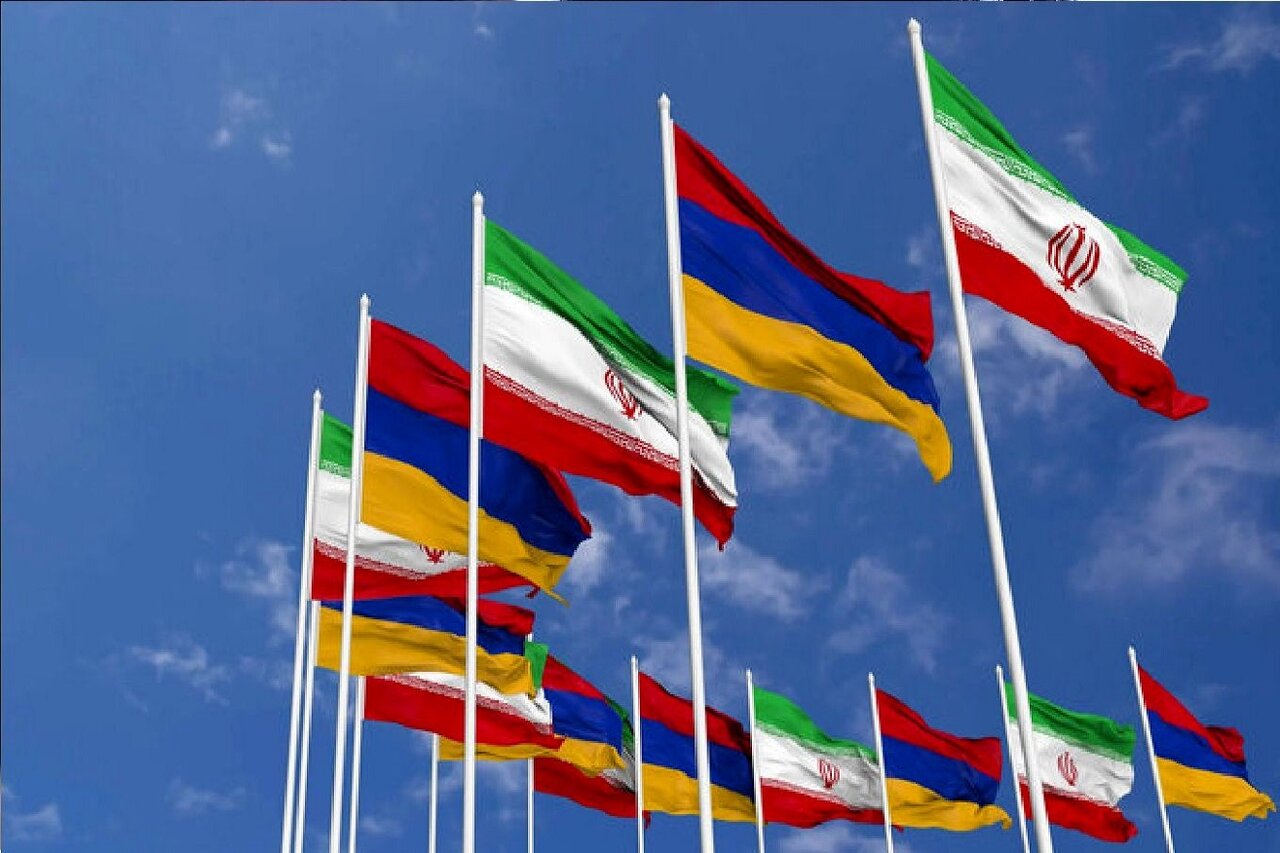
In line with Iran’s Islamic Republic policies, Ali Larijani, secretary of the Supreme National Security Council and advisor to the leader of the Islamic Revolution, met and met with Armenia National Security Council Almen Grigarian on Saturday to strengthen relations with neighbors and maintain stability in the Caucasus region. The conference, held in Tehran, focused on expanding bilateral cooperation in the fields of economic, political, security and defense, reflecting the depth of friendship between the two countries.
Meeting details and party positions
At the conference, Ali Larijani expressed satisfaction with the current level of relationship between Tehran and Yerevan, while underscoring the importance of Armenian participation in completing the corridors to the north and south. This corridor that connects the Persian Gulf with the Black Sea is not only considered an important economic project for Iran, but also plays a key role in strengthening the regional trade link. Larijani also declared Iran’s firm support for peace negotiations between Armenia and Azerbaijan, highlighting the principled policies of the Islamic Republic that support regional countries’ independence and empowerment in order to achieve sustainable security. He said Iran opposes geopolitical changes in the region that could harm Tehran and Yoyerevan relations.
Meanwhile, Armen Grigoryan described the relationship between the two countries as “unprecedented” and stated that the purpose of his trip was to expand cooperation in all areas. He announced Armenia’s willingness to sign a comprehensive document on its strategic relationship with Iran in the near future, highlighting five key principles: national sovereignty, respect for territorial integrity, exercise of state jurisdiction, inviolability of borders, and principles of mutual relations. Grigorian also declared Yerevan was ready to provide the necessary guarantees to the Islamic Republic of Iran, ensuring that bilateral relations would not be harmed and emphasized Armenia’s opposition to geopolitical changes in the region. He noted that the peace agreement with Azerbaijan preserves Armenia’s monopoly on issues of security, military and customs.
The meeting took place after Laryani and Grigorian had a phone conversation earlier this month, during which they emphasized the importance of strategic relationships. The presence of Ali Bagheri Crani, the new representative of international affairs for the best National Security Council at the conference, reflects the new Iranian government’s focus on active diplomacy in the region.
Analysis: The strategic importance of Iran and regional conferences
The conference occurred against the backdrop of the complex development of the South Caucasus, where Iran’s Islamic Republic, as a key actor, has always emphasized maintaining a balance of power and preventing interference with forces outside the region. The completion of the North North Corridor, which strengthens Iran’s position as a regional transport hub, could increase bilateral trade volumes to more than $3 billion, creating new opportunities for exporting energy, agricultural products and technology. The project not only secures Iran’s economic benefits, but also opposes initiatives such as the Syunik Transit Corridor (managed by the US) that could put Iran in a sensitive geopolitical position.
From a security standpoint, Iran’s support for the Armenia-Azabaijan peace, which has recently led to a US-mediated agreement, illustrates Tehran’s practical approach. Iran has consistently advocated for non-changes in borders and preserving the territorial integrity of the country, and is concerned that geopolitical changes, such as the creation of transport routes under foreign control, could harm Iran’s northern security. In this regard, Armenia’s opposition guarantee against such changes is considered an Iranian diplomatic outcome, raising the relationship between Tehran and Yoyerevan to a strategic level.
Furthermore, the meeting took place as Iran and Armania relations are entering a new phase of cooperation. Recently, Yerevan’s Armenian Prime Minister and Iranian president agreed to upgrade relations to a strategic level, but construction of a second bridge above the Aras River and a third power line are underway. These developments, along with a free trade agreement with Iran’s Eurasian Economic Union, provide Iran vast economic opportunities.
President Pezeschkian meets Armenia’s best security officer
Armenian Security Council secretary Amen Grigorian traveled to Tehran and met with Iranian President Maud Pezeshkian and met. Pezeshkian described his recent trip to Yerevan as fruitful, saying constructive consultations with Armenian officials reduced Iran’s concerns about the existence of foreign forces in the Caucasus.
The Iranian president has expressed satisfaction with the progress of the North and South Corridor Project in collaboration with Armenia, describing it as an important step towards the economic and political convergence of the Eurasian Union.
Pezeschkian also highlighted a few times increase in trade exchange, cooperation in the production of technical products (advanced technology, biotechnology, nanotechnology), and strengthened co-investment.
He called for the strengthening of friendly and strategic relations between Iran and Armenia so that foreign powers could not confuse them.
The Armenian Security Council also described Pezeshkian’s travel to its own country as valuable, highlighting the strategic nature of bilateral relations, signing a comprehensive cooperative document and announcing Armenia’s preparations to increase participation and economic exchanges of Iranian companies.
Caucasus challenges and opportunities
In recent years, the Caucasus has witnessed multiple developments, including the Karabakh War and the recent peace deal between Armenia and Azerbaijan. As a direct neighbour, Iran has a positive role in mediation, highlighting international principles such as the inviolability of borders. Tehran’s main concern is initiatives such as the Syunik corridor, where Azerbaijan can access Naktiban without Iran’s supervision, leading to Iran’s isolation from transport routes. Experts believe Iran must adopt a dual strategy. It will strengthen relations with Armenia to maintain access to the Black Sea, while simultaneously managing relations with Azerbaijan to prevent tensions.
At the same time, the involvement of powers like the US in the region has driven Iran to more aggressive diplomacy. Yesterday’s meeting was seen as a response to these challenges and reflects Iran’s commitment to regional stability without relying on foreign forces.
Ultimately, Saturday’s meeting not only strengthens bilateral relations, but can also contribute to the lasting peace of the Caucasus as part of Iran’s neighbourhood policy. Iran’s Islamic Republic relies on innovative principles and national interests, and is ready to expand strategic cooperation with its neighbors to ensure the security and prosperity of the region.
MNA/6574739