
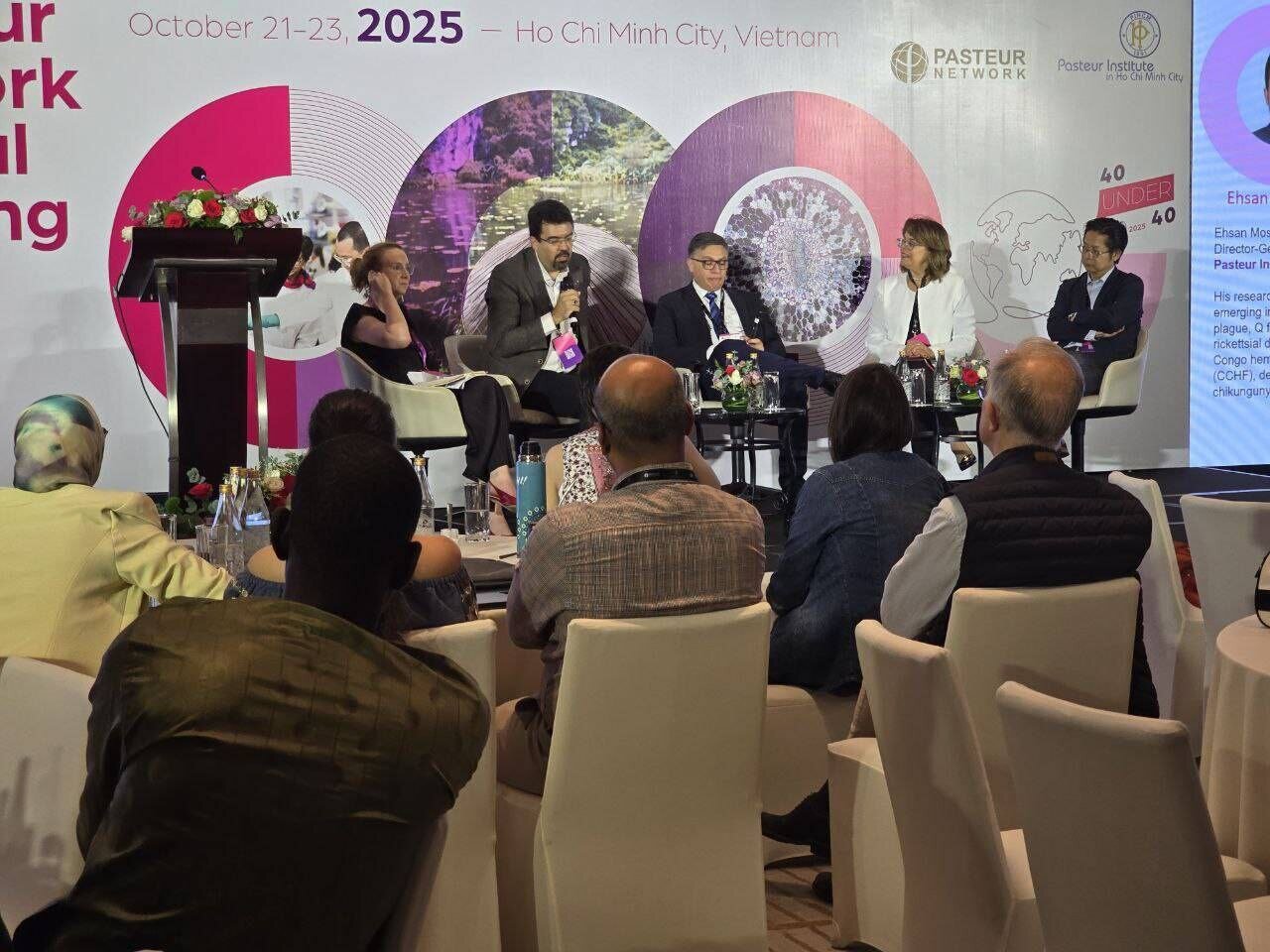
TEHRAN – A delegation of health experts from Iran’s Pasteur Institute participated in the 2025 Pasteur Network Annual Meeting to discuss ways to expand scientific and operational interactions between member countries.
The meeting was held in Ho Chi Minh City, Vietnam, from October 21 to 23, IRNA reported.
Each year, the annual conference convenes scientists, researchers, and public health experts from scientific and public health institutions.
This annual conference serves as an opportunity for leaders and experts from across the network to come together and exchange ideas to find effective strategies to address global health challenges.
Ehsan Mostafavi, Director of the Pasteur Institute of Iran, attended the Pasteur Network Asia-Pacific region meeting.
The official, in collaboration with the directors of the Pasteur Institutes in Hong Kong, Tunisia and Guyana, convened a joint expert panel in which they detailed the work of Iran’s Pasteur Institute, their own scientific experience, and answered questions from participants.
Ali Maleki, a faculty member at the Pasteur Institute of Iran, also gave a scientific lecture on setting up and coordinating diagnostic networks, ensuring the quality of diagnostic results and quality control. He highlighted the role of Iran’s Institut Pasteur in developing the COVID-19 diagnostic network and explained the institute’s effective measures during the pandemic.
The annual conference addressed global health priorities through a dynamic program of plenary sessions, roundtables and thematic discussions. Topics include arbovirus surveillance, immunity, and pathogenesis. Respiratory and emerging viruses. Bacteria, microbiota and parasites. and the intersection of climate and health.
The agenda also featured sessions on vaccine production, community engagement in research, and gender equality in science.
The Pasteur Network is a coalition of more than 30 research institutions in 25 countries on five continents that plays a critical role in addressing global health challenges through science, innovation and public health.
Other important topics of the meeting included innovative approaches in the diagnosis of climate-sensitive diseases, viral diseases, respiratory infections, emerging and re-emerging diseases, and cooperation in vaccine development.
MT/MG