
TEHRAN – Iranian Foreign Minister Abbas Araghchi, in a telephone conversation with Sudanese Foreign Minister Mohi El-Din Salem, condemned the recent attacks and killings of civilians in the city of El Fasher and emphasized Tehran’s support for Sudan’s territorial integrity.
During the meeting, Sudan’s top diplomat presented a report on the latest developments in his country and expressed gratitude for Iran’s support for Sudan’s legitimate government and solidarity with its people. The two ministers also said that the two countries intend to forge closer ties in various fields.
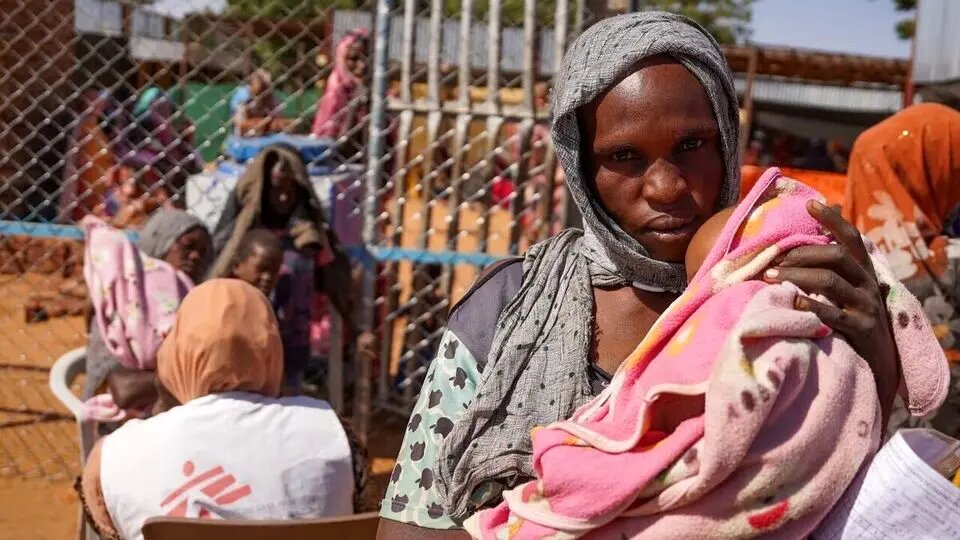
Following an 18-month siege of some 1.2 million people by the Rapid Support Forces (RSF), the group claimed last Sunday that it had captured the last Sudanese Armed Forces (SAF) stronghold in El Fasher, north of Darfur, as the United Nations issued a stern warning over reports of RSF atrocities.
The United Nations Security Council (UNSC) previously issued resolution 2736 calling for the lifting of the siege of El Fasher and the provision of humanitarian access to civilians in June 2024, but was unable to ensure full implementation of the resolution.
According to reports from the Sudan Doctors Network (SDN) and other sources, RSF has been involved in mass killings targeting patients and staff in Saudi hospitals, summary executions, including sexual violence against women and girls, and mass murders.
According to Sudan’s military, about 2,000 people had been killed by Wednesday.
Additionally, more than 26,000 people were evacuated from El Fasher in just two days, according to the United Nations. Those attempting to flee were reportedly pursued and killed by RSF forces.
Using satellite imagery and remote sensing data, Yale University’s Humanitarian Research Laboratory (HRL) reported that clumps of objects and discoloration on the ground were evidence of human bodies and pools of blood. No clusters or discoloration were present in images taken before the RSF infiltration, the report said.
Images of the murders and violence in El Fasher on social media have also drawn strong condemnation from the general public around the world.
Sudanese authorities have repeatedly said RSF receives unconditional support from the United Arab Emirates (UAE), and Khartoum took legal action against it at the International Court of Justice (ICJ) in April. RSF is also said to be supported by the Israeli regime.
Fighting in Sudan broke out on April 15, 2023, between the national army led by General Abdul Fattah al-Burhan and the militia Rapid Support Forces commanded by General Mohamed Hamdan Dagalo, known as Hemediti.
The conflict stems from power struggles and disputes over the integration of the RSF into the regular army after a 2021 coup. Despite multiple rounds of international mediation, the war has continued for more than a year and the humanitarian crisis has worsened.
Since gaining independence in 1956, Sudan has witnessed chronic instability, including 20 attempted coups and two devastating civil wars that ultimately led to South Sudan’s secession in 2011.