
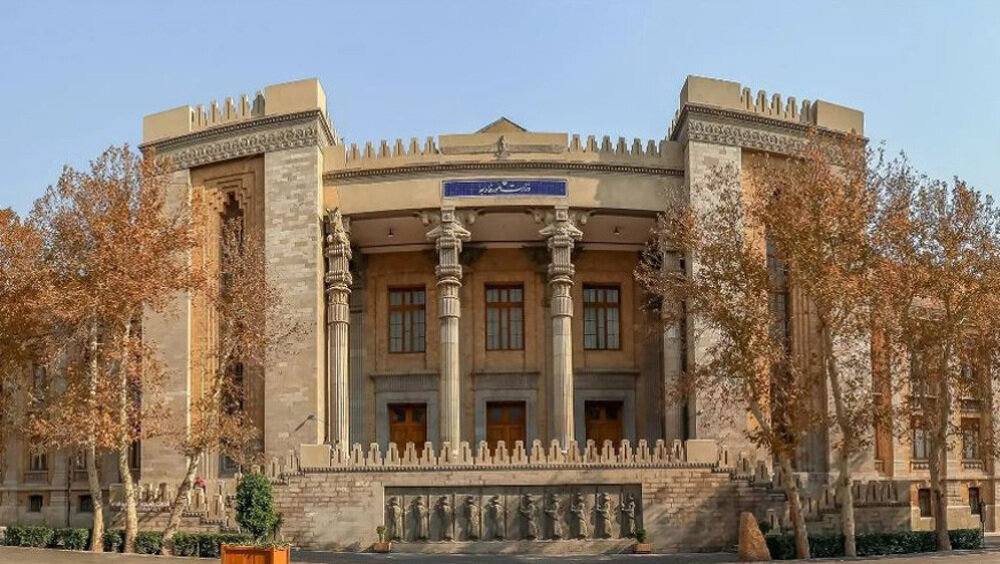
Tehran – Iran has strongly reiterated its rights to the Arash Gas Fields and the rights to the Arash Gas Fields, and the three Persian Gulf Islands, the Arash Gas Fields, and the lesser Chink, in response to recent claims by the Persian Gulf Cooperation Council (GCC).
In a statement Tuesday, the Iranian Foreign Ministry rejected the “hackney and unfounded” claims by the GCC regarding the island. The statement comes after the GCC Foreign Minister issued a declaration in Kuwait on Monday.
Iran called the islands “an inseparable part of the territory,” emphasizing that repeated claims would not change the “geographic, historical and legal reality” that underpin Iran’s sovereignty. Tehran warned that it would take all necessary measures to ensure the island’s safety and protect the national interests of the region.
The island trio is historically part of Iran and is a fact supported by extensive historical, legal and geographical records. The island has been under British control since 1921, but Iran regained sovereignty the day after British forces retreated from the region on November 30, 1971, and retreated just two days before the UAE official formation.
In the Arash gas field, which was jointly charged by Iran and Kuwait, the Iranian ministry reaffirmed Tehran’s historical and legal rights and rejected “unilateral claims” from Kuwait. A GCC statement on Monday reiterated the previous claim that Iran is not qualified to the scene.
Iran emphasized that resolving conflicts in the Arash sector known as Kuwait’s al-Dura would protect mutual rights by excluding “bilateral dialogue, joint efforts, and a positive and constructive atmosphere.” Discovered in the 1960s, offshore fields contain an estimated 20 trillion cubic feet of gas, with nearly 40% lying in Iranian waters, capable of producing up to 1 billion cubic feet per day.
The ministry also highlighted Iran’s legitimate right to develop nuclear energy under the Nuclear Non-Proliferation Treaty (NPT), labeling doubts about the peaceful nature of its programme as “unjust”. Tehran criticized the US and European parties for blocking negotiations, failing to respect commitments, and violating the UN Charter and principles of international law.
In response to the GCC’s call on Iran, in order to address all Persian Gulf security concerns in the nuclear talks, Tehran pointed to the “real and immediate dangers” posed by Israeli weapons of mass destruction. The statement urged regional countries to put pressure on the international community to deal with Israel’s WMD as a step towards a region’s nuclear-weaponless zone.