
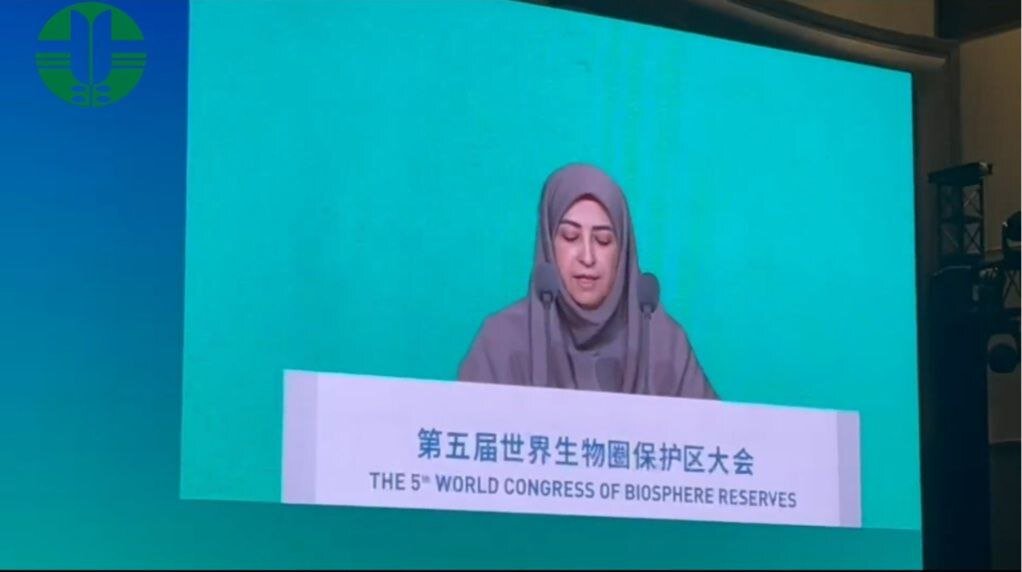
Tehran – Head of the Ministry of Environment (DOE), Shina Ansari, has expressed his readiness to promote cooperation with other countries in line with the Hangzhou Action Plan to promote twins in biosphere reserves.
“We will develop intertwining mechanisms between Iran’s biosphere reserves and other countries around the world, further promoting collaboration in research projects, sharing expertise and knowledge, and boosting scientific visits.”
Officials made their remarks while addressing the 5th World Biosphere Reserve Conference (WCBR) to be held in Hangzhou, China from September 22-26.
“We will highlight an ecosystem-based and community-centric approach to managing biosphere reserves, allowing these regions to expand their impact across borders and stimulate the surrounding area,” she added.
Unfortunately, “Iran’s biosphere reserves are affected by heat waves, water scarcity and climate change. They need solidarity, experience exchange and support from a global network of biosphere reserves.
Members of the United Nations Education, Science and Cultural Organizations (UNESCO) believe that they have the necessary capabilities to counter unilateral existence and expand multilateralism to enhance the global network of biosphere reserves.
It is a common responsibility to preserve our common home, the global network of biosphere reserves. These areas are not only sanctuaries for nature, but also symbols of the peaceful coexistence of man and nature, and are bridges between modern science and traditional knowledge. She said they should be a center of hope and a sustainable future for our children.
Officials also elaborated on the country’s biosphere reserves, saying, “It has 13 biosphere reserves, including Iran, three wetland sites, two ocean and coastal sites, two deserts and arid places and six mountainous areas, making it one of the pioneering member states of the global network of biosphere reserves.
Biosphere reserves are not sufficient as they cover less than 4% of our national territory. Therefore, we are working to expand our network by establishing four more biosphere reserves. ”
Additionally, Ansari described the brutal Zionists attacks on Iran. Since June 13, Zionist attacks have targeted non-military infrastructure such as medical centres, water distribution facilities, fuel storage and gas refineries, causing domestic CO2 and pollutants emissions. Not only are these attacks illegal, they are also harmful to the environment, human health and local stability. The potential outcomes go far beyond the border and will affect natural ecosystems, air and water resources, food safety, and civilian well-being across Iran and the region, officials said.
The global network of biosphere reserves, held every decade, comes together to identify priorities, enhance collaboration, and define future global action plans.
More than 2,000 stakeholders, including scientists, policymakers, community leaders, entrepreneurs and parents, come together to shape the future of UNESCO’s more than 750 biosphere reserves in 136 countries.
The discussion focuses on the global network of contributions of biosphere reserves to the global biodiversity and sustainable development agenda, addressing major international frameworks such as the Kunming Montorial’s Global Biodiversity Framework, the Paris Agreement on Climate Change, and the International Decade of Science for Sustainable Development.
mt/mg