
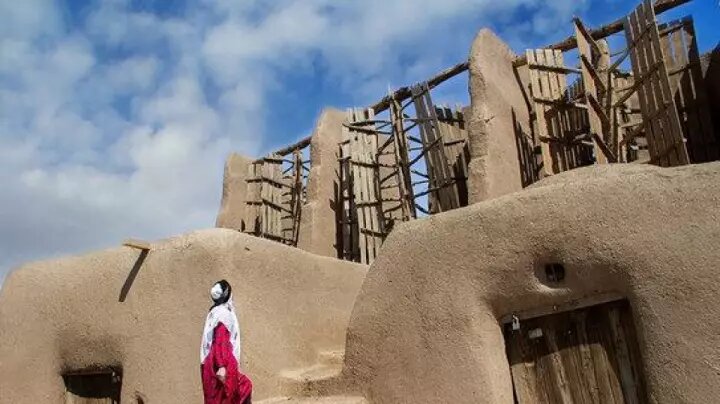
TEHRAN – Iran is seeking the status of UNESCO World Heritage Sites in Asbad, a traditional vertical axis windmill in South Holasan province, highlighted on Saturday.
Ali Dharabi, deputy minister and deputy director of Iran’s cultural heritage organization, said the structure represents a unique part of the country’s industrial history and requires coordinated local support. He spoke at a meeting with Sayz Mohammad Reza Hashemi in South Holasan on Saturday.
“These windmills are important cultural assets and South Holasan holds a large portion of them,” Dharabi said, urging state officials to help advance the nomination papers.
He also proposed establishing an “Agricultural Museum” as part of an effort to expand the state’s tourism economy, promoting desert tourism and sand trekking.
Hashemi said the state with 2,600 registered historic sites could use heritage and tourism as a platform for investment and job creation. “South Horasan has outstanding capabilities in this field,” he told reporters.
For the first time, Seyyed Ahmad Barabadi, director of the Regional Tourism Bureau, announced that operational ASBAD will begin grinding wheat in October as a visitor demonstration project.
Iran’s Asbad is considered one of the world’s earliest industrial machines, dating back to over the millennium. The South Holasan, considered the main hub, contains over 310 survival structures, including about 79% of the country’s total.
Designed to take advantage of the region’s powerful seasonal winds, Asbad differs from the horizontal axis windmills that were later developed in Europe. Historical accounts trace the invention to Iranian engineers in the early days of Islam.
As UNESCO stated, the vertical windmills spread from Iran to other parts of the Islamic world, including Egypt, and were later introduced to China during the Mongol era. By the 11th century they had arrived in Spain, Portugal and the Aegean islands.
According to technology historian Robert Forbes, windmills were originally an Iranian innovation, becoming an important source of energy throughout the Islamic sphere in the 12th century, in order to crush grain, pump water, and treat sugar cane.
morning