
Tehran – good, evil, friends, enemies depend on where you stand in the story and how you tell it. This applies to Southwest Asia, which has complex dynamics.
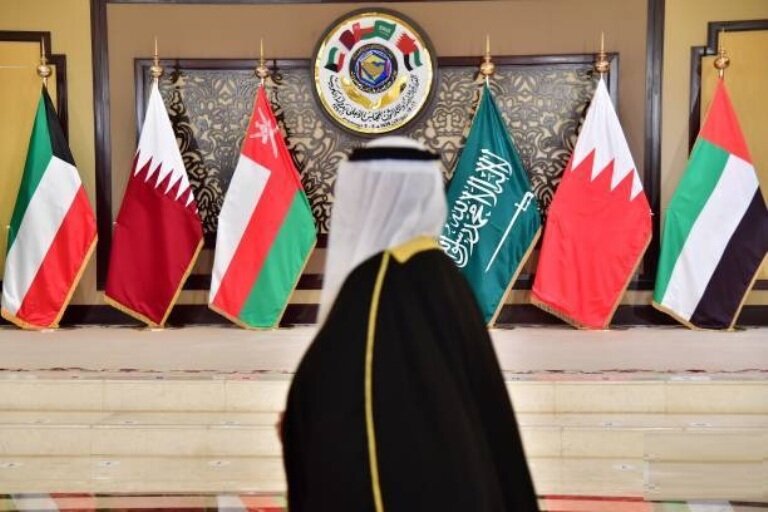
If we tell the story of the region over the past half century, we will encounter revolutions, wars, alliances and widespread foreign intervention. Among these, the relationship between Iran and the Persian Gulf Cooperation Council (PGCC) over any other dynamics emphasizes the role of mutual recognition in international relations.
The enemy is elsewhere
As a local institution, the establishment of the PGCC was a response to geopolitical threats and regional instability. However, recent events show that there has been a misjudgment in identifying the true source of threats and instability.
The Islamic Revolution in Iran (1979) caused Persian Gulf countries to fear the spread of revolutionary ideals to the soil and the potential threat to the monarchy. The outbreak of the Iran and the Iraq War (1980-1988) further framed both Iran and Iraq as the main source of regional instability in the minds of several Persian Gulf rulers, without considering the root cause of the war or the role of out-of-region actors that fueled it. After the fall of the Saddam regime in 2003, the focus shifted completely to Iran, portraying it as a threat that needed to include it. But why Iran? What factors shape the perceptions of local leaders and view Iran as a threat?
As mentioned earlier, among the concerns of regional rulers regarding Iran, there were the potential exports of Islamic revolution and its revolutionary ideals, the border dispute with the United Arab Emirates (three islands), the portrayal of Iran as an expansionist force, historical Arab versus non-denominational tensions, and similar issues. But all of these seem to be merely an excuse to be used by external forces to frame Iran as a threat.
Since its inception, Iran’s Islamic Revolution has consistently emphasized good neighbours and friendly relations with its neighbours and indeed demonstrates this commitment. When it comes to border disputes, this is not just such a problem in the region. Despite many ongoing territorial disputes, including the United Arab Emirates and Saudi Arabia (such as the Khor Al Udady region), Qatar and Saudi Arabia, Oman, the United Arab Emirates and several other territorial disputes, there is an unbalanced focus on the three islands, and support has been extended to the UAE to pursue territorial power to claim to pursue territorial pursuits solely to pursue Iranian threats.
Similarly, labeling Iran as an expansionist is unfounded given that the Islamic Republic has never launched a war. The story poses a constant threat to the country despite Western military bases operating near the Iranian border.
Iran’s artificial construction has spent nearly 80 years crossing the horizon, when Zionist regimes fuel regional conflicts, rarely passing a year without launching an attack. The ideology of “Great Israel” has transformed this regime into an actual, immediate threat to countries in all regions, including the Persian Gulf states, “coupled with the expansionist vision of the Euphrates from the Nile and unconditional international support for Zionist terrorism and full immunity for its crimes.”
Abraham is a pact: normalization, and nothing more
Continuing West negotiations with the Persian Gulf on normalizing relations with the Zionist regime could reinforce the misconception that the US and Israel view these states as equal partners. Importantly, we must remember that efforts to attract attention from the Persian Gulf countries are merely offset by the Zionist regime’s threads, what they perceived as “Shia crescents.”
In fact, weakening the influence of Iran and its regions has always been a response to the threat of the Zionist regime, will put the state of the Persian Gulf first and foremost at risk. It is rich in oil and gas resources and is located in a geostrategic location that attracts global forces, with Iran still maintaining its ultimate line of defense.
Bread thief
What can protect the attractive ports of the Persian Gulf? How can trade be carried out fairly and reasonably? And what can curb the commercial and military ambitions of the Zionist regime? The behavior of this regime consistently follows one logic: “Why can we steal bread?”
Some Persian Gulf countries have to ask themselves: How are they different from the Palestinians in Gaza? What guarantees that this administration will one day not turn the same aggression towards them? Their wealth and oil and gas reserves are intended to remain under the influence of the regime’s solid allies, with the intention of protecting them. Their commercial investment? It is unlikely that the financial tensions in the Zionist lobby will rival the US and other Western countries.
Today, after the recent violation of Israeli and Iran’s sovereignty, the truth is clearer than ever. The so-called Western-led order of the Middle East always includes an insatiable appendix named Israel. There are never enough concessions to satisfy it. Just an infinite line of the next victims.