
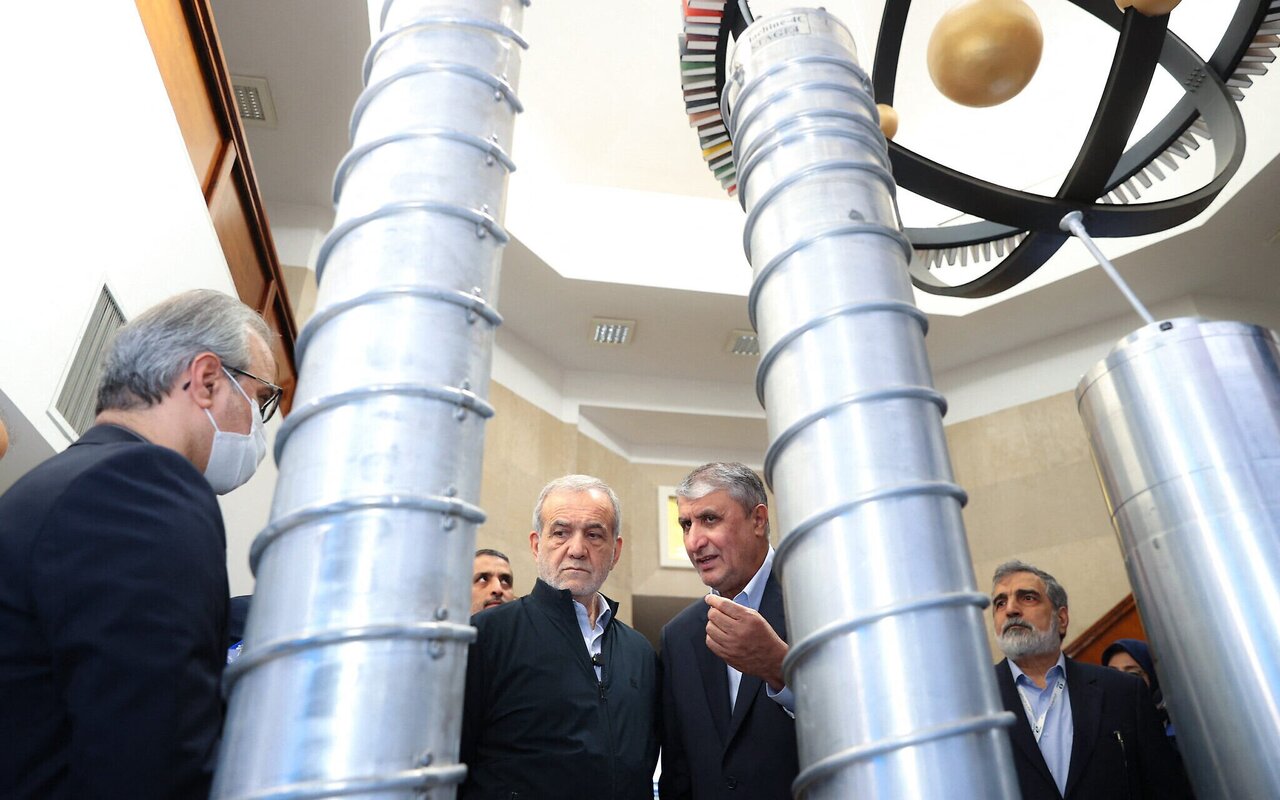
Madrid – A recent interview with Iranian President Masudo Pezeshkian and Al Jazeera reveals how Iran recognizes and defends its nuclear program amidst a landscape in a disturbed region and constant international pressure.
Without relying on Demagoguery or Hollow Rhetoric, Pezeshkian has made it clear that for Iran, the nuclear program is more than just a technology or a military project. It is a concrete expression of sovereignty, self-determination, and national dignity.
In his statement, Pezeshkian emphasized that Iran continues to enrich uranium in accordance with international law, while also claiming that the country has no intention of developing nuclear weapons. “Our real strength lies in the intelligence and commitment of scientists,” he explains, communicating confidence in the collective knowledge that maintains the program. They are seeking temporary damages suffered during their recent conflict with Israel.
This detail is essential to understanding how Iran conceptualizes its nuclear program. It is the embodiment of the ability to develop independent science and industry, not as a threat to other countries, but as a right to sovereignty. For the Islamic Republic, waiving this right is to submit to foreign pressures and give up its autonomy in a world where its people have been besieged for decades, facing continuous sanctions and threats.
Furthermore, nuclear programs are rooted in traditions that blend politics, culture and theology. For Iran, sovereignty is not merely a national issue, but also an ethical and spiritual responsibility. President Pezeschkian has made it clear that the project is not limited to technical concerns. It symbolizes the collective rights of Iranians to shape their future and resist attempts to rule or confiscate.
Pezeshkian was frankly saying that part of the nuclear infrastructure was damaged during the recent conflict with Israel, but the attacks had no effect on Iran’s “real power.” His discourse reflects a deeper notion of resistance that connects technology, spirit and politics.
The military context passes through the interview. Pezeshkian did not hide the fact that Iran is ready to respond to new attacks, but he also expressed caution about the future of peace in the region. In his view, a suspension in conflict with Israel remains fragile, unless Iran’s sovereignty is truly and permanently respected. This message is solid, but not a belligerent explosion. This is a reaffirmation of Iran’s right to deem it impossible to negotiate. It is a defense against the attacks that have been carried out against the soil and its people over the years.
This framework reveals a different perspective on what “security” really means. For Iran, security comes from mutual recognition and respect for self-determination, not from long-formed domination or unilateral control. The president emphasized that Iran is open to resuming dialogue, but that such consultations should be based on equality and the unconditional perception of Iran’s red line.
This approach, far from mere pragmatism, is fixed on a deeper foundation. It is a political and theological thinking that weaves community, sovereignty and justice into a single, inseparable fabric.
The interview also sharply reassures the contrast with the dominant Western narrative, portraying Iran as a problematic and threatening actor and its nuclear program as an imminent risk. But for the Islamic Republic, much of its narrative is caught up in colonial prejudices in which several countries deny consciousness and the right to autonomous decision-making. In fact, the defense of Iran’s nuclear programme represents a historical demand for respect and dignity. It goes far beyond the boundaries of the energy sector.
The fact that Pezeshkian clearly states that Iran does not seek nuclear weapons highlights the country’s intention to project a responsible image in international spheres, reflecting the complexity of policies that balance multiple tensions.
One important aspect of the interview is that Iran was not embarrassed to deal with Israeli attacks, which he considers as part of a broader geopolitical strategy aimed at weakening sovereign projects. This conflict framework shows fundamental differences from other worldviews. For the Islamic Republic, war and peace are not just moods or temporary stages. They are moments in the ongoing struggle for sovereignty and collective existence.
In short, Pezeshkian’s interview is a statement that challenges the simplification and dominant narrative of Iran and its nuclear program. It is, on the one hand, an affirmation of sovereignty that does not abandon diplomacy and negotiation, and on the other hand, a political theological gesture that weaves memory, community and dignity into a unified whole. For the global narrative that often frames Iran as a source of tension, the president’s voice invites us to read these events from another perspective. It recognizes the struggle for people to exercise their right to exist and to decide freely.
Therefore, Iran’s nuclear sovereignty cannot be reduced to technical or security issues. It is a symbol of resistance and self-determination, resting on the broader ethical and political horizon. And this is a message worthy of hearing and analysing with rigour and respect, coming from the simplification that deepens division and conflict in order to understand the future of the region and the future of the world.