
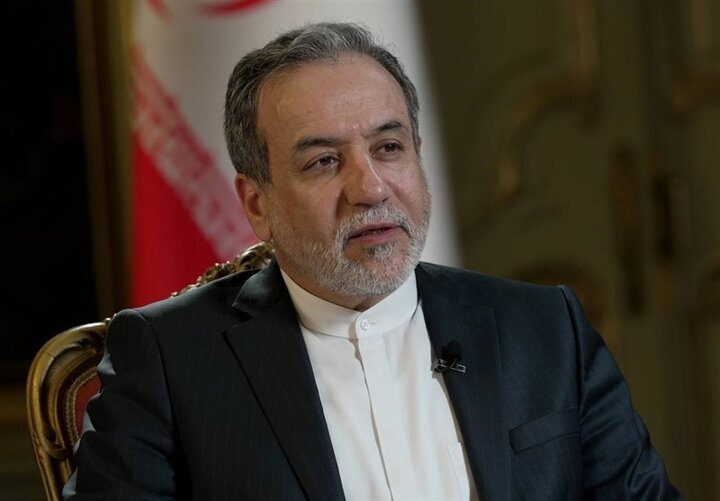
Abbas Araguchi WS spoke in an interview with local Iranian Media Outlet IRNA announced Wednesday amid debate over whether Israel and the US will resume diplomacy that derailed after attacking Iran’s nuclear facilities in June, according to Press TV.
Europeans have threatened to trigger a snapback mechanism built into the 2015 nuclear deal, the Joint Comprehensive Plan of Action (JCPOA), and restored all UN sanctions in Iran before it officially expired in October.
Araghchi said recent actions, including the “zero enrichment” debate, have made non-participants effective at the JCPOA, and that Europeans have no right to do so.
“They think snapback is the only tool they have,” he said.
“Here we are clearly explaining our position. First of all, you are basically not entitled to use it. You will also effectively withdraw from trading following the US withdrawal and in recent positions including zero enrichment.
The diplomats then suggested that snapbacks would mark the end of Europe’s role in diplomacy over Tehran’s nuclear activities.
“Even if you assume you have rights, what happens if you do that? First, Europe’s role in diplomacy is completely over. You use the tools and it is done. What remains after that? The end of diplomacy?”
The Foreign Minister said that while Iran is working to prevent such outcomes, it also has prepared for outcomes, with minimal economic impacts and the main effect being psychological.
He acknowledged that the return to the UN Security Council resolution, including the possibility of a revival of the arms embargo, is a serious issue. However, he said the economic impact is negligible compared to current unilateral US sanctions.
“Security Council sanctions are far more limited than the current unilateral US sanctions,” he said.
“Things won’t get worse than they are now. Yes, there are consequences, psychological and political and even strategic points of view, but not to the extent that it will bring diplomacy to a dead end or paralyze the country.”
Officials say Iran has worked for many years in a plan to counter the snapback, working with China and Russia.
“We held various joint meetings and designed a set of joint measures to implement if snapback is activated,” the official said.
“Suspension of IAEA cooperation, not an agenda.”
Meanwhile, another set of negotiations with the International Atomic Energy Agency (IAEA) is underway following the recent US-Israel attacks on Iran’s nuclear facilities.
Araguchi said Iran has begun discussions with the IAEA about a new framework for cooperation.
He said the new cooperation is old but not continuation as recent bombings have created an unprecedented situation with new safety and security considerations.
“This new collaboration with this agency is undoubtedly not similar to the past, especially as per Congressional law, all issues must be pursued through the highest national security council.
He said that a complete suspension of cooperation is not an option, citing the need for inspectors to be present for daily activities such as fuel rod replacement at the Buchere nuclear power plant.
MNA