
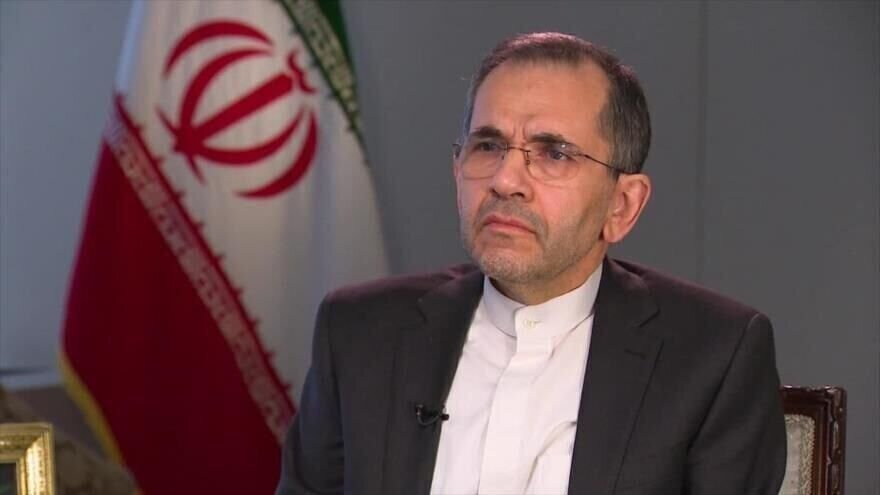
Tehran – The Iranian Deputy Minister ruled out the possibility of halting uranium enrichment and argued that the country will continue to develop nuclear programs within the framework of international law and continue to develop nuclear programs for peaceful purposes.
In an interview with BBC Majid Takht-Ravanchi, Iran said it would not waive its right to enrich uranium within its own territory. “We advocate for enriching uranium in Iranian soil for peaceful purposes,” he said. “Levels and capacity are negotiable, but “You need to zero enrichment. And if you refuse, we will bomb you. That’s just the law of the jungle.”
Takht-Ravanchi added that if Washington wants to resume diplomacy, further military action against Iran must be eliminated first. “We are currently trying to understand whether another act of attack will occur while the dialogue is underway, and that’s the fundamental question,” he said, calling for transparency and future diplomatic offers from the United States at this point.
He also dismissed speculation that Iran is willing to reconsider its nuclear program in exchange for economic incentives. “Why should we accept such a proposal?” he asked, reaffirming that even up to 60% enrichment remains entirely for peaceful purposes.
He said that regional states, including Arab allies in the Persian Gulf, are “doing everything they can to promote the terms of dialogue,” but warned that Iran will remain vigilant. “We don’t want war. We support diplomacy. But we have to be prepared to not be caught off guard again.”
Uranium enrichment is Iran’s legal right: United Nations envoy to CBS
In New York, UN ambassador to Iran, Amir Sayed Irabani, reflected similar comments in an interview with CBS, claiming that uranium enrichment “will not cease under any circumstances.”
He emphasized that there was no threat from Iran to IAEA Director Rafael Grossi or to the agency inspector. “The IAEA inspectors currently do not have access to our facilities,” Irabani said. “We are ready to negotiate, but the environment is not encouraging consultations with the US.”
He repeated Iran’s full rights under the Non-Proliferation Treaty (NPT) to continue its nuclear activities. “As a responsible NPT signatory, Iran is entitled to enrich uranium, conduct nuclear research and benefit from technical cooperation under the supervision of the IAEA,” he said. “These are inseparable from the peaceful nature of our nuclear program.”
Irabani has called for recent accusations, including US Sen. Marco Rubio’s allegations that Iran had threatened Grossi. “We are not sacrificing any threat,” he said, saying Iranian parliament passed a law that suspends cooperation with the IAEA because it “did not fulfill its responsibility.” He emphasized that the halt would remain intact until those conditions changed.
When asked about the controversial articles of Iranian outlets criticizing Grossi, Irabani revealed: “It was a form of personal opinion and criticism. We too have fair complaints with the IAEA that failed that obligation and allowed us to commit crimes against Iran.”
He further stated that IAEA inspectors remain safe in Iran, but their access has been suspended. “They don’t have any risks, but our cooperation is currently suspended and they have no access to any of the Iranian nuclear facilities.”
In response to a recent statement by former US President Donald Trump, suggesting that direct talks with Iran could soon resume, Irabani said such debates were already ongoing but have since derailed. “We were negotiating. Dialogue is the only way to resolve the issues between Iran and the JCPOA party. Iran has always supported a peaceful solution,” he said.
However, in light of recent military attacks on Iranian targets, Irabani said the conditions were no longer desirable. “There was no demand for new consultations or meetings with the US President,” he said.
“If the US is serious about consultations, they know Iran is ready,” Irabani added. “But if they continue to try to impose prerequisites, negotiations are simply impossible.”