
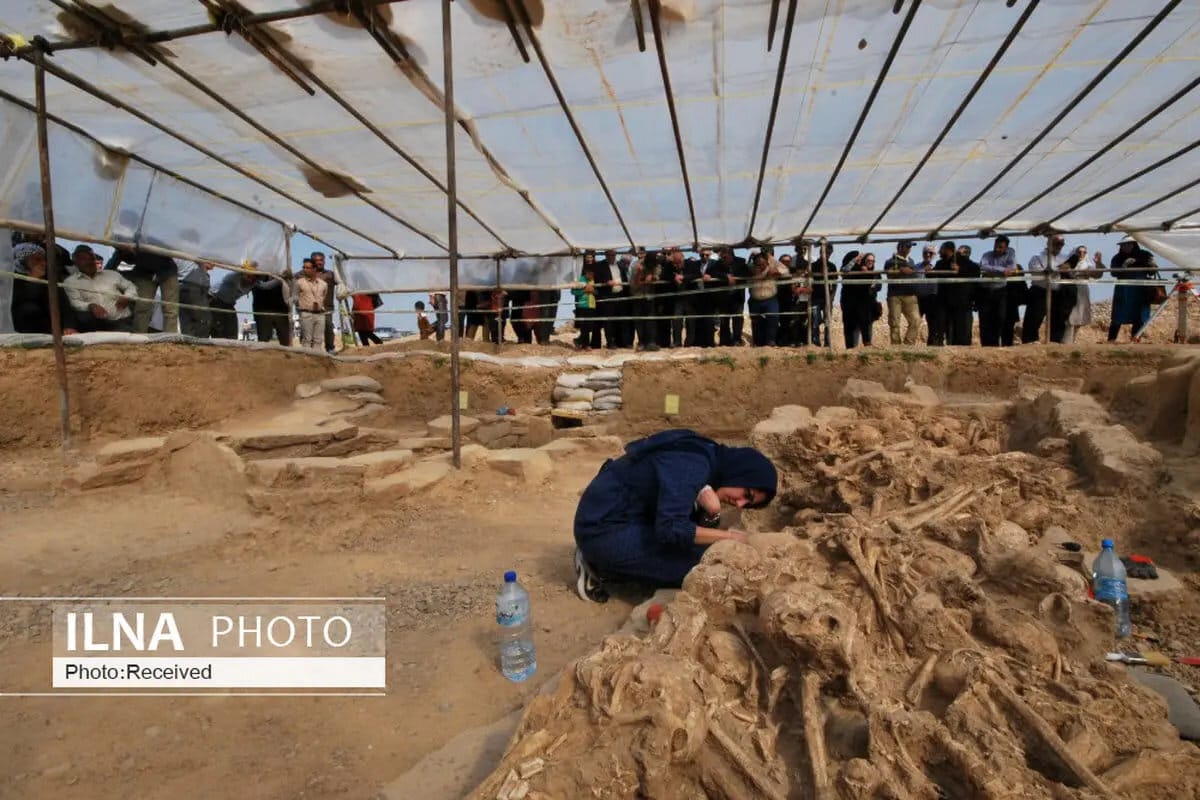
Tehran – New excavations at the ancient site of Chega Sofra, southeast of Kzestan, provide new photographs of the history of early Near Eastern civilizations.
The findings show that roughly 6,000 years ago, the “dasht-e Zohreh” copper age association was more advanced than Mesopotamia with several innovations, including brickwork, weight standards, silver and gold gems, and redefine the location of Iran in the history of pioneering civilization in the region.
An article titled “Ahead” published by Eric Powell, associate editor of Journal Archeology, states that excavations at the Chega Sofla site in southwestern Iran demonstrate the high level of development of the region’s Copper Age society.
From the transition from copper/Calcolithic and Neolithic villages to early Mesopotamian cities (3500 BC), the site was previously thought to be on the rim of the civilizations of Elamite and Mesopotamian.
However, recent findings show the opposite of this idea, indicating the technical and advanced cultural development of its residents.
Excavations at Chega Sofla Cemetery revealed the bodies of 102 individuals buried in various burial practices, including re villages, bone mixing, skull burials and skulls known as “lovers”. The most notable burial is the burial of a 25-year-old woman named “Hatun”, found with a ritual copper sword, silver and gold gems and stone weights. Approximately 70% of burials are women, and some women have modified their skulls, a symbol of social status.
Other important achievements of excavation are architectural innovation and the discovery of advanced technology. The use of baked bricks in the construction of graves and temples, standard measuring systems with outstanding weight, marble bowls and complex ceramics confirm the high levels of technological and cultural advances in these societies.
The first temple of the Iranian copper age was also discovered in Chega Sophra, made of burnt bricks, with a small marble bowl of H-shaped structures, burials of sacrificial animals (male goats and cattle), and perhaps a counting system or numerical signs (rows 17, 19, 21) representing religious rituals.
These findings reflect the advances in society of Dasht-e Zohreh in the fields of metallurgy, pottery and architecture, indicating that the region is ahead of the ancient city of Susa in some areas.
Cemeteries and temples Shega Sophra offers clear symbols of social organization, commercial activities, religious rituals and the prominent role of women, opening new horizons with prehistoric studies of Iran and the Near East.
KD