
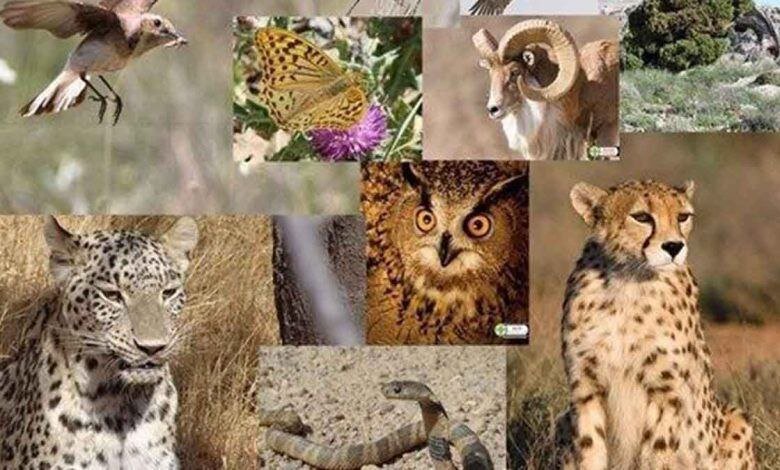
TEHRAN – Iran will participate in the 20th Conference of the Parties to the Convention on International Trade in Endangered Species of Wild Fauna and Flora (CITES COP20), scheduled to be held in Samarkand, Uzbekistan from November 24 to December 5.
IRNA reports that the COP meets every two to three years to define, approve and implement administrative, technical and financial issues, communications, measures and programs.
It reviews progress in the conservation of species included in the Appendices of the Convention, considers proposals to upgrade or downgrade species from Appendices I and II, or to add species to the list, and details documents and reports from the Standing Committee, the Fauna and Flora Committee, the Secretariat, and working groups.
At the meeting, topics such as the pursuit of funding for the convention, proposals for measures to increase the effectiveness of the convention, and the functions of the secretariat will be discussed.
The COP will be attended by senior officials from each country’s environment ministry, as well as presidents, delegations representing parties to CITES, and observers who are not parties to CITES, UN agencies, and other international forums. However, they cannot vote or participate in discussions.
This year, 51 proposals were submitted, of which 14 focused on mammals, four on birds, eight on reptiles, one on amphibians, seven on sharks and rays, seven on sea cucumbers, and 12 on plants. There is one suggestion for freshwater eels, one suggestion for arachnids, and one suggestion for gastropods.
CITES is a multilateral treaty designed to protect endangered plants and animals from the threats of international trade. It was drafted as a result of a resolution adopted by the Conference of the Member States of the International Union for Conservation of Nature (IUCN) in 1963. The Convention was opened for signature in 1973 and CITES entered into force on July 1, 1975.
Working group to combat wildlife trafficking
The Department of the Environment (DOE) has established a working group to monitor wildlife cybercrime and combat illegal wildlife trade, DOE officials announced in September.
Wildlife trafficking is the third most profitable crime after drug and arms trafficking.
Research shows that 25 percent of species advertised for sale are listed as prohibited for international trade by CITES.
From lion cubs to pythons, salamanders, Persian squirrels and rhesus macaques, birds such as peregrine falcons, bustards and saker falcons, various species of hawks, invertebrates, native and exotic turtles, snakes and reptiles such as iguanas are the most common wild species sold and kept illegally.
The DOE is also working with experts from wildlife agencies to develop another plan to combat wildlife trafficking, which will be implemented nationwide if approved, ISNA quoted Hamid Zoharbi as saying.
The main goal is to draw attention to wildlife trafficking and deal more decisively with wildlife traffickers.
Strategic planning for conserving endangered species
President Massoud Pezeshkian issued an order requiring the DOE to develop a strategic plan to protect the nation’s endangered species.
Some 154 species of vertebrate animals in Iran are at risk of extinction, according to the latest report from the International Union for Conservation of Nature (IUCN).
IRNA quoted the president as saying: “The country needs a comprehensive environmental operational plan that covers various environmental areas. It must include goals, assumptions, operational measures, financial resources and results.”
Iran is a rich country in terms of biodiversity, with approximately 37,500 species of animals and more than 8,000 species of plants. In addition, the Persian Gulf, Sea of Oman, and Caspian Sea are home to 579 species of birds, 214 species of mammals, 284 species of reptiles, 23 species of amphibians, 309 species of freshwater fish, and 763 species of saltwater fish.
Approximately 35,283 species of invertebrates have been confirmed in Japan, of which more than 32,600 are arthropods. More than 94 percent of the country’s animal species diversity belongs to invertebrates and less than 6 percent to vertebrates. There are at least 26,800 species of insects, accounting for more than 70 percent of all species in this country.
The Asian cheetah and ostrich are among the endangered species, with their natural populations reduced to less than 25 individuals. Furthermore, five species of Caspian sturgeon, unique in the world, are disappearing from the Caspian Sea.
Experts say species extinction is a natural phenomenon, but the speed at which it’s happening is alarming. Unfortunately, the current rate of extinction is accelerating due to human activities. It will have serious implications for ecosystems and the well-being of the planet.
MT/MG