
Speaking at the “Space Technology for Sustainable Development” event held at the ICT Technology Park this morning, Hassan Salarieh highlighted the growing role of satellite-based data services. He said the conference focused on showcasing the capabilities of private companies to provide satellite data and imagery services across agriculture, water resources, environment, meteorology and other national sectors.
Salary highlighted the growing application of satellite data, noting that services such as estimating crop area, locating mines and monitoring dust storm hotspots have improved significantly in recent years.
He also discussed continued efforts to update the country’s 10-year space program, particularly in the area of satellite data services. The Space Agency, which has been tasked with making this change since last year, is evaluating national capabilities through the Space Council. If approved by the Supreme Space Council and the President, the updated document will be published as official guidelines for government agencies, the private sector, universities, and research institutions.
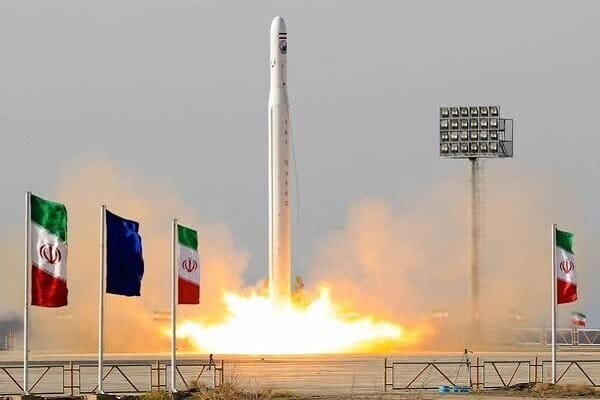
Salalie confirmed that the Zafar, Paya and Kosar satellites are advancing in their technical stages and are scheduled to be launched in early winter, with the exact launch date to be announced soon.
He further stated that the Armas and Conaran Space Stations are nearing completion and will soon enter the operational phase.
Regarding international cooperation, Iran said it is collaborating with China on lunar projects and with ECO member states on research, training, support operations, and satellite-based data services.
MNA