
TEHRAN – Iranian officials said they plan to submit their own nomination file to UNESCO for inscription of the country’s centuries-old rosewater distilling tradition, known as Golabgiri, as an element of intangible cultural heritage.
Alireza Izadi, head of the Department of Cultural Heritage Registration and Preservation at Iran’s Ministry of Cultural Heritage, Tourism and Handicrafts, said Iran’s file would be submitted separately, clarifying recent reports suggesting a possible joint registration with other countries.
“Iran has its own rituals and traditions related to the distillation of rosewater, and ‘golab’ is a Persian word,” Izadi said on Sunday. “Iran’s registration of Golabgiri will proceed independently.”
His remarks appeared to be in reference to speculation about possible cooperation with Saudi Arabia, which added the practice of Taif Rose to UNESCO’s Representative List of the Intangible Cultural Heritage of Humanity in 2024.
Izadi said countries have the right to register their own cultural traditions under UNESCO conventions. “Every country has customs and customs that belong to its geography and can be registered individually,” he said. “For example, Nowruz was first registered by Iran, and then many countries such as Tajikistan, Azerbaijan and Turkey joined this file.”
He added that Iran jointly registered the Sadeh festival with Tajikistan last year.
Ghorabgiri, an Iranian tradition, is concentrated in the central city of Kashan and its neighboring villages, where Mohammadi rose (Rosa damascena) has been cultivated and distilled for centuries. Every May and June, communities across the region celebrate the harvest and distilling season with the Rosewater Festival.
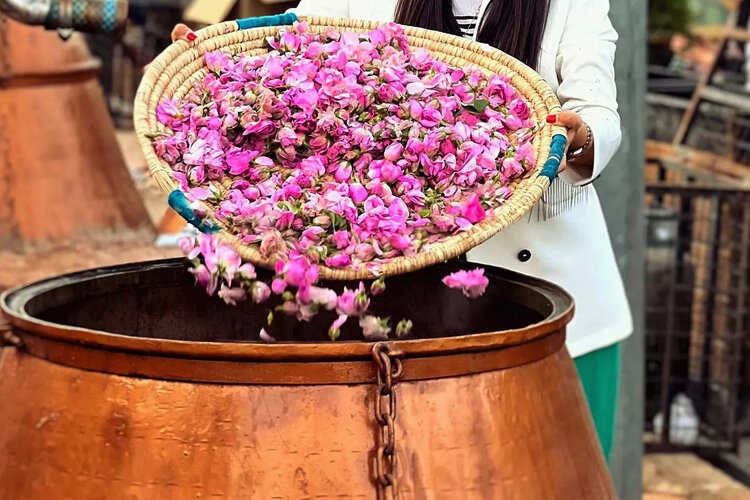
The Golabgiri festival begins with a procession of local residents carrying baskets of roses to the local distillery. The flowers are then sorted and placed in large copper pots where they are boiled to produce oil. Pots are made from brick, stone and mud. Apart from the actual production of rosewater, participants will also stroll through the lively bazaar where local vendors sell all kinds of rose-infused products such as perfumes, soaps, and even teas. In fact, rosewater is an essential ingredient in Persian cuisine. Additionally, various musical and cultural events will be held, including folk dances and traditional performing arts.
The flower harvest is almost finished in the early morning. Rumor has it that delays in harvesting and transporting the essential oil to the distillery will reduce the quantity and quality of the essential oil.
As part of the process, about 80 liters of water and almost 30 kilograms of rose petals are added to each pot, which is connected to a metal pipe to pass steam through to create a hydrosol. Distillation waste can be fed to animals or composted.
Locals believe that rose oil and rose water have therapeutic properties. Some say rose oil is calming and relieves depression, sadness, stress, and tension, while others add that rosewater products can help improve skin health, colds, and digestive issues.
morning