
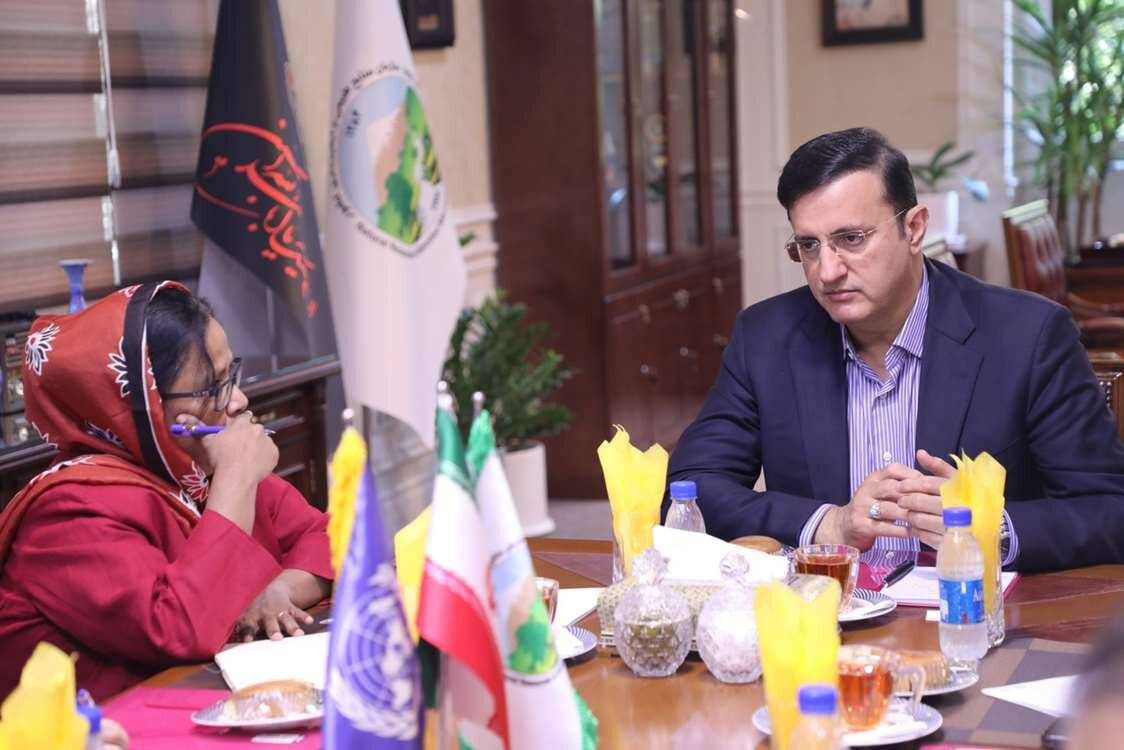
Tehran – Ayshanie Medagangoda-Labé, director of Natural Resources and Basin Management Agency Ali Teimouli and interim AD area for resident representatives of Iran’s United Nations Development Programme (UNDP), discussed ways to increase joint efforts to manage natural resources and mitigate the impacts of climate change.
According to the Ministry of Agriculture’s website, at a meeting held on Monday, Teimouli detailed the challenges facing the country due to arid and semi-arid conditions, highlighting the importance of global cooperation in the conservation and restoration of natural resources.
Referring to the fact that the desert comprises around 32 million hectares of 135 million hectares of natural land nationwide, Teimouri urged the UNDP to work with the state in implementing the basin management plan and mitigating important dust hotspots.
The authorities also announced the preparation of natural resources and basin management organizations to work with the UNDP office within the organization’s goals and mission framework.
Medagangoda Rabe explained the area of cooperation between UNDP and Iranian government agencies for her turn. The formula proposed establishing microcredit funds in state and local regions as an effective step to expanding the joint effort.
Referring to the complexity of managing natural resources, she emphasized the need to benefit from community capabilities.
Officials also said the UNDP office is striving to minimize the impact of sanctions on Iran’s environment and receive the state’s financial allocation for climate change.
She went on to say that the UNDP office is in consultation with financial funds to present proposals in the areas of water, drought, climate change, dust storms and desertification.
At the end of the meeting, both sides decided to continue their discussions to highlight the growing bonds around the fight against SDS through pilots and small-scale projects, and to explore the possibilities of fostering collaboration.
Active diplomacy was necessary to address SDSS transported
Duststorm is a major environmental challenge that has negative impacts on food security, human health, and sustainable development processes at the national and local level.
Referring to the fact that the sources of sand and sandstorms affecting Iran are located abroad, officials from the Ministry of the Environment (DOE) highlight the role of environmental diplomacy in managing the climate crisis, particularly sand and sandstorms.
Air pollution, sand and sandstorms are global issues that need to be addressed with international cooperation as their solutions are cross-borders, the IRIB quotes Arman Khorsand as saying.
Emphasizing the need for domestic and international cooperation, authorities said Persian Gulf countries are working together to mitigate and address water pollution, climate change, sand and sandstorms. More collaborative efforts are also being formed.
“The negative effects of climate change are increasing faster than the effectiveness of measures taken to resolve the issue, but we should not refrain from playing a more effective and responsible role,” Khorsand said.
Due to drought and reduced water resources, he said the aridity of the Aral Sea, the Karakham Desert in Central Asia, and the deserts of China and Mongolia have been transformed into hotspot sources of sand and sandstorms that spread across countries such as Korea and Japan.
On July 13, President Masoud Pezeshkian issued an order calling for the establishment of a specialized working group to deal with sand and sandstorms (SDSS) that has turned into important public health concerns around the country.
mt/mg