
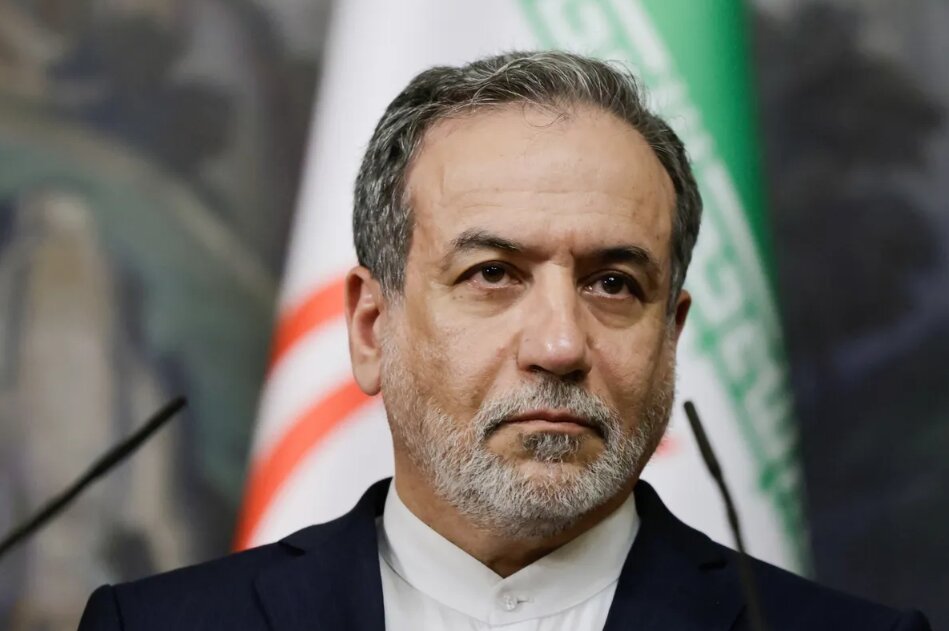
Araghchi made the reminders in a letter addressed to the UNSC and UN Secretary-General António Guterres on Thursday, following the notification submitted by the E3 – Britain, France, and Germany – seeking to activate the Dispute Resolution Mechanism, also known as snapback mechanism, and reinstate UNSC sanctions on Iran that were lifted under the Joint Comprehensive Plan of Action (JCPOA) and Resolution 2231.
The full text of his letter is as follows:
In the name of God, compassionate and merciful
Your Honor,
I may address certain false claims contained in the letter dated August 8, 2025 by the Ministers of Foreign Affairs of France, Germany and the UK (hereinafter referred to as E3). This letter constitutes yet another attempt to lay the foundations for two courses of action that set unfair and dangerous precedents in eroding the credibility and integrity of UNSC and its solutions by misrepresenting facts.
Misrepresentation of E3 facts
I have to repeat this act that cannot be justified by referring to the fully legal and legal remedies of the Islamic Republic of Iran, which have been implemented in stages and proportionately. Ironically, the letter E3 misrepresents two fundamental flaws in their argument, due to attempts that could evoke the so-called snapback.
a) Sequence is important. By falsely claiming that “Iran only activated the dispute resolution mechanism in July 2020,” E3 outlawed Iran’s corrective action, misrepresenting a series of events, hiding the fact that the Islamic Republic officially activated the DRM in a letter on May 10, 2018. Again, on August 21, 2018, Iran reaffirmed its call to paragraph 36, saying that it “called a dispute resolution mechanism based on paragraph 36 of the JCPOA, which was convened at the level of political supervisor and foreign ministers on May 25 and June 6, 2018, respectively.”
By poses the issue of sequencing, E3 implicitly acknowledges that the order of DRM activation by different aspects is important. Furthermore, measures taken in accordance with paragraph 36 of the JCPOA cannot justify mutual measures by other parties. In short, E3’s own inference admits that the remedy cannot be called against the previous remedy on the other side, and that such invocations are unacceptable and unapplicable.
b) False claim that recognition is necessary for DRM activation. He falsely claims that “other reliance on this mechanism was not recognized by JCPOA participants back then and today.” E3 suggests that consensus between participants is required for the validity of DRM activation. This very logical, not explicitly recognized by other participants, so E3’s own attempt to activate DRM or snapback is not valid.
If there is one fully recognized and exhausted DRM activation, it is caused by the Islamic Republic of Iran on May 10, 2018. This was followed by an extraordinary joint committee on May 25, 2018 and a ministerial level meeting on July 6, 2018. Following these meetings, Iran said it had called on paragraph 36 of the JCPOA in several correspondences in a letter dated August 21, 2018, November 6, 2018 and April 7, 2019.
In fact, the letter E3 is self-destructive. Further defaults continued on their behalf of E3 attempting to activate DRM, resulting in an unrecognized and completely exhausted act of “relief for treatment” that was completely exhausted.
As comprehensively detailed in the JCPOA Coordinator (attached here) in a letter dated January 29, 2020 to the then Iranian Foreign Minister’s Foreign Affairs, the Islamic Republic of Iran effectively and formally activated and exhausted the DRM before initiating the bailout.
By referring to their letter dated January 14, 2020 in response to Iran’s remedies since May 2019, we must emphasize that the call to E3 to the JCPOA dispute resolution mechanism is completely misleading and irrelevant. As expressed in many communications, Iran’s decision to implement its commitment in accordance with its rights under paragraphs 26 and 36 of the JCPOA was a legal and legitimate response in accordance with its right to the unilateral withdrawal of the US from the JCPOA and the repositioning of its illegal sanctions. Therefore, it is absolutely illogical to explain its intention to not implement its commitment or cause a snapback as a response to Iran’s legal remedies that took place a year after the US’s illegal withdrawal and the E3/EU’s own obligations.
The Islamic Republic of Iran has explicitly and formally informed the JCPOA Joint Committee coordinator several times that it caused the DRM under paragraph 36 of the JCPOA. In particular, in a letter dated January 29, 2020, Iran has used up all the resous foreseen in paragraph 36. The Minister-Level Joint Committee Meeting on July 6, 2018 recognized the issue that Iran called the joint committee “open issues” and adopted a series of commitments in response to that. These issues remain “unresolved” to this day, with no consensus on Iran’s satisfaction as a dissatisfied participant. An issue that has not yet been resolved to Iran’s satisfaction cannot form the basis for E3’s decision to trigger a snapback mechanism.
It should be noted that these facts will in no way affect Iran’s exclusive rights under paragraph 26 of the JCPOA. This explicitly states that Iran will deal with such reintroduction or reissues to halt its commitment under this JCPOA.
Unlike the bad acts of faith in E3, the Iranian measures that were perfectly compatible with their rights under paragraphs 26 and 36 were intended to maintain the transaction through attractive compliance rather than undermining it. Iran has engaged in good faith through meetings of several joint committees, providing ample notices in which it has maintained its diplomatic engagement aimed at coordinating actions that enable reversibility and restoring full implementation of the JCPOA by all parties. Depicting these legitimate measures as “non-performance” ignores their own negligence in inducing this legitimate reliance.
Resolution 2231 must end on the end date
In line with its policy of using Snapback as leverage to make concessions from others, E3 “provides” a limited extension of “relevant provisions of UNSC 2231” to provide for Iran to meet certain requirements. However, the Islamic Republic of Iran strongly believes that resolution 2231 must expire according to the timeline predicted within it.
Other attempts will ignore the purpose of the resolution and violate reality, set bad precedents for the functioning of the Security Council, and deepen the division within the council. Needless to say, in such an unfortunate scenario, Iran responds decisively and proportionally, taking into account its highest national interests.
Iran urges the Security Council to strictly adhere to the binding timeline inscribed in Solution 2231, urging that its provisions expire as intended, free from coercion and threats, and paves ways of updating diplomatic engagement with a more constructive atmosphere.
Iran remains open to diplomacy
Iran believes that diplomacy will continue to be the most effective and powerful tool for resolving differences during a meeting of the deputy minister with the EU/E3 political director in Istanbul on July 25th. Sanctions targeting the happiness and prosperity of the people of Iran.
We urge all members to refuse unfair political manipulation and to protect the integrity of the council’s international law and authority. The path forward is mutual respect, not compulsory.
I would appreciate it if you could distribute this letter as a document for the General Assembly and the Security Council.
I hope you will accept my best considerations, Your Excellency.
MNA/