
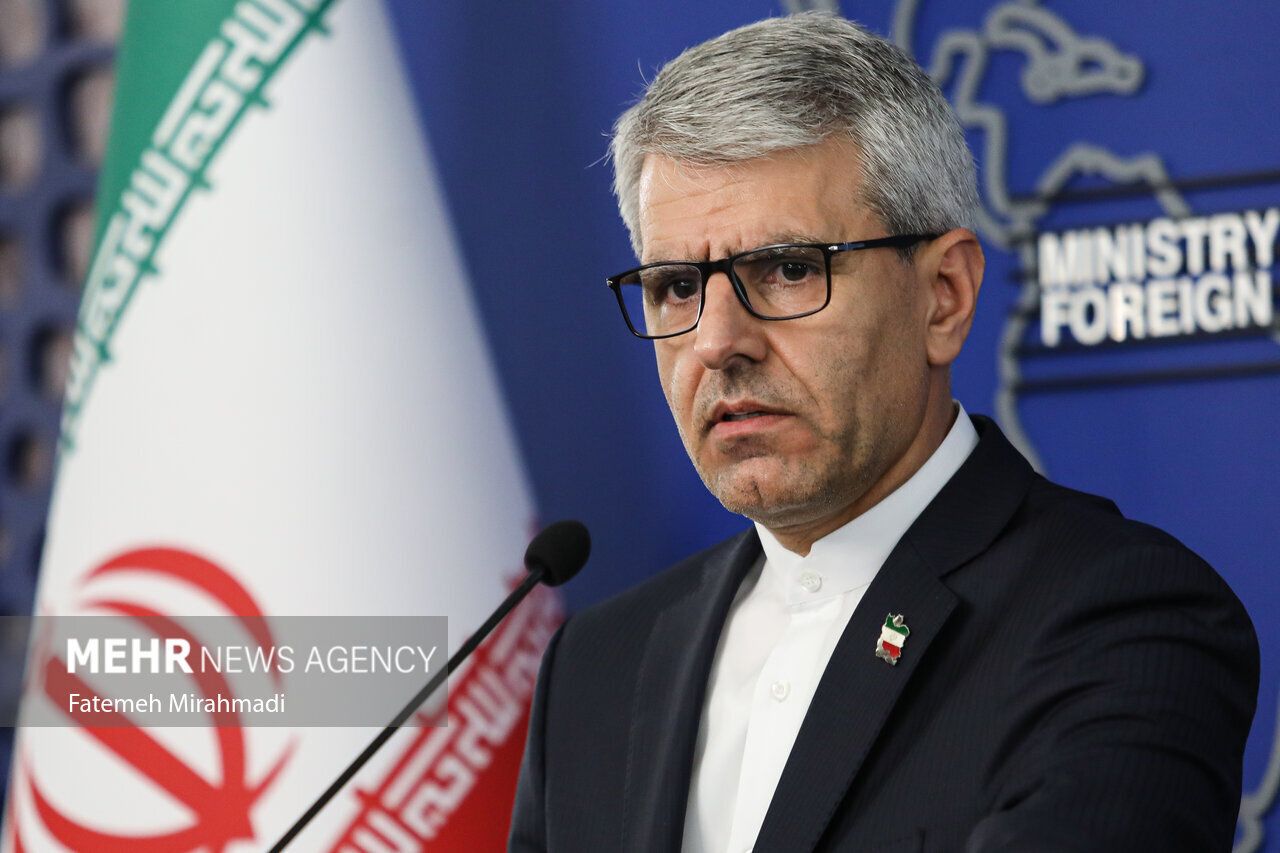
Esmail Baghai made the remarks on Friday, a day after the IAEA’s 35-member executive board passed an anti-Iran resolution proposed by France, Britain, Germany and the United States.
In response, the Iranian government announced the end of an agreement signed in Cairo, Egypt, in September to resume cooperation with the United Nations nuclear watchdog. Relations between the two countries had been suspended after the United States and Israel carried out a deadly invasion of Iran in June.
“In an official letter to the Iranian authorities, we have declared that the so-called Cairo Agreement, which was reached after relatively long negotiations with the Iranian authorities in good faith by Iran, has now been abandoned. Other measures are also being considered,” Baghai said.
He also denounced the IAEA resolution as a “blatant abuse of an international organization” to further the objectives of the United States and three European countries regarding the Iranian nuclear issue.
The IAEA’s “totally irresponsible and unwarranted” action ignores the agency’s own standards and reduces the agency to a mere political instrument to put pressure on certain member states, the spokesperson added, Press TV reported.
“This resolution makes no mention of the underlying reasons or causes of the current situation. Neither the resolution nor the statements of the three European countries and the United States make any mention of the fact that Israel and the United States attacked Iran’s nuclear facilities in June, (which) led to Iranian authorities’ inspections and the suspension of Iranian cooperation.”
The resolution, passed with 19 votes in favor, three against, and 12 abstentions, called on Iran to report “without delay” on its enriched uranium stockpile and facilities damaged in the June invasion, but did not mention Iran’s long-standing cooperation with the IAEA.
Bagai said the resolution itself created rifts within the council, with about half of member states abstaining or voting against it.
He also denounced the document as “legally weak” and said it was based on previous anti-Iranian activities at the United Nations and was considered invalid by Tehran and a significant part of the international community.
He was referring to recent moves by three European countries and the United States to reinstate all UN Security Council sanctions against Iran through the so-called snapback mechanism.
Meanwhile, the spokesperson dismissed Western claims of a diplomatic approach to resolving the Iranian nuclear issue as “completely deceitful and hypocritical.”
“The very issuance of the draft resolution demonstrates the rejection of a diplomatic solution and the reliance on pressure and sanctions,” he said.
Earlier on Friday, Iran’s Foreign Ministry condemned the IAEA’s “illegal and unjust” draft resolution, saying it “reflects the bullying of the United States and the duplicity of the three European countries.”
MNA