
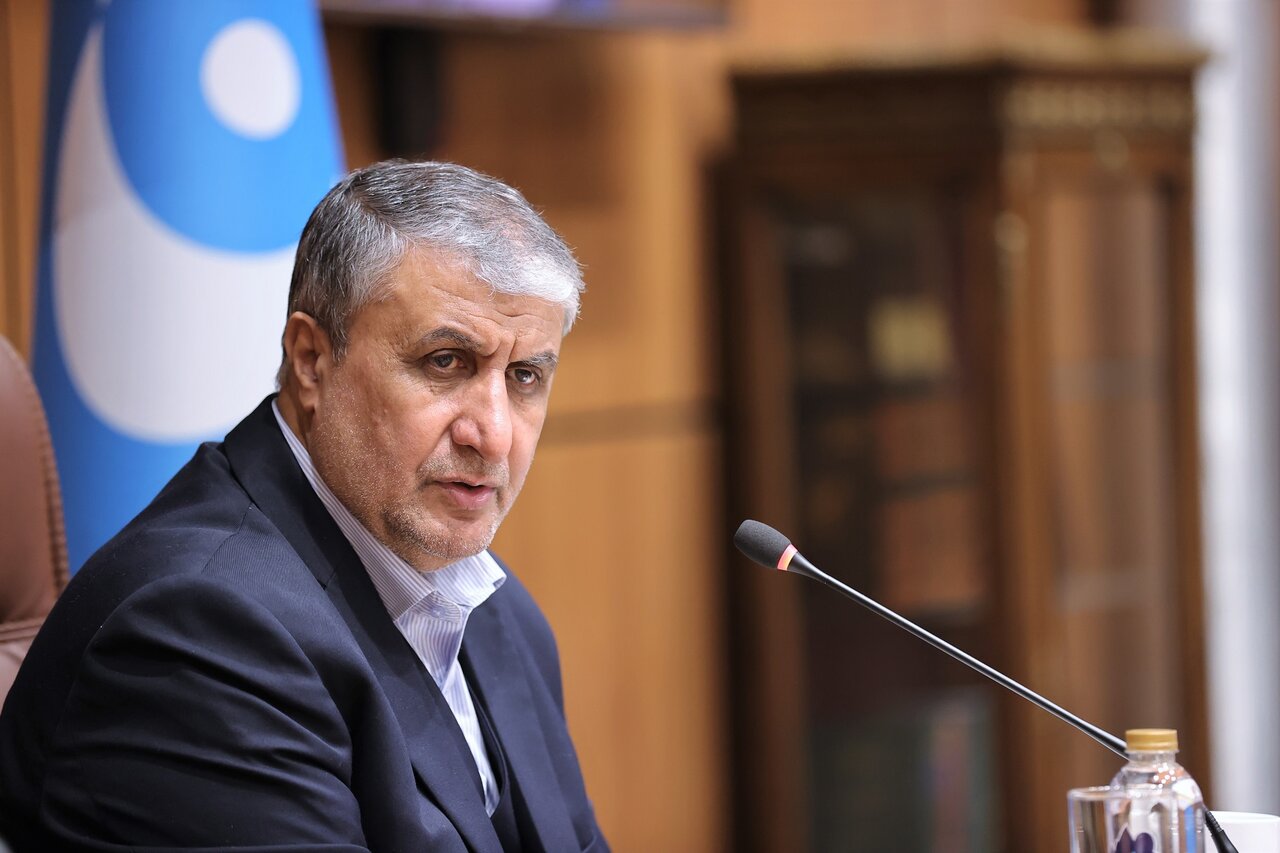
According to Mehr News Agency, Mohammad Eslami, head of the Atomic Energy Organization of Iran (AEOI), stressed in an interview with Al-Masira that the attack on Iran’s peaceful nuclear facilities is unprecedented in the history of targeting the scientific capabilities of countries.
He said the nature and timing of the attack indicates that the United States and its allies have entered a dangerous new phase in the war against Iran’s scientific advances.
Eslami said targeting Iran’s peaceful nuclear infrastructure was a “clear crime” against the country’s will, which continues to assert its right to peaceful nuclear knowledge despite threats and pressure.
He added that Iran has complete evidence proving the nature of the attack, actors involved, and motives. He stressed that the Iranian government will not give up its rights or allow anyone to impose its will on the country.
Speaking on the sidelines of an international conference entitled “International Law Under Attack: Aggression and Defense” on Sunday, Eslami said Iran would maintain its nuclear program and strategic direction no matter what resolution is passed by the International Atomic Energy Agency (IAEA) board.
Mohammad Eslami, Director-General of the Atomic Energy Organization of Iran (AEOI), stressed that the recent attacks on Iranian nuclear facilities are unprecedented as they are the first in history to target a facility under IAEA safeguards. “This is a clear violation of international law,” Eslami said, noting that neither the IAEA director-general nor the board of directors had condemned the attack, reflecting a failure to adhere to international norms.
Eslami criticized what he called the continued coercive practices and pressure, stressing that the language and approach used against Iran continues to be consistent with past patterns of double standards.
He asserted that Iran’s policy has been transparent from the beginning and that the country will continue its operations despite external pressure. “We will continue on the (chosen) path,” Eslami said, stressing the importance of ending double standards in international surveillance and diplomacy.
“Our policy in cooperating with the Iranian authorities is that the 10-year deadline of Resolution 2231 expires in October 2025. Iran has fulfilled all its obligations. The Iranian authorities should only monitor our programs within the framework of safeguards,” he stressed.
On June 13, while Washington and Tehran were in the process of nuclear negotiations, Israel launched a blatant and unprovoked invasion of Iran. The Israeli attack sparked a 12-day war that left at least 1,064 people dead in the country, including military commanders, nuclear scientists and civilians.
The United States also entered the war by bombing three Iranian nuclear facilities in a serious violation of international law.
In response, Iranian forces targeted strategic locations throughout the occupied territories, as well as Qatar’s Al Udeid Air Base, the largest US military base in West Asia.
On June 24, Iran successfully thwarted the invasion through successful retaliatory operations against both the Israeli regime and the United States.
MNA/6658452