
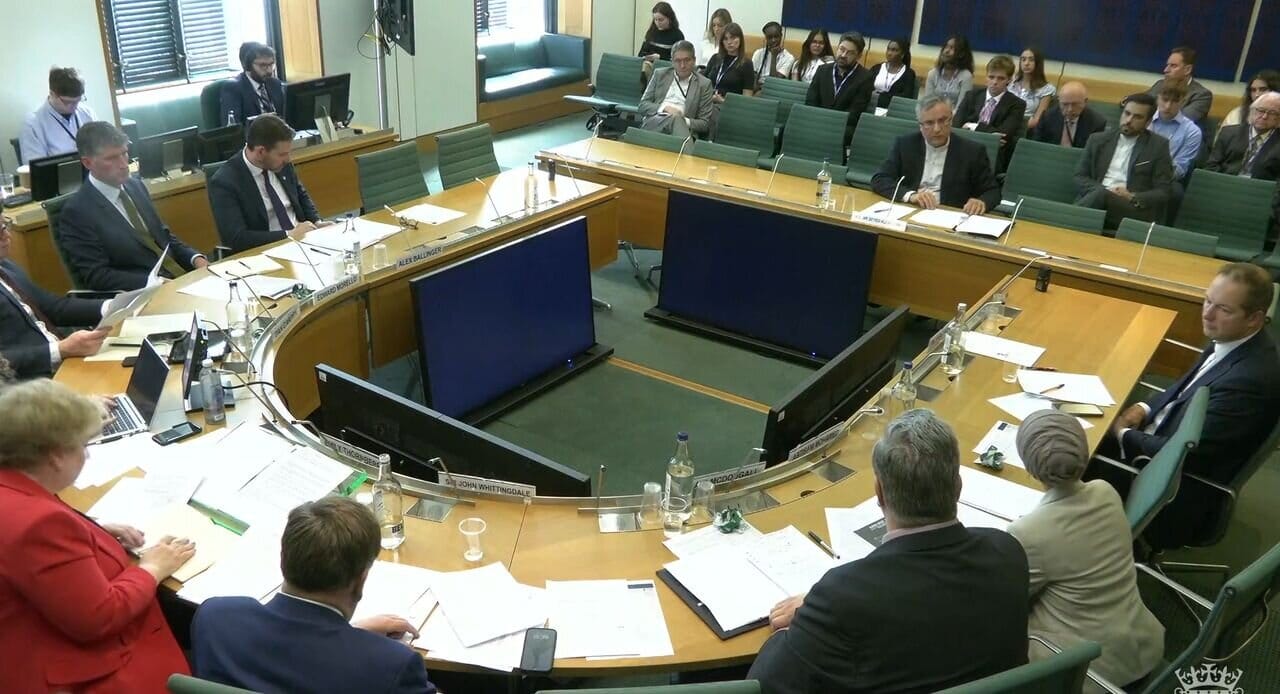
TEHRAN – Iran’s British Ambassador Ali Musabi issued a harsh warning during a fierce session of the British Parliament’s Foreign Affairs Committee on June 17, emphasizing that Iran is a legitimate sovereign state and declared that Tehran reserves the right to withdraw the right of the NPT to withdraw the NPT (NPT).
The session focused on regional escalation, Iranian nuclear activity, and the diplomatic path ahead. Musabi forced him back to “hostile rhetoric, biased narratives, double standards” from Western officials.
Asked about speculation that Iran could withdraw from the NPT, Musabi said such a decision was in the authority of Iran’s independent parliament.
“According to Article 10, withdrawal is a legal option if the signatories’ important interests are threatened. There is no ambiguity,” he said. “We are responsible for these people.”
He reiterated that Iran remains in the NPT for now, and its religious doctrine and defence policies ban the development or use of weapons of mass destruction, including nuclear weapons, citing binding fatwa issued by the leaders of the Islamic Revolution.
Foreign Affairs Committee Chair Emily Thornberry later shared some of Musabi’s comments on social media platform X, highlighting the need to return to diplomacy.
“The Israel attack violated international law.”
Musabi began his remarks by denounceing Israel’s recent military strikes against Iranian territory as “a blatant violation of the UN Charter and international law,” and calling the action a serious threat to global security.
He described “terrorists and criminal conduct” and strikes that crossed all red lines, particularly by targeting private nuclear facilities operating under full IAEA supervision.
Rejecting Israel’s “target accuracy” claim, Musabi said the strike has collided with private infrastructure, homes, hospitals and oil refineries.
“More than 220 civilians, including women and children, have been marched, and nearly 1,500 other people have been injured,” he said.
He condemned the direct attacks on Iranian national broadcasters during live broadcasts, as “deliberate war crimes” and “attempts to silence the voice of truth,” which Israel accused of as “the greatest enemy of media freedom.”
Musabi also criticized the United States, accusing Washington of being a direct accomplice through military, intelligence and political support for Israel.
“The United States must be legally accountable. The countries that support Israel in this attack are also responsible under international law,” he said.
The ambassador noted that the Israeli attack came in Oman a few days before indirect talks with the US.
“Iran came to the table with constructive proposals, but the US has derailed the diplomatic process by supporting Israel’s attacks,” he said.
He repeatedly stated that Iran’s missile response was defensive, proportional and legal under Article 51 of the UN Charter, and that Iran did not target civilians.
Musabi expressed his dissatisfaction with the UN Security Council not condemning the attack, saying the silence weakened its credibility. He urged the UN and independent states to take concrete steps to stop the Israeli attacks.
Asked if Iran is planning to escalate tensions or close the Strait of Hormuz, Musabi said, “Iran’s consistent priorities have been diplomacy. We have repeatedly stated that we must resolve local issues through dialogue.