
TEHRAN – Iranian officials congratulated the Iraqi government and people on the successful conduct of the country’s parliamentary elections on November 11.
“I congratulate the brotherly Iraqi people and government for the successful conduct of peaceful parliamentary elections,” Iranian Foreign Minister Abbas Araghchi said in a post on his X account.
Araghchi added: “This election was an important step forward in strengthening Iraq’s democratic process and safeguarding the country’s sovereignty and security.”
“The Islamic Republic of Iran is determined to further strengthen friendly relations with Iraq in all areas of mutual benefit,” he added in the post.
Iranian Foreign Ministry Spokesman Esmail Bakaei also praised the increased turnout of Iraqi voters and the peaceful holding of the elections, calling these developments valuable. He also expressed hope that the vote in Congress will be a stepping stone to further cementing the unity, security, and progress of neighboring Iraq.
The third message came from Ali Akbar Velayati, an adviser to Islamic Revolutionary leader Ayatollah Ali Khamenei, who also expressed his congratulations and said that cooperation between the two brotherly states had a bright future ahead.
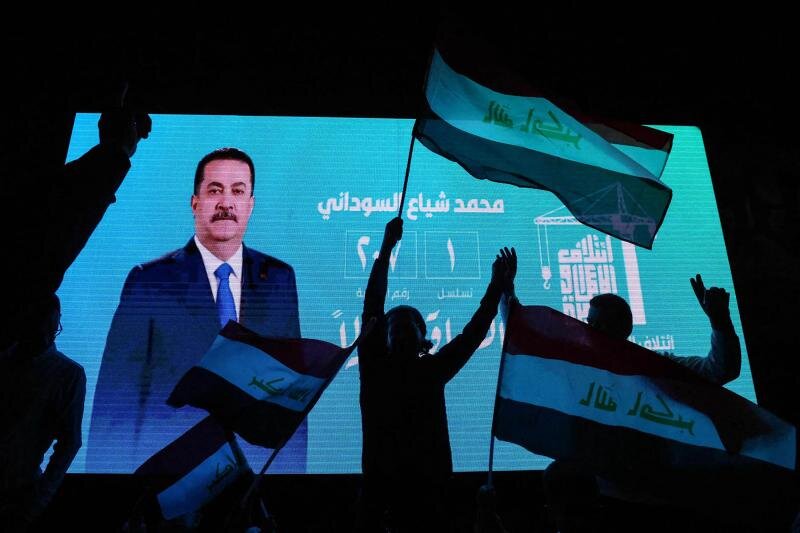
Iraqi Prime Minister Mohammad Shia al-Sudani’s list of reconstruction and development aid has won a “huge victory” in the November 11 parliamentary elections. The Independent High Electoral Commission said on Wednesday that the al-Sudani coalition received 1.3 million votes, about 370,000 more than the next closest candidate.
Iraqis voted for a new parliament on Tuesday. The Independent High Electoral Commission announced that a total of 12,003,143 citizens cast their votes out of 21,404,291 eligible voters.
After the first results were announced, al-Sudani said the 56% turnout was “clear evidence of new successes” that reflected the “recovery of trust in the political system”.
The current parliament, dominated by Shiite parties and blocs, will begin its term on January 9, 2022, and end on January 8, 2026. By law, Iraq must hold parliamentary elections at least 45 days before the end of the parliamentary term.
West Asia analyst Alireza Majidi said al-Sudani’s list received the most votes, but it is not clear whether he will be elected prime minister again.
“The winner of the election does not necessarily decide who becomes prime minister,” Majidi explained. “After the results are announced, the leaders of the various lists negotiate to form the largest faction in parliament. And it is this faction, not necessarily the list that receives the most votes, that decides who becomes prime minister.”
The analyst also explained the structure of Iraq’s parliament, which has 329 seats. Nine seats are reserved for minorities, and the remaining 320 seats are divided into about 20 different lists: 12 Shiites, 4 Kurds, and 4 Sunnis. In this situation, no single list typically holds a majority.
“If a list wins less than 60 seats, it cannot form a government even if it leads in votes. Other groups can come together and form a coalition that outperforms the list,” Majidi added.
Analyst Hossein Kazeroni said on his Telegram channel that the election results are widely seen as a major victory for Iraq’s Shiites and the country’s resistance forces. This outcome occurred despite extensive diplomatic and propaganda efforts by the United States aimed at preventing the election of individuals sympathetic to resistance groups. Resistance groups form a key pillar of Iraq’s security and are the group that heroically spearheaded the fight against Daesh terrorists in the 2010s.
“The results of the Iraqi parliamentary elections show an unexpectedly strong performance by factions aligned with the Axis of Resistance,” Kazeroni wrote. “Al-Sudani still needs to form a coalition with other groups to form a government, but his list of winners basically includes figures and parties that support the resistance.”