
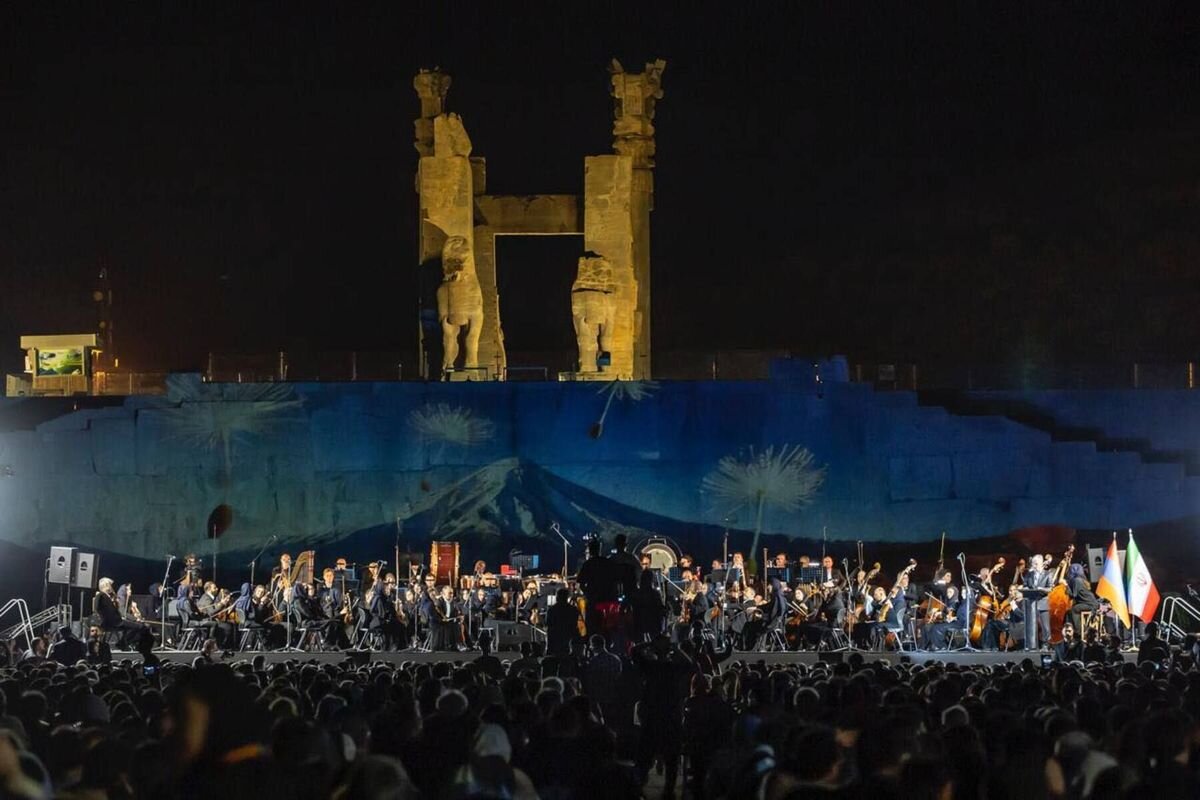
TEHRAN – Iranian heritage officials said Monday that a permanent and safe venue for a cultural event in Persepolis has sparked concerns among cultural heritage supporters and archaeologists after a concert by the Armenian National Philharmonic Orchestra at an ancient site.
The orchestra appeared on UNESCO World Heritage Site near Shiraz on September 6th, following an invitation from the Ministry of Cultural Heritage, Tourism and Handicrafts in celebration of its 100th anniversary. The event drew praise from officials as a symbol of cultural connections, but also criticised by several archaeologists and conservationists who warned of the potential harm to the ruins two,500 years ago.
“The comprehensive plan under preparation will establish permanent, safe and culturally appropriate spaces in Persepolis for artistic and cultural events,” Farhad Azitzi, director of Iran’s National and World Heritage Sites, said in a statement carried by the ISNA news agency.
He said the stage and audience area moved farther from the main terrace and monuments compared to previous events, and the sound system was adjusted to direct vibrations from the ruins.
Concerns about the concert in Persepolis have been raised on the site for the first time since the performance of Iranian vocalist Alilezagorbani on the site in 2024. The event was held under the supervision of heritage experts, but prompted discussions that resurfaced after the arrival of the Armenian orchestra.
Zhanna Andreasyan, Minister of Culture and Education and Sports, Armenian, attended the concert, acknowledged his concerns. “We fully understand the importance of preserving the historic monument, and professional measures can prevent damage,” she said during a meeting with Iran’s Minister of Heritage, Seyed Reza Salehi Amiri.
A few days before the Armenian concert, Salehiamiri said the ministry had established regulations on cultural programs at historic venues. “We have already held concerts in Near Balan and we have held ceremony at the Saadabad Palace complex,” he said. It cites international examples such as performances at the Giza Pyramid and the Acropolis.
Known in Persian as Takuto-e-Jamsid, Persepolis was built under Darius the Great as the ritual capital of the Achemenid Empire in the 6th century BC. It was one of the first Iranian sites to be engraved on UNESCO’s World Heritage List, but faces ongoing threats such as erosion, structural collapse and land subsidence.
Critics of the concert on the site believe sound vibrations, pedestrians and lack of infrastructure could put fragile ruins on even more risk.
morning