
TEHRAN – Iranian Parliament National Security and Foreign Policy Committee Member Salar Velayatmaddar called on the judiciary to pursue sustained and comprehensive legal action against those responsible for crimes committed during the recent 12-day war, warning that justice should not be limited to single or symbolic acts.
In his remarks to reporters on Wednesday, the lawmaker stressed that Iran must continue to assert its legitimate rights despite the apparent politicization of international human rights institutions.
“Even if it becomes clear to the world that international human rights organizations are operating under the influence of certain powers, we must always persist in reclaiming our rights,” he said.
Mr. Velayatmadal strongly accused the United States and the Zionist regime of violating international law and the United Nations Charter during the conflict.
He said both the National Security and Foreign Policy and Judiciary committees in Congress are seriously pursuing this issue to ensure the rights of oppressed nations affected by war are defended and restored.
He also praised the Department of Justice’s International Affairs Division for taking valuable steps in advancing the legal aspects of this case, and stressed that the Judiciary Committee continues to seek accountability through formal channels.
He added: “The fundamental duty of the judiciary is to pursue these crimes through comprehensive and multi-layered legal mechanisms.” “Responses to the crimes of the 12-day war must not be reduced to temporary or one-off measures.”
On June 13, in an unprovoked and brazen act of aggression, Israel targeted Iranian military commanders and nuclear scientists who were on the sanctions list based on an IAEA report. Israel also killed civilians.
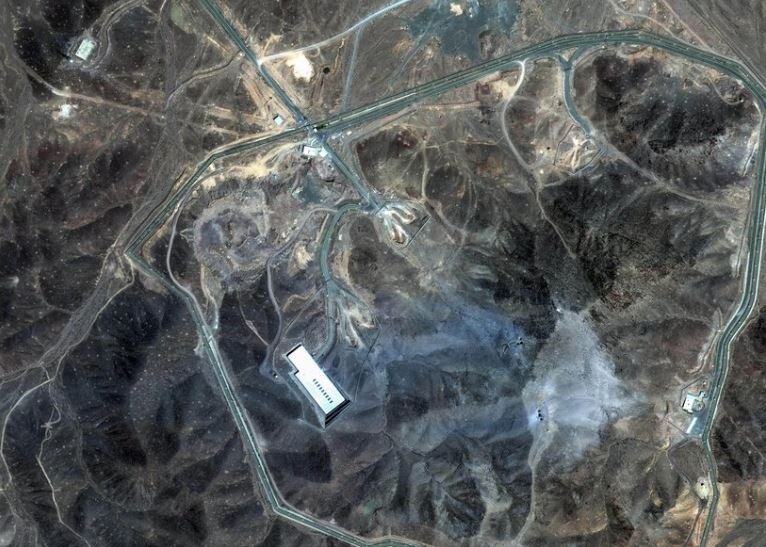
On June 22, U.S. forces bombed nuclear facilities in Natanz, Fordow, and Isfahan in violation of the United Nations Charter, international law, and the Treaty on the Non-Proliferation of Nuclear Weapons (NPT).
Legal experts have repeatedly emphasized that military operations by the United States and the Zionist regime violate fundamental principles of international law, particularly those enshrined in the United Nations Charter and International Humanitarian Law (IHL).
Experts say Israel’s attack on Iran’s nuclear facilities lacks valid legal justification under Article 2, Section 4 of the United Nations Charter, which prohibits the use of force except in cases of self-defense or with the authorization of the United Nations Security Council.
Analysts stress that there is no evidence of an imminent Iranian attack that would justify such operations as an act of self-defense. As such, the Israeli and U.S. attacks appear to constitute a preventive rather than a defensive use of force, an act that is widely considered illegal under international law.
Furthermore, the attack may have violated core principles of international humanitarian law, such as the obligations of distinction and proportionality. Iran’s nuclear facilities are supervised by the IAEA and are designated for peaceful purposes, so they do not constitute legitimate military targets.
Under Additional Protocol I to the Geneva Conventions, facilities housing “dangerous forces” such as nuclear power plants receive special protection because of the potential for devastating harm to civilians. Although Israel is not a party to the protocol and the United States has signed but not ratified it, both countries remain bound by customary international law that prohibits indiscriminate or disproportionate attacks.