
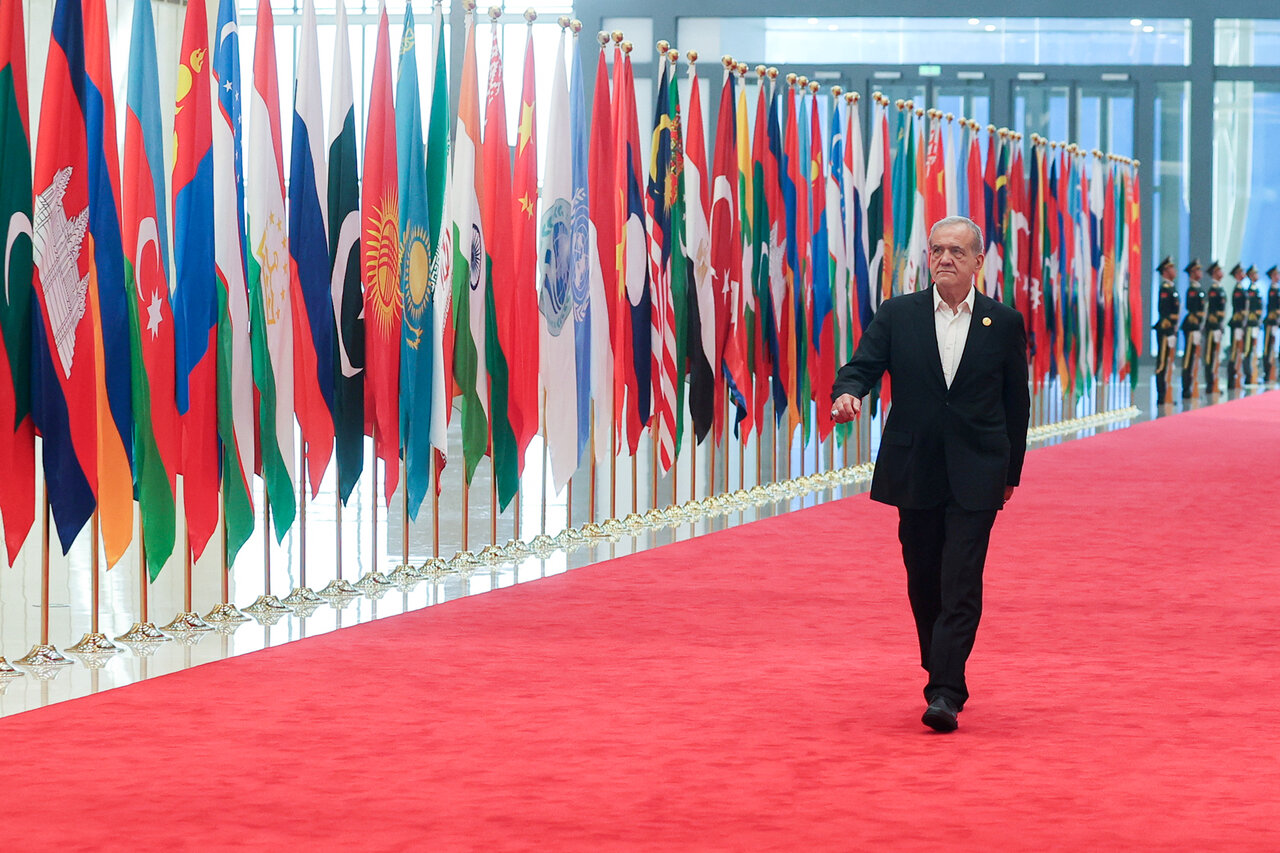
President Masoud Pezeshkian’s official visit to China is one of the most important international emergences of the presidency to date. Since taking office, Pezeshkian has consistently emphasized Iran’s resolve to strengthen multilateral diplomacy and protect its sovereignty from foreign pressure. Contrary to the growing Western pressure, the activation of so-called “snapback” mechanisms by three European countries, and the activation of recent military attacks by the US and Israel on Iran, travel to China has had symbolic and strategic weight.
The visit coincided with two major events hosted by Beijing and Tianjin, the 25th Summit of the Shanghai Cooperation Organization (SCO) and the expanded Shanghai Plus Conference. These platforms provided Tehran with the opportunity to engage with world leaders, clarify Iran’s diplomatic vision and demonstrate the unilateral Western rejection. For Pezeschkian, the journey was not merely a call for diplomatic courtesy, but a statement of intention. Iran is a more active participant in global governance, seeking to deepen relationships with strategic partners and project itself as a responsible actor committed to peace and justice.
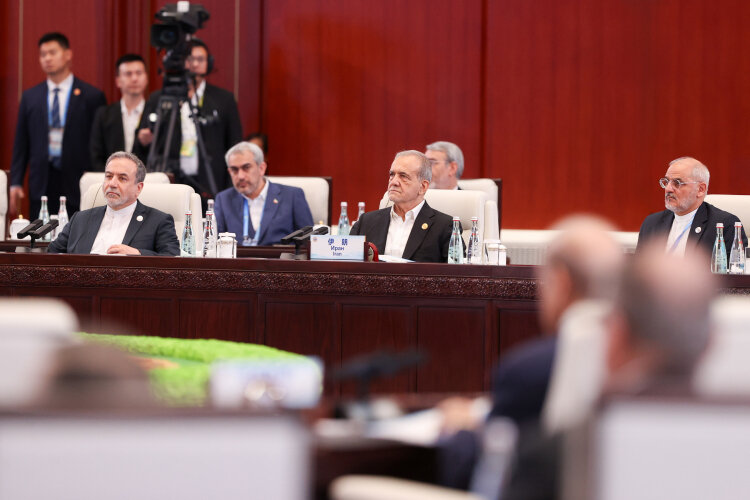
Visit Context
The Shanghai Cooperation Agency has emerged as one of Eurasia’s most important multilateral institutions, bringing together important authority from China, Russia, India, Iran and others. For Tehran, full membership in SCO represents an opportunity to diversify foreign policy partnerships and highlight its role as a regional stabilizer.
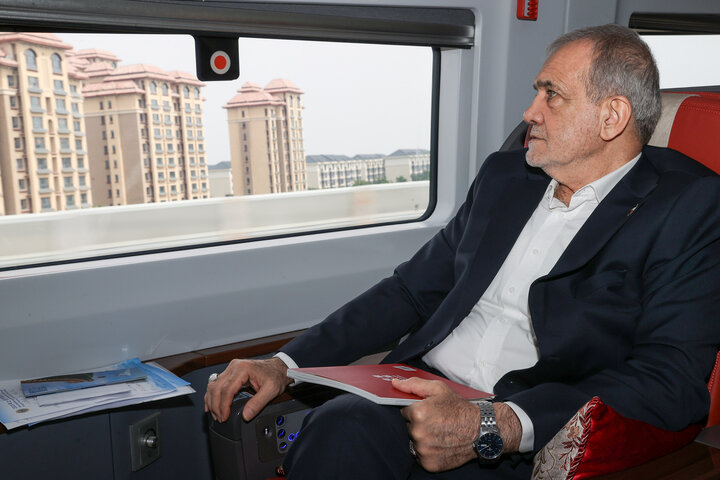
Pezeschkian’s arrival in Tianjin is marked by full provincial protocols and symbolizes the political significance of both sides along with the visit. The president, accompanied by Iranian officials, reflected Tehran’s determination to ensure that travel would have concrete diplomatic and economic consequences. From Tianjin he traveled to Beijing on a Chinese highway train. This is a symbolic gesture highlighting China’s technological advancement and interest in Iran’s close connectivity and infrastructure cooperation.
Strengthen Iran’s multilateral diplomacy
One of the central themes of Pezeshkian’s visit to China was the promotion of multilateralism as an antidote to Western unilateralism. In his address to the SCO and Shanghai Plus leaders, he highlighted the need for justice in global governance and the equal treatment of all states.
Through meetings with their counterparts, Pezeshkian positioned Iran as a nation seeking a cooperative solution rather than a conflict. He emphasized that Tehran does not seek to escalate the conflict, but rather aims to expand dialogue and partnerships that can provide mutual benefits. In doing so, he highlighted Iran’s role as a constructive regional actor and rejected accusations that he wanted destabilization.
In particular, the SCO framework provided Iran with a platform to highlight its opposition to double standards in global politics. Pezeschkian sought a mechanism to ensure equality of sovereignty and resist the imposition of unilateral sanctions. For Tehran, SCO is not just a economic and security zone, but a political field where alternative governance models can be clarified.
By strengthening its presence in such institutions, Iran shows that despite Western attempts it is not isolated.

Nuclear Issues, Snapback Mechanisms, and Diplomatic Advocacy
The main theme of the president’s visit was the recent revitalization of Iran’s nuclear program and the “snapback” mechanisms by the UK, France and Germany. At his bilateral and multilateral conferences, Pezeschkian consistently rejected the legitimacy of this mechanism, emphasizing that there is no legal basis under UN Security Council resolution 2231.
The repeated stance of Iran during the trip is that the snapback attempts are politically destructive and legally unfounded. By retreating unilaterally in 2018, Pezeschkian reminded the United States that first violated the Joint Comprehensive Plan of Action (JCPOA), and that Europe did not respect that commitment. Therefore, the current European attempts to revive sanctions are not only unfair, but also undermine the very foundations of international law.
China and Russia, permanent members of the UN Security Council, have already reflected the debate in Tehran. Their joint diplomatic statements with Iran include a recent letter rejecting the European snapback initiative by foreign ministers of Iran, Russia and China by UN Prime Minister Antonio Guterres. This consistency showed that Iran was not alone in its opposite, but part of a broader coalition of states that resisted Western manipulation of international organizations.
Importantly, Pezeshkian surrounds Iran’s nuclear policy peacefully and firmly within the scope of a non-proliferation treaty. By clarifying Iran’s position at the international forum, he sought to reduce misunderstandings and prevent escalations. He repeatedly emphasized Iran’s preference for diplomacy and dialogue against threats and coercion, reaffirming Tehran’s long-standing position that security cannot be achieved through pressure and sanctions.

Condemnation of our and Israeli attacks on Iran
Another aspect of the visit was Pezeshkian’s firm condemnation of recent US and Israeli attacks on Iran’s territory. By raising this issue in China, he ensured that the international community was reminded of Iran’s sovereignty and continued violation of international law.
In a statement issued during the SCO leadership summit held in China on Monday, member states forced the military attacks carried out by Israel and the United States against Islamic Republic in June 2025.
The SCO leader said such positive actions against civilian facilities, including nuclear energy infrastructure, which have resulted in civilian casualties, constitute a clear violation of international law, the UN Charter and Iran’s sovereignty.
They emphasized that the physical safety of nuclear facilities and the protection of nuclear infrastructure must be guaranteed forever.
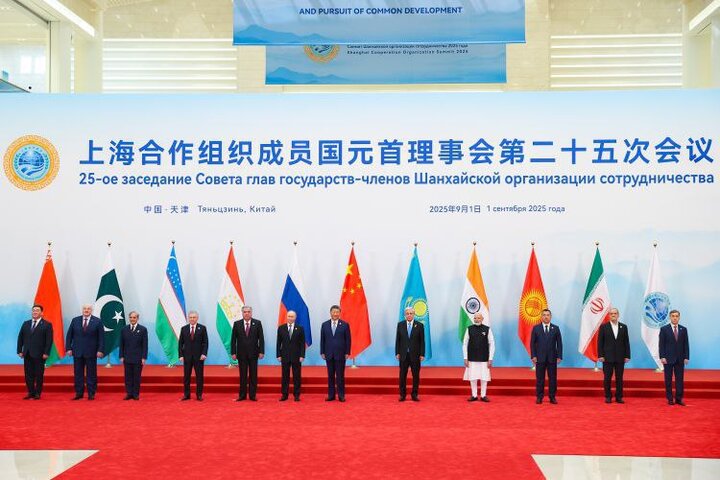
Strategic Significance – Countering Western One-Stateism
Beyond certain issues such as nuclear files and regional conflicts, the broader strategic message of Pezeschkian’s travel to China was clear. Iran is a defender of multipolarity and aims to be an enemy of Western unilateralism’s voice.
The SCO and other multilateral agencies provide platforms for creating new mechanisms of cooperation that are not vulnerable to Western influences. In Iran, participation in these organizations can help diversify economic ties, secure new markets, and reduce the risk of being affected by Western hostility. Pezeshkian emphasized the need for fair trade, comprehensive development and security arrangements that respect the sovereignty of all states.
Therefore, the visit had double importance. It deepened bilateral relations with China and other SCO members, and at the same time strengthened Iran’s broader diplomatic identity as a champion of justice, sovereignty and multilateral cooperation.
Conclusion
President Masoud Pezeshkian’s visit to China is more than a daily diplomatic involvement. It represented Iran’s resolve to strengthen its role in international organizations, resist Western unilateralism, and project itself as a responsible, peace-oriented actor in world affairs.
By using the SCO and Shanghai Plus platform, Pezeshkian has raised Iran’s position on important issues: rejection of snapback mechanisms, defense of Iran’s sovereignty over the United States and Israel’s aggression, and the defense of multi-group international order. His involvement with China and other world leaders highlighted Iran’s preparation to work with, his claims for dialogue against conflict, and his commitment to justice in global governance.
By Mohaddeseh Pakravan