
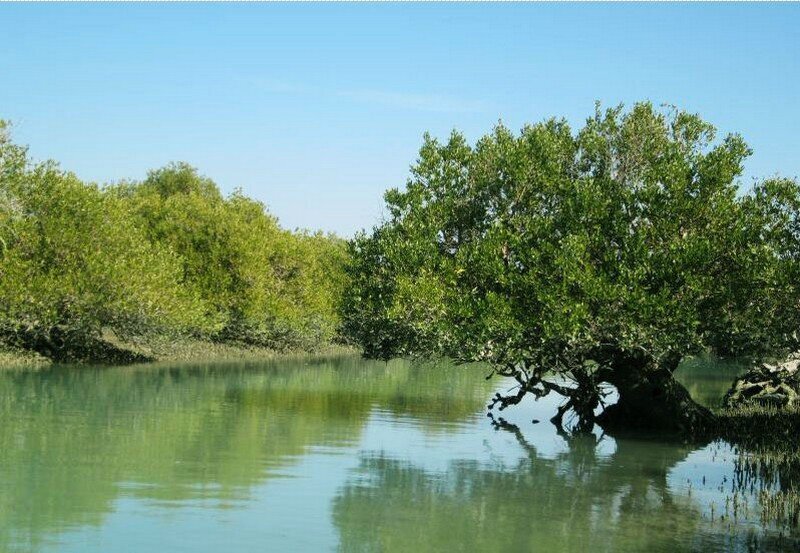
Tehran – An innovative study conducted by Iranian researchers has confirmed the actual use of drones as a cost-effective tool for monitoring and managing mangrove forests.
Mangrove forests are rich ecosystems that support planets and humanity in unique ways by providing conditions for fish growth, carbon storage and fighting floods. They can store about 6-8 tonnes of carbon per hectare per year.
The results of the study conducted by Ali Karimi, Behrooz Abtahi and Keivan Kabiri were published in the International Monthly Journal “Forest” on July 20th.
Research shows that drones can provide reliable estimates of blue carbon (BC) through non-invasive means (by employing application to mangrove monitoring and ecosystem services assessments, excluding the need to harvest, cut, or physically interfere with individual trees).
Accurate, scalable and cost-effective methods for estimating carbon stocks in these environments are essential for conservation planning.
This study was conducted in Melgon’s Mangrove Forest along the south of Mondo Conservation Area in the southwest of Mondo Conservation Area along the north coast of the Persian Gulf.
This study included 30 field measured trees and 30 drone measured trees, which are useful, but represent small sample sizes and should be interpreted accordingly. Nevertheless, drone-based estimates are in close agreement with field-based ones at the individual level.
The strong correlation between tree height and crown diameter supports the use of drones for mangrove monitoring. Although the height of drone-derived trees was significantly different from field measurements, final estimates of AGB and BC based on both height sources showed no significant differences.
These results highlight the survival rates of drone data for accurate carbon estimation in similar ecological contexts.
Drones offer several benefits, including cost and time efficiency, and provide access to other ways to passable environments to enhance the value of coastal management programs, such as muddy tide zones.
Iran’s mangrove forests consist primarily of Avisenna Marina, known primarily as Hara, and are named after the great Iranian scientist Avisenna, or Abu Alisina, of the 11th century.
Mangrove trees, as a wonder of the marine environment, offer many benefits to a variety of species, including birds, fish, crustaceans and even terrestrial animals, and stabilize the soil.
Mangrove forests contribute to the creation of a complete ecosystem. On the water, mangrove trees provide bird habitat, while amphibians and small fish live in the roots. Mangroves play an important role in preserving beach soil and protecting it from erosion. Mangrove trees play an important role in maintaining the ecological balance of the coast.
Mangrove ecosystems in the northern Persian Gulf face a variety of environmental pressures, including increased salinity levels, human-induced threats such as construction of non-standard roads and bridges, and climate change such as rising temperatures and ocean levels.
mt/mg