
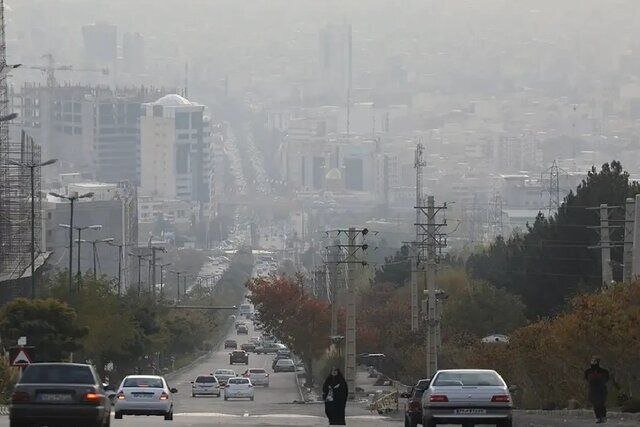
TEHRAN – As the frequency and intensity of sand and sandstorms (SDS) have increased in various states of the country, Iranian researchers are using indigenous technologies to mitigate and control the effects of SDS.
Below are several approaches being adopted to address SDSS which have a major impact on public health, the ISNA reports.
Development of non-oil and environmentally friendly mulch: These mulch are an alternative to traditional oil-based mulch, resulting in serious environmental damage. These types of mulch have been developed from compost, gingival and starch products provided by the Institute of Agriculture Biotechnology, the University of Tehran, the Organization of Forests and Rangeland, and researchers at Fuzestan Science and Technology Park.
Nano and Polymer Multi: Developed by Sharif University of Technology and the Center for Materials and Energy Research, products use nanoparticles to produce coatings with high adhesion and long-term durability. Nanomultique is environmentally friendly and has been tested in parts of the country’s central and southwest.
Indigenous Early Warning System: Iranian weather organizations have launched a satellite dust surveillance system that uses remote sensing data to predict dust storm travel paths. To this end, the organization has developed collaborations with the United Nations Environment Programme (UNEP) and the World Weather Organization (WMO) to upgrade these systems.
Air Pollution Warning App: Several native apps have been developed for viewing data from air quality monitoring stations, such as “Iranian Meteorology” software, “Zarin Meteorology” software, or the Ministry of Environment’s web-based systems.
Restoration of water resources and wetlands employing new technologies: Restoring the wetlands of Al Azim, Baktegan and Jazzmoria in time, implementing smart water use projects with drainage control and wastewater treatment, recycle urban water for re-entering urban water to re-enter the wetland floors and applied as a solution of fine dust.
Green Belt Plan: This strategy focuses on planting low-water and drought-resistant plants such as ash trees and bitter olives, establishing green spaces around Tehran and industrial cities to control the risk of SDS.
Urban Air Purifiers: Iranian knowledge-based companies have developed air filters for public places, schools and even open spaces, but are being tested in limited locations.
Despite international sanctions and restrictions, Iran has been able to take measures in areas such as satellite surveillance, biomultiple and scientific desertification. However, financial support, extensive implementation and regional cooperation with neighboring countries is needed to ensure that they can pursue the path.
“Community cooperatives that share expertise will help ease SDS.”
Sand and dust storms occur frequently in this region, affecting almost every region’s countries. Independent studies by these countries show that while sources of SDS are scattered throughout the region, there are potential sources of dust in countries with transnational meaning, Mehr’s news agency cited Sediqeh Torabi, an official at the Ministry of the Environment (DOE).
Exchange of information and fostering regional cooperation will contribute to reducing the negative impacts of sand and sandstorms (SDSS), Torabi added.
She made comments following the initial regional dialogue on strengthening interregional cooperatives on SDSS held on February 18th and 19th in Doha, Qatar.
At the 38th meeting of the Regional Organizations (ROPME) Committee (ROPME) Committee of the Marine Environmental Protection (ROPME) Executive Committee (Excome 38), Iran proposed a proposal to incorporate the fight against sand and sandstorms (SDSS) into the organization’s strategic plan.
mt/mg