
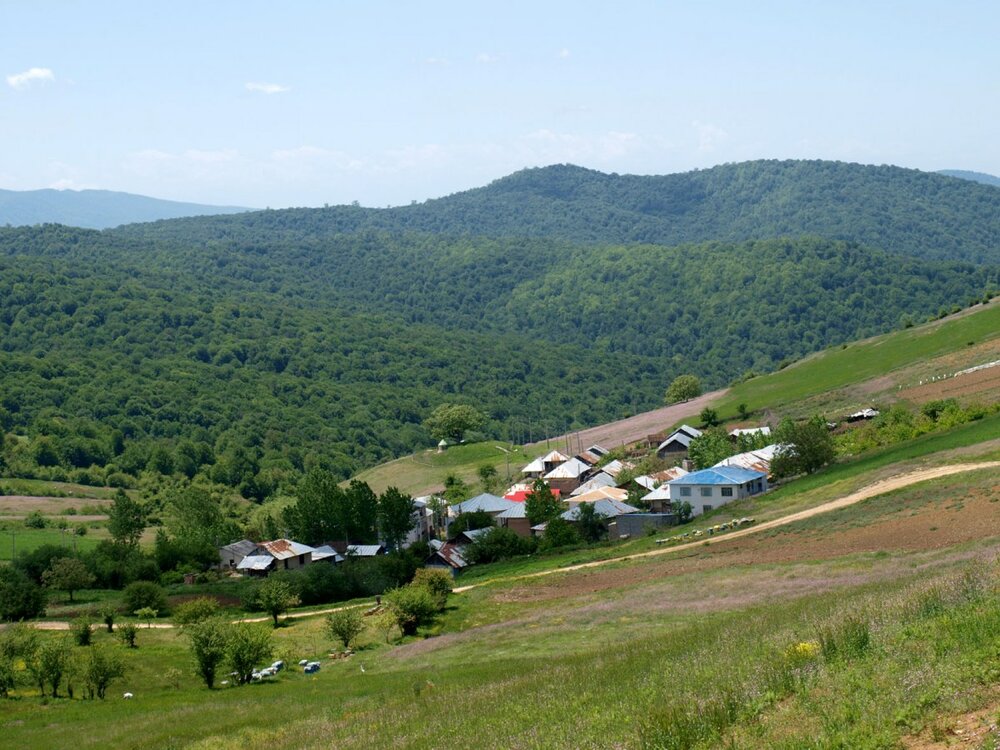
Today, the United Nations tourism agency named three Iranian villages – Shafi Abad in Kerman, Qandrus in Mazandaran and Sohaili on Qeshm Island – among the world’s best tourist villages for 2025.
A new chapter has opened in our country’s cultural diplomacy.
A chapter in which rural life itself becomes a message to the world.
In an era of turbulent civilization and constant acceleration of globalization,
The world is once again searching for meaning, balance, and authenticity.
It is no coincidence that the world’s eyes are once again on the village.
It is a living treasure trove of wisdom, identity, and the art of harmonious coexistence between humans and nature.
The registration of these three Iranian villages within a year makes Iran among a select group of countries to receive such recognition.
This milestone is more than a cultural achievement.
It is a testament to the creativity of the local community.
The vitality of the culture rooted in the land,
and towards a vision of development based on heritage, identity and ecology.
Each of these villages tells a living story of resilience and innovation.
In Candors, the integration of traditional knowledge and modern creativity is reflected in a herbal museum and a thriving indigenous medical culture, representing a knowledge-based rural economy.
In Shafi Abad, women-led initiatives in handicrafts, qanat restoration, and ecotourism demonstrate the deep connection between cultural heritage and social empowerment.
And in Sohaili, Qeshm Island fishermen have turned their livelihood into a marine conservation movement, a symbol of human responsibility to nature.
More than 50 indicators were evaluated during the UN Tourism selection process.
It spans cultural resources, natural resources, social and economic sustainability, innovation, and environmental protection.
Iran’s prominence among these criteria reaffirms both its ancient heritage and its modern ability to transform culture into a dynamic engine of development.
Looking ahead, the Ministry of Cultural Heritage, Tourism and Handicrafts is developing a national roadmap for the global registration of Iranian villages.
Focus on improving infrastructure, on-site training, and creating multilingual content —
To increase Iran’s presence and visibility in the world tourism network.
With more than 60,000 villages, Iran is more than just a geographical space.
It is a living archive of human civilization —
This land is steeped in history, and in every field, house and river is a memory of the balance between humanity and the planet.
The global recognition of these three villages is not only a national success;
But it is a cultural statement, a message from Iran to the world.
True development is born from culture, not from external imposition.
Sustainability begins with memory.
And the future of humanity depends on the wisdom of its roots.
If we believe in this path, Iran’s name will not only be engraved on the lists of UNESCO and the United Nations Tourism Organization;
But in the cultural memory of humanity itself—
As a nation that continues to generate meaning, harmony, and hope from its living heritage.
Seyed Reza Salehi Amiri, Minister of Cultural Heritage, Tourism and Handicrafts of the Islamic Republic of Iran