
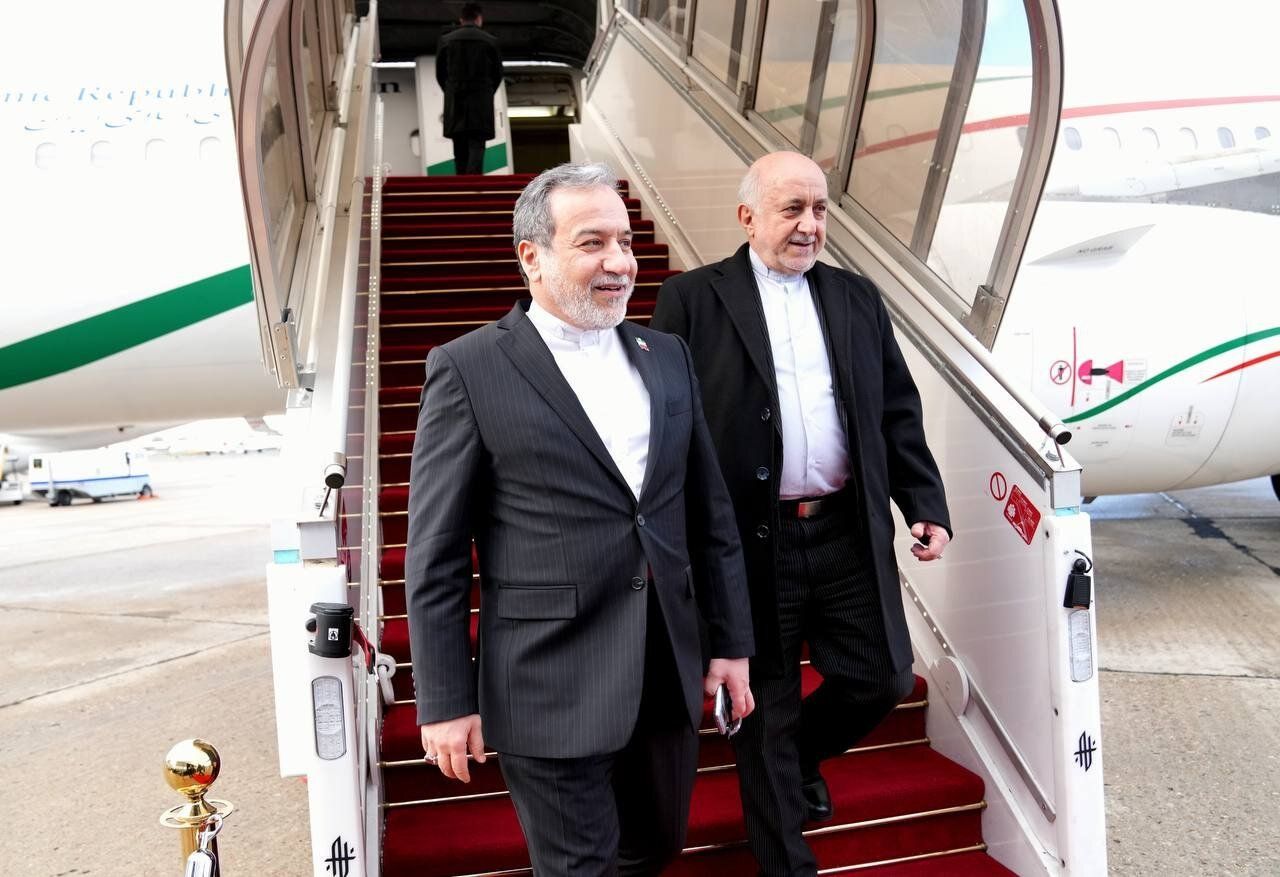
TEHRAN – Iranian Foreign Minister Abbas Araghchi arrived in Paris on Wednesday to attempt diplomacy amid a dangerously escalating crisis in which the country and its wider region are under unrelenting pressure imposed by the West, and after nearly two years of failed diplomatic efforts, he is increasingly convinced that a tougher response is needed against Europeans, Americans and their proxy Israel across West Asia.
Aragushi’s visit, which itself comes after a stop in the Netherlands to address the 30th Conference of the Parties to the Chemical Weapons Convention at the OPCW headquarters in The Hague, suggests that Iran remains keen to use diplomacy both in its conflicts with the West and the growing instability in West Asia. The current dangerous situation is primarily the result of Israel’s unrelenting aggression, made possible by the political, diplomatic and military support of Western countries, especially the United States.
The visit has already provoked alarmed reactions from conservatives within Iran. In Congress on Wednesday, a group of lawmakers called on Arraguchi to keep in mind the “criminal” nature of the United States and its European allies.
Since the June war, opposition to engagement with the West has sharpened dramatically. In that war, a 12-day U.S. and Israeli operation attacked Iranian territory, killing about 1,100 Iranians and damaging nuclear, civilian, and military infrastructure just as Tehran was preparing to attend the sixth round of nuclear negotiations with Washington.
After the war, the E3 (France, Germany, and Britain) took charge of a new pressure campaign. In late August, they activated a mechanism to reinstate pre-JCPOA UN sanctions against Iran. This month, they helped craft a resolution at the International Atomic Energy Agency (IAEA) calling on Iran to allow UN inspectors access to its dilapidated nuclear facilities, but made no mention of illegal attacks by the US and Israel.
These European moves have sharply eroded Iranian public confidence, increasingly portraying Britain, Germany, and France as Washington’s pawns, no longer able to pursue an independent foreign policy course.
Dr. Abdulreza Faraj Rad, professor of geopolitics and former Iranian ambassador to Norway and Hungary, said it is commendable that Iran continues to pursue diplomacy despite everything that has happened.
“The Iranian government has not shied away from diplomacy. This is extremely important because it is a difficult task for anyone to keep diplomatic channels open in the face of repeated demonstrations of ill will by the West,” he explained. “Iran is acting responsibly and proactively.”
He added that Iran’s ultimate goal is to restore stability in the region, and to that end, it intends to maintain a strong stance while actively engaging with legitimate political parties it deems effective. “I don’t think this visit will be a game-changer, but it certainly could have a positive outcome.”
As of Wednesday evening, there were no official accounts detailing the talks between the Iranian minister and the French counterpart who extended the invitation. However, Tehran Times understands that Iran prioritized pressing regional issues, most importantly focusing on Israeli attacks across Gaza, Lebanon and Syria, while addressing Iran’s nuclear issue to a lesser extent.
Israel launched an unprecedented military operation against Palestinians in Gaza after resistance groups invaded the occupied territory in October 2023, a historic humiliation for the regime, and prisoners were taken to Gaza.
Israeli military operations in the enclave have been classified by rights and legal authorities as genocide, characterized by the mass killing of Palestinian men, women, and children, starvation caused by complete siege, and total destruction of civilian infrastructure.
Under a ceasefire that took effect in October, Hamas resistance has returned the bodies of Israeli prisoners of war or those killed by Israeli shelling. However, Israel has repeatedly violated the ceasefire since its inception, continues to routinely kill Palestinians, and maintains a near-famine siege.
Another ceasefire agreement that Israel is violating is the one signed with Lebanon’s Hezbollah in November 2024. Continued violations have rattled resistance groups, who have so far refrained from retaliation. However, a recent attack in which Israeli warplanes struck southern Beirut and assassinated a senior Hezbollah official has raised concerns that Hezbollah may be forced to respond. Israel wants Hezbollah to disarm. Its ultimate goal may be the establishment of a “Greater Israel,” a vision of a Jewish state encompassing territory from several Arab countries, including all of Lebanon. Israeli Prime Minister Benjamin Netanyahu said in an August interview that he “absolutely” agrees with this infamous vision.
“When it comes to Lebanon and Iran, the Lebanese government and France seem to share somewhat similar views,” Dr. Faraj-Rad explained. “Tehran and the Lebanese government consider the issue of Hezbollah and its disarmament to be an internal issue to be resolved by the group and the Lebanese state, not by Israel and the United States. They also warn that continued Israeli attacks could spark a larger regional conflagration and internal conflict within Lebanon. Meanwhile, France condemns the Israeli attacks and calls for an end to them.”
In the past two years, Israel has attacked Gaza, the West Bank, Lebanon, Syria, Iraq, Iran, Tunisia, Yemen and Qatar. It has also attacked ships attempting to deliver food and medical aid to Gaza on the high seas.