
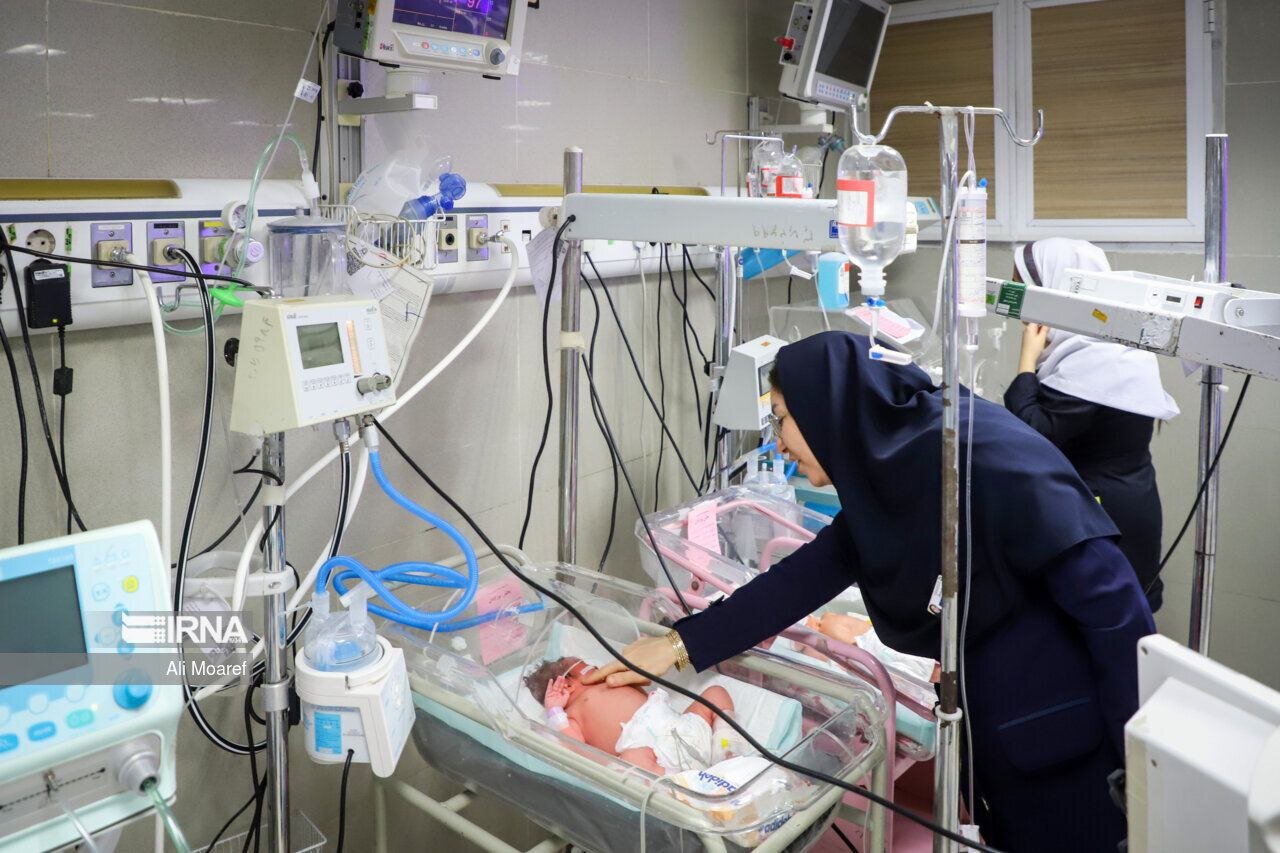
TEHRAN – Thanks to the development of Iran’s Neonatal Intensive Care Unit (NICU) and the training of more than 400 experts in the field in the country, the country has succeeded in reducing the infant mortality rate from 30 to 7 per 1,000 live births over the past 40 years, experts from the Iranian Newborn Health Council said.
Before the outbreak of COVID-19, Iran had the lowest infant mortality rate in the region. IRNA quoted Hadi Samaei as saying that after the pandemic, some Persian Gulf countries were able to reduce infant mortality rates to five deaths per 1,000 live births.
Upgrading critical equipment such as ventilators, advanced monitoring systems, smart body temperature monitoring systems, and improving access to newborn health products are on the health ministry’s agenda, the official added.
The country has also been successful in preventing prevalent infectious diseases among infants and children over the past few decades. Recently, the Ministry of Health launched a vaccination program including rotavirus, pneumococcal, rabies and pentavalent vaccines to protect children against life-threatening diseases.
In October 2023, the country’s most advanced children’s hospital was officially opened in Tehran by the late President Ebrahim Raisi.
The hospital, named Hakim, consists of 19 specialty clinics, emergency medical services, operating rooms, medical imaging, cardiac testing, a behavioral intensive care unit (BICU), and a neonatal intensive care unit, with a total of 266 beds.
The building is designed according to the physical and mental needs of children. Green spaces and natural light, accessibility and welfare services for children and their companions are among the most important design features of the hospital.
It is also equipped with a biological water treatment plant, making it the first eco-friendly hospital in the country.
MT/MG