
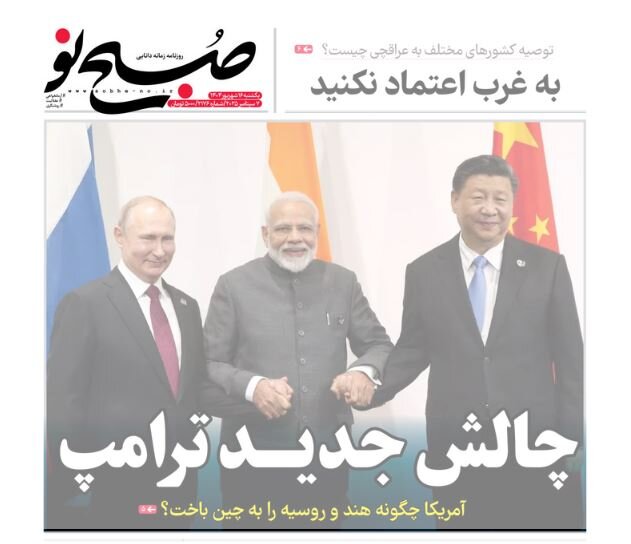
In the Tehran-analysis, Sobh-e-No highlighted the pivotal role of Iranian diplomatic devices.
He is engaged in negotiations with not only members of the Security Council, but also with European institutions that make Iran’s position clear and decisive. Araghchi recently made a strategic call with three non-permanent members of the Security Council, Greece, Slovenia and Sierra Leone. In these conversations, he described the actions of three European countries as “illegal, unjust and irresponsible,” emphasizing that while Iran is committed to diplomacy, it does not compromise on defending legitimate rights. These calls reflect Iran’s efforts to reduce international support for European measures and to gain support from countries that can adopt a balanced stance within the Security Council. More importantly, foreign ministers from these three countries responded by highlighting the importance of diplomatic solutions and the need to prevent further escalation. Their responses indicate a rift in European positions and a lack of unity within the European Union.
Arman-e-Melli: Why isn’t China implementing a 25-year agreement with Iran?
In the article, Arman-e-Melli investigated the reasons behind the unemployment of the 25-year agreement between China and Iran. According to the paper, there are several contributing factors. First, China maintains close ties between Arab countries and Israel, and has invested heavily in Israel. Furthermore, China is still away from the US market, so it will not compromise its national interests to support Iran. The agreement between Iran and China has not been implemented and may not be realized in the future. In particular, snapback mechanisms have been raised, and the trajectory of the situation remains uncertain. We need to wait and observe how the snapback mechanism unfolds. The rechallenge of sanctions will make dynamics more complicated and we hope that for the rest of the day before the mechanisms are activated, Iran will make flexible decisions to alleviate further harm.
Jam-e-Jam: Maximum Pressure – From Spies to Security Council Taunts
In the commentary, Jam-e-Jam worked to approve the agency’s espionage activities, saying: The recent actions of the institution and the European troika are part of the largest Western pressure campaign against Iran. According to the Associated Press, the agency’s report on Iran’s rich uranium reserves, which reached 60%, brought Iran closer to “weapons level,” clarifying credible evidence, and was dismissed as politically motivated by Tehran. At this critical time, the Islamic Republic of Iran has once again demonstrated that it would not bring to illegal Western pressures or be freed through targeted negotiations and extensive consultations. The agency’s spying revelation was confirmed by its own admission, and thus highlights the oppressive nature of the current global order and calls for greater vigilance from Iranian officials. The discussions between Vienna and Doha, along with consultations with members of the Security Council, demonstrate Tehran’s determined commitment to maintaining its independence and scientific progress in the face of Western conspiracies. Currently, it is the West and the International Atomic Energy Agency (IAEA) that must be held responsible for violations of commitments, spies and hostile actions.
Javan: America’s strategy is to maintain superpower status
Jawan wrote Trump’s name for the US Department of Defense War Bureau, commenting on his writing: After World War II, the United States remained far away by war zones, but by supporting Russia against the German forces through Iran’s “victory bridge” and helping China defeat Japan, it emerged as a global superpower, supporting Japan’s surrender following the atomic bomb. Today, this name change under the Trump administration is not merely a symbolic one, but a strategic move aimed at instigating new conflicts around the world, undermining new powers and maintaining US domination. The US is attacking Iran, preparing for a conflict with Venezuela, engaged in a proxy war with Russia over Ukraine, and planning a conflict with China, at least through Taiwan’s support. The war and the weakening of rivals represent America’s final strategy to maintain its superpower status. Defense analysts and think tanks overwhelmingly agree that a name change alone will not improve America’s operational capabilities or strategic balance.