
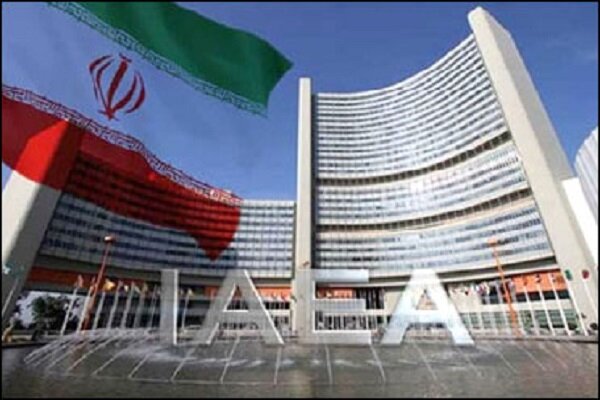
Description of the manual for the report to the International Atomic Energy Agency (IAEA) entitled “NPT Safeguards Agreement” with the NPT Safeguards Agreement with the Islamic Republic of Iran (September 3, 2025) and “NPT Safeguards Agreement” and “Verification and Monitoring of the Islamic Republic of Iran.” It has been published.
The text of the atomic energy organization in the Iranian memo is as follows:
The permanent mission to the United Nations Office of the Islamic Republic of Iran and other international organizations in Vienna would like to share comments and observations with the committee of the IAEA Committee. Unfortunately, the report is out of legal and professional context based on the continuation of past non-constructive approaches that have led to catastrophic outcomes, based on distorted narratives. Below are the main points regarding the above report:
a) Military attacks by the United States and Israeli regimes over protected nuclear facilities in Iran
Prohibiting attacks and threats of attacks on nuclear facilities in international law:
The attack is a significant violation of the principles of the UN Charter, provisions of international law, and international humanitarian law in June 2025, prohibiting the use of force. Many documents, such as the UNSC/IAEA GC resolutions and the NPT Review Conference, expressly prohibit attacks or threats on nuclear facilities. These attacks were condemned in the strongest terms by a large number of members of the international community. They not only put regional and international safety and security at risk, but also undermine the foundations of international cooperation. Unfortunately, the agency had no legal obligation to protect peace protection facilities, including those listed in Article 3 of the IAEA Act. Despite Iran’s advance warning, the agency’s negligence and inaction to take necessary measures have been harmed to protect Iran’s nuclear facilities, resulting in greater human losses. Furthermore, the agency has not fulfilled its obligation to submit a report to the UN Security Council under Article 3 of the IAEA Act.
b) Cooperation with the organization:
The law passed by the Islamic Council in June 2025 is a legitimate and reasonable response to acts of attack regarding the suspension of cooperation with the institution. Protecting its integrity, and the safety and interests of its people, is the right of sovereignty of any country, especially when the security of the highest national interest is at risk as a result of the hostile conduct of that enemy. The law also foresees how Iran’s protection commitments will be implemented when conditions are met.
Iran has so far negotiated three times with Tehran and Vienna institutions and adopted practical measures to fulfill its obligations to protect its obligations under exceptional circumstances created as a result of attacks in accordance with the laws of the new country.
c) Nuclear material:
All Iranian nuclear material is under constant supervision of the agency. However, lulls regarding agency verification and surveillance activities have been created as a result of illegal attacks. This situation can be addressed once peace is restored and a fair and mutually accepted framework is agreed.
d) Remaining protection issues:
All Iranian nuclear material and activities have been fully declared to the agency and undergo a highly robust verification system. Furthermore, Iran had no undeclared nuclear material or activity. Current complications of safety, security and protection require mutual coping with the consequences of unfair attacks.
Past unresolved issues were resolved and reflected in a DG report in December 2015, entitled “Final Assessment of Past and Present Spotlight Issues Regarding Iran’s Nuclear Program” (GOV/2015/68). This issue can be easily addressed, rather than politically motivated observation, when only the technical aspects are considered. Iran has repeatedly been completely misleading the use and reliance on false and manufactured data provided by its solid enemy, the Israeli regime, not by the NPT members and by the Israeli regime, which does not respect international principles and the protection regime of institutions. The claims on maintaining these manufactured issues in various reports from the DG are clear indications of politicization that undermine the reliability and technical equity of the government. Continuing this approach would put Iran and the institutional cooperation at risk.
e) Issues related to two agency inspectors:
The misconduct of two inspectors deleting highly confidential documents from the facility and transferring them from Iran was later reflected in the agency’s letter MV-IRA-31.1/SGVI/2025-0271, dated May 27, 2025 constitutes a violation of Iran’s security protocols. It is not necessary to mention that the right to object to the designation of an institution’s inspector is expressly recognized in Article 9(a)(ii) (infcilc/214).
f) New safeguard arrangements under exceptional conditions
INFCIRC/214 does not provide provisions regarding the implementation of safeguards under conditions of war. However, in good faith, Iran took part in negotiations with the agency to find a way to continue its protection commitment under the current circumstances. Without Iran’s consent, it is not an expert that the DG of his report (14 and 15 reports/15 of 2025/53) reflects some of the texts on this issue that have yet to be finalized and unconsensual.
Summary and conclusion:
The Islamic Republic of Iran is fully committed to the NPT and CSA and has always given full cooperation to the institutions. In parallel, Iran expects the agency to succumb to political pressure or be fair and technical.
The unfair military attacks imposed on Iran have dramatically changed the scene and affected many areas, including how and procedures the protection agreements are implemented. To address this issue, Iran and the agency entered into negotiations.
There are no limits on the level of enrichment, but the DG has expressed concern about Iran’s protected level of enrichment activity without legal basis. But surprisingly, the DG resists expressing regret over the clear attacks committed against protected Iranian nuclear facilities.
As has been said, the continuation of the agency’s verification activities under the current state of war requires new safeguard arrangements to agree. Negotiations on this issue are underway. The agency is expected to continue negotiations with Iran in a constructive way and avoid anything that could endanger the trend by selectively reflecting some of the content of the text that has not yet been finalized.
To finalize these negotiations, Iran’s legitimate concerns should address appropriately in particular the provisions of recent laws passed by the Islamic Council (Parliament).
MNA