
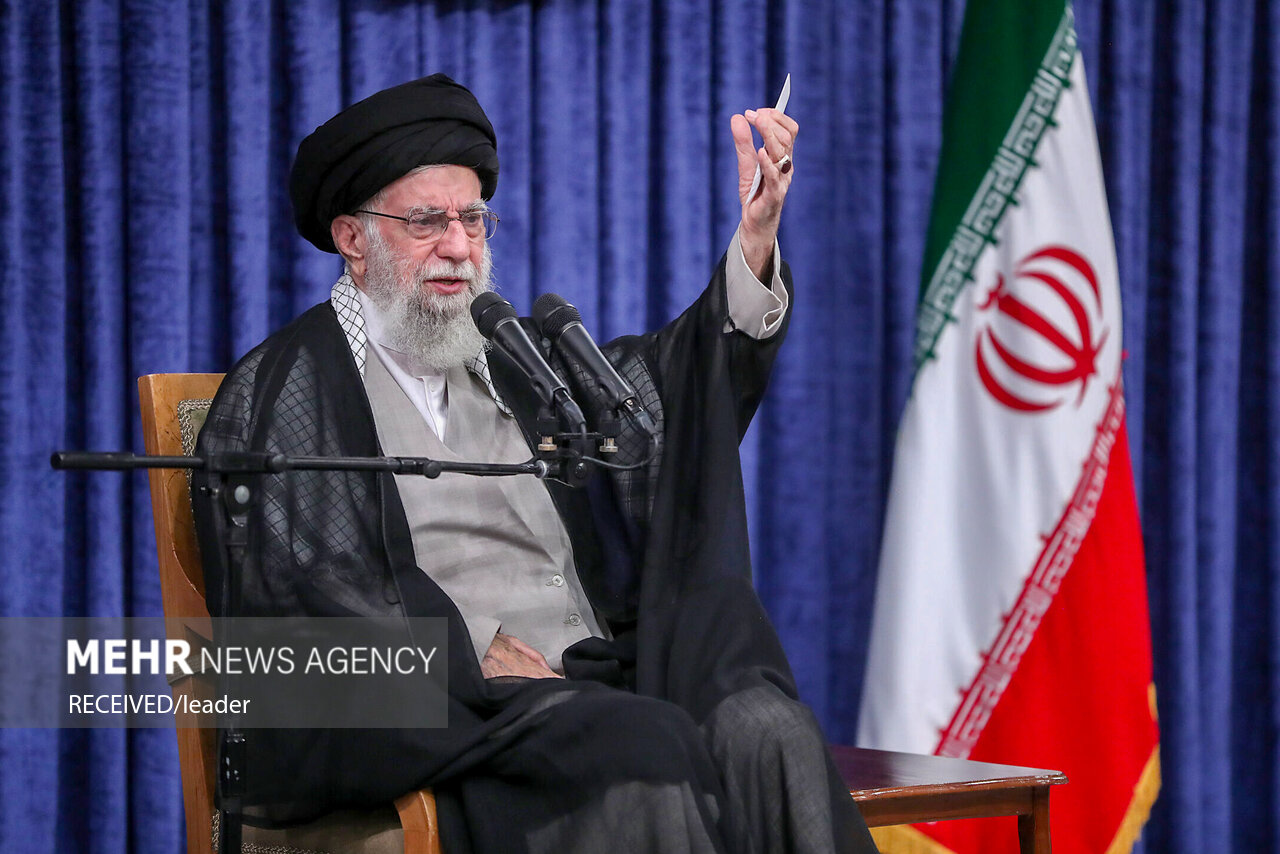
After the 1979 Islamic Revolution, Iran faced major political, economic, and military challenges. Under the leadership of Seyyed Ali Khamenei (since 1989), Iran has gradually strengthened its domestic stability and expanded its regional influence. This memo provides a historical and political analysis of how Khamenei’s leadership has shaped Iran’s overall power through strategic independence, military deterrence, and ideological cohesion.
National power is one of the important indicators of a nation’s stability and global standing. In Iran, this concept has historically been associated with political independence, resistance to external pressure, and cultural resilience. The period of Seyyed Ali Khamenei’s leadership (1989-present) marks a distinct historical phase characterized by post-war reconstruction, institutional consolidation, and regional activism. This article argues that Iran’s sustained power during this period derives from an integrated model of leadership that blends ideological legitimacy with strategic policy pragmatism.
Historical background of leadership changes
After the death of Imam Khomeini in 1989, Iran faced the aftermath of the Iran-Iraq War and internal division. Khamenei’s appointment as leader ensured the continuity of the Velayat-e-Fakih doctrine. His early years were focused on restoring domestic stability while preserving revolutionary principles. The leadership’s assertion of political independence, combined with the government’s economic reconstruction efforts, created a balance between pragmatism and ideology.
Foreign policy and regional power
Under Khamenei’s leadership, Iran’s foreign policy evolved toward regional assertiveness and independence.
Strategic autonomy: Iran avoided alignment with global power blocs and pursued an “independent foreign policy.” This approach has allowed Iran to maintain its sovereignty in crises such as Afghanistan and Iraq.
Regional influence: Since the early 2000s, Iran has expanded its relationships with non-state actors and governments in Lebanon, Syria, Iraq, and Yemen, often referred to as the “axis of resistance.”
Resisting international pressure: In nuclear negotiations and sanctions, leaders emphasized preserving national dignity and technological independence, and framed Iran’s power as rooted in resilience rather than submission.
military power and defense power
The defense sector is one of the cornerstones of Iran’s national power.
Indigenous Defense Development: Since the 1990s, Iran has invested heavily in missile and drone technology to build its own deterrent force.
Regional deterrence: After the US invasion of Iraq (2003), Iran’s strategy emphasized deterrence through asymmetric warfare and regional alliances.
Internal Security: Despite regional tensions, Iran maintained internal stability and demonstrated the institutional strength of its security apparatus under centralized leadership.
cultural and ideological forces
Ayatollah Khamenei has repeatedly asserted that “the main battlefield is the cultural front.” Cultural sovereignty thus became an important pillar of national power.
Revolutionary discourse: Continued emphasis on justice, independence, and anti-imperialism strengthened ideological cohesion.
Media and Soft Power: International media such as Press TV and Al-Alam have served as a platform to project Iran’s perspective to the world.
Science and education: Scientific self-sufficiency and the promotion of a “knowledge-based economy” reflect the growing soft power of intellectual independence.
Economic power and resistance to sanctions
Iran, facing massive international sanctions, has adopted a “resistance economy” policy to reduce its vulnerability. This model promotes domestic production, knowledge-based industries, and self-sufficiency. While economic hardship continued, this policy symbolically linked economic sovereignty with political independence, forming a new dimension of Iran’s national power.
Historical stages of power integration
Historically, Iran’s national power during the Khamenei era can be divided into three stages.
Stabilization (1989-1997): Postwar reconstruction, political consolidation, and institutional continuity.
Expansion (1997-2013): Increased regional influence and technological and military capabilities.
Resilience (2013 – present): Focus on cultural and economic resistance to sanctions and external pressures.
Each stage represents an evolution in Iran’s ability to integrate hard and soft power within a coherent ideological framework.
conclusion
Historically, Khamenei’s leadership has been central to maintaining Iran’s sovereignty and shaping its national power. His strategy is based on three main pillars: strategic independence, defensive deterrence, and ideological unity.
Although internal and external challenges remain, Iran’s ability to withstand international pressure and maintain regional influence demonstrates a form of “total strength” rooted in ideological leadership and adaptive governance.