
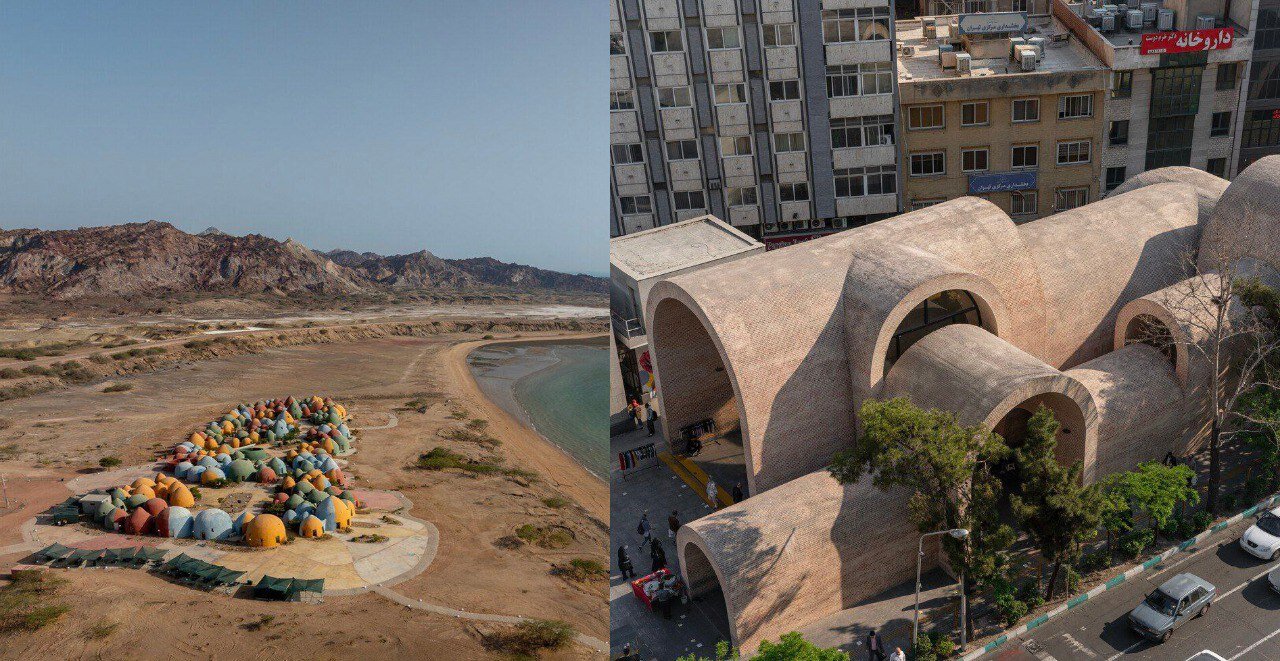
Tehran – Two innovative projects from Iran have been named recipients of the 2025 Aga Khan Award for Architecture, one of the most prominent awards in the field.
On Tuesday, redevelopment of the Majara Complex and community at Hormuz Island, designed by Zav Architects, and Jahad Metro Plaza at Tehran, designed by Ka Architecture Studio, was selected for seven projects around the world and received well-known recognition.
The Majara complex forms part of the “The Existence of Hormuz” initiative, an ambitious cultural and social development program aimed at reviving the island’s struggling economy through ecotourism and community-driven design and reviving the island’s struggling economy through an earth-based dome structure that evokes the island’s colorful landscape.
The project combines visitor accommodation with artist residencies, restaurants, workshops, libraries and prayer spaces, while previous interventions such as the Long Cultural Centre and Ozal Mobile Cinema provide venues for cultural exchange. Beyond its building achievements, the project created much needed employment, transforming the landscape into a living symbol of resilience, and provided a framework for tourism and social engagement in areas long marked by economic instability.
Iran’s second winner, Jahad Metro Plaza, in central Tehran, redefines the capital’s central urban intersection and transforms the metro entrance into a vibrant pedestrian hub through an arched structure inspired by Iran’s brick-making tradition.
Built in just seven months using a modular steel mesh framework and handmade local bricks, the arched structure is cost-effective and durable, yet reminiscent of the rich tradition of Iranian geometric brickwork. The space provides shade and bright gathering areas, allowing for social activities, performance and rest. By incorporating spaces into street vendors, the project will integrate informal commerce into the city’s public sphere and transform the Plaza into a vibrant urban hub that reflects Tehran’s evolving identity.
In addition to Iran’s achievements, projects from Bangladesh, China, Egypt, Pakistan and Palestine were also recognized. The seven winners share a million dollar awards, one of the most important awards in the architecture field.
In Bangladesh, Marina Tabassam Architects has gained the recognition of Kudi Bali or Little House, an affordable and adaptable housing solution for the Char community, which is threatened by repeated flooding and river erosion. Made from bamboo, steel connectors and cardboard tin, the modular house is assembled in 3 days and can be disassembled in a few hours.
From China, architect Changpenju was awarded at the Westwest Village Community Centre in Mongolia. The project, which transformed the ruins of a former Buddhist temple, created a dynamic cultural hub built primarily from recovered bricks. With its central courtyard, roof terraces, flexible spaces of majeon, pottery and cultural events, the centre not only stimulated the life of the village, but also caused the region’s economic growth through tourism, guesthouses and restaurants.
In Egypt, the award was spent revitalizing historic ESNA through integrated community development. At risk of destruction, Esna’s layered urban heritage has been protected through the urban acupuncture process, ranging from Greco-Roman to Islam and Ottoman structures.
Pakistan was represented through Vision Pakistan, designed by Mohammad Saihura Siddiki of Islamabad. The vocational training facility offers classrooms, exhibition halls, shops and prayer spaces, providing literacy, tailoring and life skills to young non-literate men. Built with modest measures, this building now trains 40-50 students each year, serving as a model for sustainable, community-based education.
In Palestine, AAU Anastas was awarded to the Wonder Cabinet in Bethlehem, a cultural and educational hub for preserving Palestinian craft traditions. With a bold concrete frame and transparent façade, the building highlights the process of foam, residential workshops, artist studios, radio stations and performance spaces. Local artisans played a central role in shaping the details, ensuring that the building not only serves as a venue for contemporary art, but also maintains a livelihood and strengthens its cultural presence in the West Bank.
The 16th award cycle for the Aga Khan Award Award (2023–2025) was published after an extensive site review earlier this year, with ju-deciding as an example of the power of architecture to promote resilience, pluralism and optimism in an age of global uncertainty. The awards ceremony will be held on September 15th at the Toktgursatyrganov Kyrgyz National Philharmonic in Bishkek, Kyrgyzstan.
Beyond architects, the Agakhan Awards are also recognized by local governments, clients, engineers and craftsmen who contributed to each project. Additionally, the book “Optipism and Architecture,” edited by Lesley Lokko, will be released later this year and will be awarded and presented finalists’ projects, standing in a broader global discussion of tradition, innovation and architectural inclusivity.
Founded by his Highness Karim Aga Khan IV, who passed away in 1977, the award was created to recognize and encourage projects that address not only social and economic needs but also cultural aspirations. Over 16 cycles, it honors 136 projects and documents nearly 10,000 architectural initiatives around the world, providing a wealth of records on how architecture can serve humanity across diverse contexts.
Photo: This combination of photos shows the redevelopment of the Majara complex and community at the island of Hormuz (L) and Jahad Metro Plaza in central Tehran.
sab/