
Tehran – The logic of realism governing international relations means that the transition from an existing order to a new international order will inevitably come to an unregular era in which the current effective rules will be challenged and the geopolitical structure of the previous order will collapse.
In these circumstances, small actors and forces can usually play a more effective role, either alone or in the form of new coalitions, and conversely, large forces that were expected to play a significant role are also removed from the game.
More precisely, having the capabilities and capabilities that are commensurate with the new order that is being formed, often differs greatly from the components of existing order, but is one of the fundamental requirements for playing a role at a global level and establishing a position where countries have set goals to foresee and achieve in their vision of the future.
The changing form and nature of international conflict in modern times, accompanied by the introduction of new elements into a series of power generation elements on the regional and global stages (which effectively altered traditional conflict strategies by taking a meaningful leap from one-dimensional, dry patterns to the use of complex and quantum patterns), is the same crucial pillar that laid the foundation for forming a new order on a different foundation than the past.
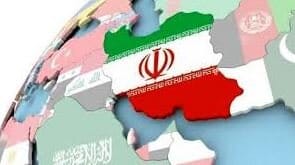
These interpretations show that despite many hostility today, less than half a century later, Iran has experienced entry into the first level of an effective power in the international system, while at the same time, it is able to produce all power components in this path, independent of the power flows and sources that prevail in the structure of existing order, and beyond, effectively challenging the main subjects of existing order to existential levels by creating new concepts of soft and smart power on the world stage.
With its scientific, information and military capabilities, the ongoing debate on cultural identity, and the optimal use of the elements of “national unity,” Iran has been able to reach the position of authority and active deterrence to manage impulses and challenges imposed, as well as gaining spiritual influence in the heart of the hostile front. Today, many scholars, analysts in the field of international relations, and futurists in the international community believe that Iran will undoubtedly play a pivotal role in the new order being formed.
More precisely, Iran is one of the few emerging powers that can rely on principles such as “independence, denial of foreign domination, resistance, dependence on the power and will of domestic forces,” and can push their power and authority onto the will of the West while challenging existing structures and theories.
This is precisely why, in the new hybrid model, the main weapons of Western countries opposed to Iran have focused not solely on hard power, but on the most cognitive and perceptual warfare and the maximum use of soft and intelligent power tools, aimed at capturing the hearts of Iranian society, instilling weaknesses, and thus causing structural disruption in its growth and development.
On the other hand, if we look at history, we can confidently say that Iran has never had such strong, independent or influence after the collapse of Islam. There is a wealth of evidence and examples that support this proposition, and an analyst will inevitably conclude that Iran is at the heart of the New World Order.