
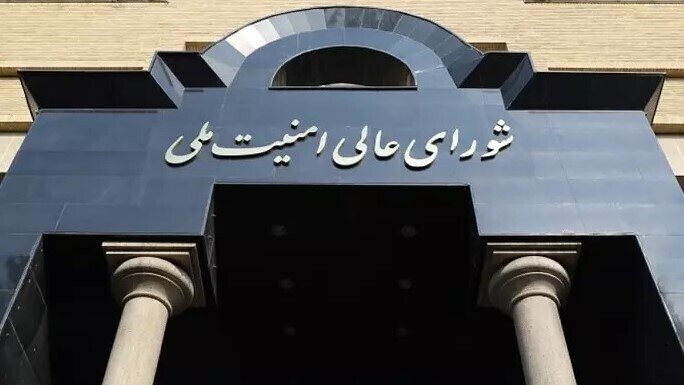
MADRID – The Supreme National Security Council (SNSC) stands as one of the most central and strategic organizations in Iran’s politics and governance. Its creation and development reflects the institutional adaptation of an Iranian state facing internal and external challenges, while maintaining autonomy and stability in a context historically characterized by regional tensions and international pressures.
Origin, history, and constitutional framework
The SNSC was established in 1989 by Article 176 of the Islamic Republic of Iran’s Constitution and has roots in the challenges accumulated during the Iran and the Iraq War (1980-1988). This context forced Iranian authorities to create mechanisms that could coordinate national defense, security and crisis management in the face of complex and persistent threats.
According to the Constitution, the SNSC is the premier body responsible for the development and oversight of national security and defense policies, along with its mission to protect the key interests of Iran’s revolution and the territorial integrity. Its configuration is extensive and robust. This includes top leaders in the executives, legislative and judicial sectors. Key ministers in defense, intelligence, interior affairs, and diplomacy. Senior Commander. Direct representatives from the leaders of the Islamic Revolution. The latter, as the highest political authority, plays a critical role in the strategic leadership of the Council.
This composition reflects Iran’s intention to balance the various power centers within the state, military, political, religious and technocratic. The result is an institutional architecture that confers the cohesion and flexibility essential to resilience in the face of sanctions, crises and military conflicts, and allows for adaptation and avoidance of critical internal fractures.
Function and strategic roles
In fact, social media is not limited to just technical management, even in static bodies. It plays an important role as a space for strategic deliberations and political research institutes, constantly calibrating the “red line” that defines national sovereignty, defense, internal security, and Iran’s regional forecasts. This is where state responses to instability in the Persian Gulf, technological threats, international pressures, and social and economic challenges are designed.
The indication of the agency’s flexibility is the recent approval of the National Defense Council as a subsidiary of the SNSC. Its function is to centrally review and strengthen defense planning and military capabilities in response to new scenarios of hybrid warfare, cybersecurity and technology modernization, reflecting the state’s ability to adapt structures amid evolving threats.
SNSCs also serve as spaces to negotiate quick responses to critical situations, maintain critical autonomy for the Iranian state, and avoid external dependencies that could undermine system consistency and continuity.
Resilient and dynamic institutions
The institutional resilience of SNSCs should be understood as a sophisticated form of adaptability. Far from weakening the system, this multipolar design strengthens Iran’s ability to respond to cycles of pressure and sanctions, conflicts with regional and global authority, and technical or social crises. University architecture, which integrates military, political, religious and technical actors, has proven effective in crisis management and maintaining national sovereignty and stability.
Beyond the simple reading that governs external perceptions of Iranian politics, the SNSC embodies the will of the state to maintain strategic autonomy and coordination capabilities in highly demanding scenarios. The Iranian state has transformed the space into a permanent negotiation forum. There, the fundamental elements of the Islamic Revolution coexist and balance it with the practical needs of modern administrations.
Ali Larijani is institutionally evaluated for his management skills, strategic vision and ability to coordinate policies in the most sensitive areas of the Iranian state. Under his leadership, the SNSC is expected to play an important role in integrating internal cohesion, protecting national sovereignty and clarifying integrated responses amid changing international dynamics.
This appointment is more than just a manager. It represents a commitment to specialization and efficiency within Iran’s political system when the region and global environment demand constant coordination and adaptation. Larijani’s new Defense Council and security equipment oversight highlights the state’s intentions to strengthen its response capabilities, focus its strategic plans, and ensure institutional continuity amid a potential cycle of conflict.
SNSC as a pillar of Iran’s political autonomy
Understanding the role of social media is essential for a deeper analysis of Iran’s political dynamics. Councils not only serve as crisis managers or advisory spaces, but also as the backbone of national security and defense systems. Its functions include clear foreign policy and defense, ensuring that state sovereignty is preserved against external imposed and internal manipulation. SNSCs represent Iran’s will to maintain strategic autonomy and national unity in an international environment characterized by fluctuations, sanctions and hostilities.
The strategic design and evolutionary capabilities of SNSCs provide unique strength to the Iranian system and are often misunderstood from outside. The combination of ideological stiffness and political pragmatism has proven effective in facing a cycle of crisis and sanctions, allowing Iran to maintain national unity and operational capabilities even at its most important moments.
In short, Iran’s highest national security council exists as the fundamental institution of country stability and strategic development. Its history, structure and function reflects efforts to harmonize the founding principles of the revolution with a flexible regime that can adapt and reinvent itself within modern challenges.
Larijani’s appointment, with his experience and institutional recognition, reinforces Iran’s commitment to an efficient and coordinated management model focused on protecting sovereignty and state continuity. Beyond external perceptions and simplification of political media, SNSC embodies the deep logic of a state that prioritizes autonomy, resilience and adaptability in an increasingly harsh global environment.
Through social media, Iran predicts models in which internal cohesion, strategic responsiveness, and leadership specialization are central factors facing current and future challenges. Therefore, SNSCs are the key core of national sovereignty in a system exposed to constant challenges and an example of institutional governance, maintained by the will of the corporation to maintain autonomy and stability.