
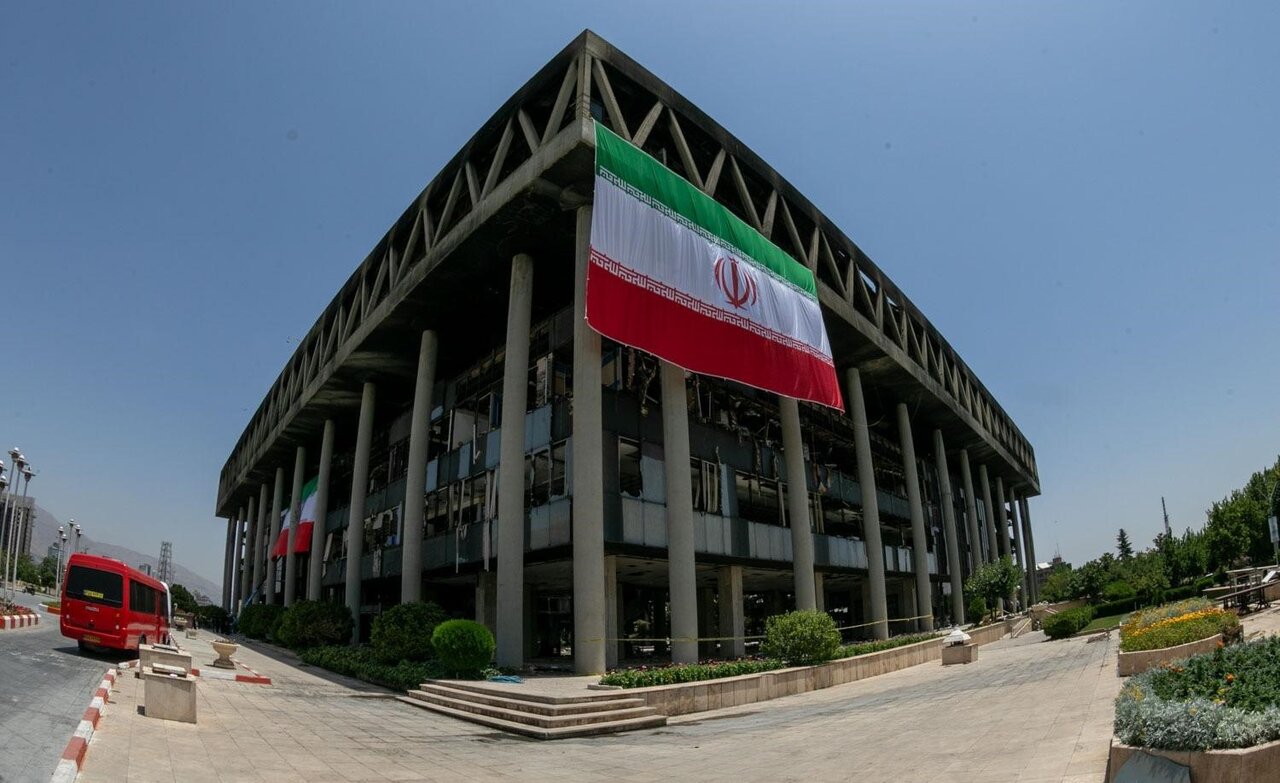
TEHRAN – The Ministry of Justice of the Islamic Republic of Iran is actively pursuing legal action on the Zionist regime’s attacks on Tehran’s state media headquarters.
Several steps have been taken by the department during the 12-day war, and efforts are underway to compensate for damages, Mehr cited IRIB’s legal adjutant on Tuesday.
Continuing unfair and brutal attacks, the Israeli regime targeted the IRIB building on June 16, resulting in the deaths and injuries of several journalists and staff.
The Israeli regime bombed the main building in Ilib, but journalists had the complexity to cover the ongoing Iran-Israel war that began with an unprovoked attack by the regime early on June 13th.
“The department is actively pursuing legal action on attacks on the Zionist regime’s buildings and compensation for damages inflicted on national media. In this regard, communications are also being made,” explained Ahmad Haidali.
He condemned the attack on the buildings of the Zionist regime, saying, “Such action violates international law, human rights and media rights. He has submitted documents to the international legal authority. International treaties place a serious emphasis on this issue with strict laws and regulations.”
According to the UN General Assembly, national media and journalists must be protected at every cost during the war, he added, based on the UN Charter and all international treaties.
“An attack or violation of a journalist or a media outlet is expressly considered a war crime under all legal frameworks. If such a crime is identified, reputable international organizations and actors are obligated to hold the perpetrator liable through legal proceedings.”
He also said that members of the Iranian parliament’s Cultural Committee visited the destroyed building and the studio of the news channel to ensure that parliamentary representatives were informed closely about the Zionist regime’s crimes against Ilib. During these visits, they expressed their readiness to support the IRIB and strengthen the authority of its media. Several other lawmakers have also requested separate visits to the building, some of which have already been scheduled and implemented.
Additionally, around 60 MPs participated in the IRIB special program during the 12-day war. Exceptional conditions in the country made communication channels between the media and the MP temporarily confusing, and in some cases telephone contact was not possible. Conclusion.
sab/