
Amid Isfahan’s rich tapestry of history, famous for the architectural splendor of its bridges and the intricate tilework of its mosques, one day a unique and understated presence emerges.
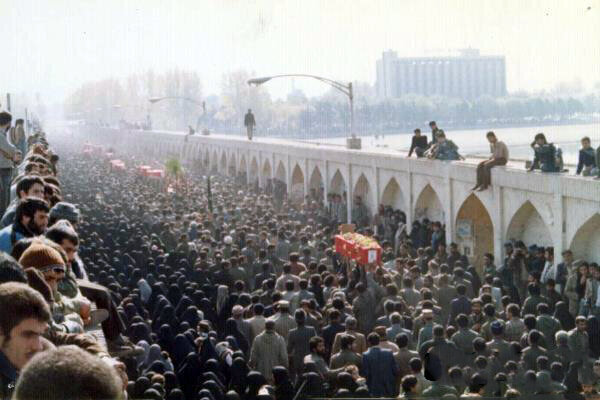
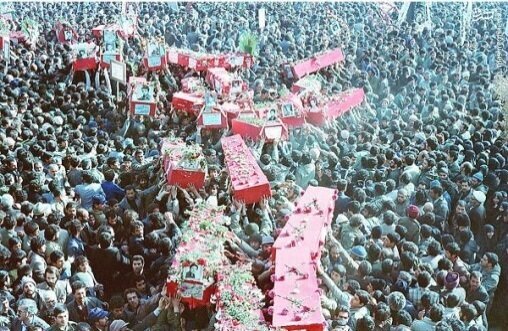
Although this day does not appear in guidebooks, it is forever etched in the consciousness of every Isfahani. November 16, 1982 corresponds to the 25th day of Aban in 1361 in the Iranian calendar, and was the day when the city of Isfahan held a mass funeral for 370 sons.
The day has been officially designated as the “Day of Epic and Sacrifice of the People of Isfahan,” a title that encompasses more than just an event, but a profound demonstration of the community’s fortitude, faith, and resilience.
To understand the scale of this event, it is necessary to contextualize it within a period of brutal externally imposed conflict.
In September 1980, the Saddam Hussein regime in neighboring Iraq began a full-scale invasion of Iran. This senseless war lasted eight years, exposing the nation to airstrikes, territorial violations, and the conscription of entire generations to defend its sovereignty.
Those honored on that pivotal day fell during an important military operation called Operation Moharram. This ten-day offensive, which began on November 1, 1982 in the rugged terrain of western Ilam province, constituted an intense and costly chapter in the nation’s defense.
The strategic importance of the area was so great that Saddam Hussein himself was reportedly present to command his forces and deploy maximum military force to thwart the advance of Iranian forces.
Operation Moharram ultimately resulted in the martyrdom of 1,250 Iranian fighters. Of these, a whopping 750 were from Isfahan province, a figure that highlights the province’s disproportionate contribution to the war effort.

On Tuesday, November 16, 1982, Isfahan’s habitual rhythm stopped. Schools, government offices, factories and labyrinthine bazaars were closed.
The city’s grand central square, Naqsh-e Jahan (Imam Square), and its adjacent arteries were transformed into a vast gathering place for humanity. The atmosphere, typically commercial and lively, was permeated with a collective sadness.
In a display of deep sadness and breathtaking solemnity, senior clergy and a large congregation of citizens gathered to perform a solemn prayer ceremony over the pure remains of the 370 martyrs.
The flag-draped coffin was perceived not as a symbol of defeat, but as a sacred sacrificial vessel. The communiqué of Imam Khomeini (RA), the founder of the Islamic Republic, was then read out to the crowd, blending deep religious conviction with unwavering patriotic resolve.
This was not a closed, private grieving ritual. It was a public and collective acceptance of both deep loss and unwavering purpose. Residents of Isfahan faced their suffering directly. They gathered to greet their nation’s heroes, to give a final kiss to what they felt was a piece of their heart before surrendering it to God.
The city wept incessantly, but its mourning was not desperate. They were the tears of a people who understood the grave price of sovereignty and were determined to endure it.
The simultaneous burial of 370 young men could have paralyzed the spirit of the metropolis. But for Isfahan, it served as a catalyst for an even more terrifying resolution.
The solemn funeral rites did not instill doubt or weakness in the iron will of the people. On the contrary, it strengthened their resolve to defend their land, their beliefs and revolutionary ideals.
Analysts see the day as a pivotal milestone in the story of the Islamic revolution, a day of immense pride for a people with a “metall like steel.”
In a powerful manifestation of this spirit, the people of Isfahan, while burying a group of heroes, also sent thousands of brave young men to the battlefield.
This simultaneous act of mourning and support created what Islamic revolutionary leader Seyyed Ali Khamenei later called “an outstanding paradigm of sacrifice and honor.”
The legacy of that day is forever etched in the national memory. Imam Khomeini himself expressed his awe at the city’s perseverance in his historic speech. “What country can match Isfahan, which held the funerals of 370 martyrs just a few days ago? This is the very country that continues to serve Islam by making such offerings.”
The statistics of the war clearly testify to the sacrifice of Isfahan. Of the approximately 200,000 Iranians who died in the imposed conflict, an astonishing 23,000 were from Isfahan province.
The 370 martyrs of the 25th of Abban constituted one devastating force out of this vast number.
Thus, “The Day of the Epic and the Sacrifice of the People of Isfahan” goes beyond a mere historical reference. It’s a living record.
Report by Tohid Mahmoodpour