
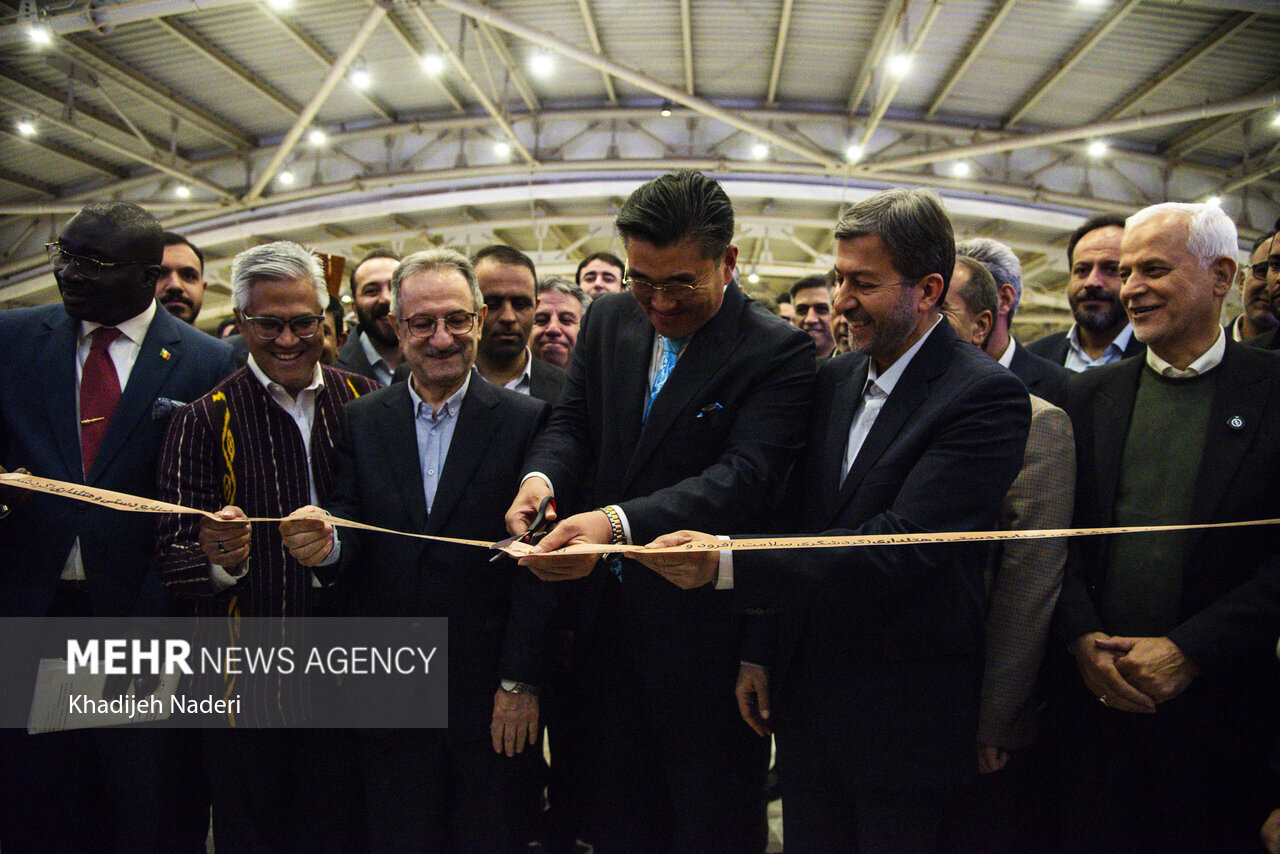
TEHRAN – Officials in central Iran’s Isfahan province said on Tuesday that the 15th Isfahan International Tourism, Handicrafts and Hotels Exhibition will help launch a new phase of tourism development in the region.
In his address at the inauguration ceremony, Isfahan Governor Mehdi Jamalinjad said the exhibition will redefine tourist routes, strengthen the involvement of the private sector and spotlight lesser-known tourist attractions.
“Isfahan has a rich collection of historical sites and monuments, most of which date back to the Seljuk, Safavid and Buyid periods.”
The four-day exhibition marks the beginning of a new movement in tourism, the Governor said.
Jamalinjad said the exhibition served as a “bridge between culture and economy” and that foreign participants participated based on what he described as a message of peace and friendship. He said the state’s tourism industry is transitioning to a data-driven, sustainable and technology-based model.
He said that Isfahan contains all tourist attractions, including natural heritage sites.
Citing global figures, Jamalinjad said tourism accounts for 10.3% of the world’s gross domestic product and contributes about $11.7 trillion to the global economy. He said Isfahan, which has a strong position in this sector, could capture a larger share of this economic activity.
The official added that future tourism growth will depend on technology and artificial intelligence. “If we don’t get into the technology space, the future of tourism will fail.”
Mr Jamalinjad then stressed that tourism must be linked to local culture such as food, festivals, traditional games and intangible heritage. He said it was essential to study global tourism trends and adapt them to local conditions.
Elsewhere in his remarks, the Governor-General described Isfahan as the “inheritor of ancient Iranian history” and “the engine of national tourism development” and said the exhibition was an opportunity to showcase the tourism capabilities of the province, Iran and neighboring countries. He also highlighted the strong participation from local governments, rural areas, private operators and artisans, saying this is evidence of a concerted effort in this area.
Jamalinjad added that Isfahan’s location on the ancient Silk Road emphasizes its historical role, and its purpose was to strengthen the national tourism network and increase the flow of tourists, rather than competition between cities or countries. He said rural, nomadic, natural, historical and intangible heritage tourism are among the areas to be exhibited.
“Data-driven destination planning and monitoring of visitor satisfaction could increase repeat travellers. In this regard, local tourism infrastructure has improved in recent years and this trend is expected to continue until the end of the year.”
He said the exhibition is not just an event, but part of broader efforts to increase private sector participation, uncover hidden gems, develop handicrafts and promote data-driven tourism.
Jamalinjad said the tourism and handicraft markets are based on trust, not money. He said exports in modern economies require a common language between producers and global markets, and sustainable exports depend on continued trust, international engagement and cooperation.
Korean and Indonesian ambassadors highlight potential for further tourism cooperation
The ambassadors of South Korea and Indonesia also emphasized the potential for expanding tourism cooperation and cultural exchanges at the opening ceremony of the exhibition. Both diplomats emphasized the deep historical and cultural ties between their respective countries and Iran.
South Korean Ambassador Kim Jun-pyo said the ancient Silk Road route through Isfahan symbolizes the long-standing ties between South Korea and Iran. He pointed out that Isfahan’s rich history provides opportunities to develop future tourism cooperation.

The Korean envoy also pointed out that Iran’s natural landscape and cultural heritage are important attractions for international tourists. Recent cooperation between the two countries could foster stronger relations, he said.
Indonesian Ambassador to Iran Lorianshah Smirat praised the world reputation and rich culture of Isfahan, known as “Nesf-e-Jahan” (Half of the World). He drew parallels between Iran and Indonesia’s cultural diversity and similar handicrafts, and identified these common characteristics as potential areas for cooperation.
The Indonesian ambassador said that tourism is more than just a destination; it expresses hospitality and cultural values. He added that both Iran and Indonesia can serve as models for cultural exchange in the world.
The Indonesian envoy also expressed the hope that this exhibition will provide a platform for tourism stakeholders to exchange ideas and find effective solutions for the development of the industry.
Exhibitors from 31 Iranian provinces set up 270 booths
Another speaker at the inauguration ceremony was Amir Karamzadeh, Director of the Isfahan Cultural Heritage Department, who said that the exhibition covers an area of 8,000 square meters and is the largest tourism event held in Isfahan. “Exhibitors from 31 provinces of Iran will participate in the handicrafts category and 12 provinces in the tourism category.”
He added that the exhibition is also attended by many overseas participants, tourist guides, hotel associations, tour operators and travel agencies.
“This exhibition could help revive Isfahan’s tourism industry, which has been experiencing a decline in foreign tourists for many years. We are determined to expand Isfahan’s tourism industry, as Isfahan’s tourism industry is a clean industry.”
Karamzadeh also said that 270 booths were operated at the event and more than 12 specialized panels on investment, tourism law and related issues were held with the participation of Isfahan’s Chamber of Commerce and Industry and private organizations. He added that many foreign ambassadors were attending the exhibition and were scheduled to meet with local officials later in the day.
Elsewhere in his remarks, the state tourism director announced that the state’s comprehensive tourism plan has been completed after 18 months of work.

The ancient city of Isfahan, which also serves as the provincial capital, is located at the crossroads of Iran’s north-south and east-west trade routes. It reached its peak from the 9th century to the 18th century. During the Safavid period, it became the capital of Iran under the rule of Shah Abbas the Great.
Once the crossroads of Iran’s international trade and diplomacy, Isfahan is now one of Iran’s top tourist destinations, and for good reason. It is filled with many architectural wonders, including unparalleled Islamic architecture, bazaars, museums, Persian gardens, and tree-lined avenues. This is a city for walking, getting lost in enchanting bazaars, snoozing in beautiful gardens, and meeting people.
The Persian proverb “Isfahan Nesf-e-Jahan Ast” (Isfahan is half the world) reflects the city’s cultural and historical excellence.
morning