
Tensions between Iran and Israel have escalated since the occupation regime launched an unprovoked invasion of Iran on June 13, sparking a 12-day war. The regime assassinated top commanders and nuclear scientists, and also killed hundreds of civilians across the country. The United States also intervened, bombing three Iranian nuclear facilities in violation of international law.
The 12-day war ended on June 24 after crushing Iranian retaliatory attacks targeting both Israeli and American positions, forcing Israel to halt its aggression and enter into a unilateral ceasefire.
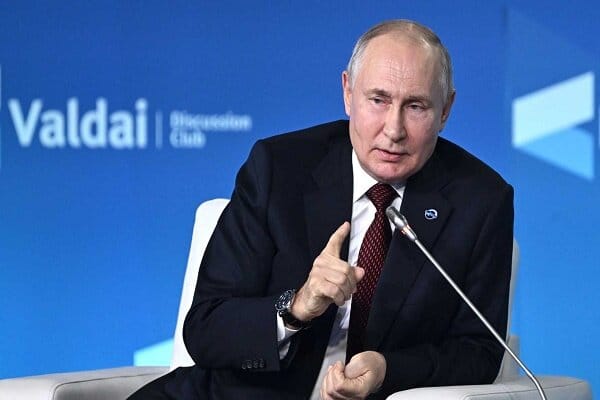
Speaking at the Central Asia-Russia Summit in Dushanbe on Thursday, President Putin said he had been asked by Israeli authorities to convey a message to Iran.
“We remain in contact with Israel on a basis of trust and have received signals from the Israeli leadership asking us to convey to our friends in Iran that Israel intends and is determined to further resolve this issue and is not interested in any form of confrontation.”
Putin also said the only viable way to address concerns about Iran’s peaceful nuclear program is through diplomacy.
“Also, the situation surrounding Iran’s nuclear program can only be resolved through diplomacy and negotiation. There is no reasonable alternative.”
“We maintain close contact with our Iranian partners and feel their determination to seek mutually acceptable solutions and renew constructive cooperation with the IAEA,” the Russian president added.
Putin said that Moscow recently hosted IAEA Director-General Rafael Grossi and spoke in detail on this topic, adding that Grossi also noted the Iranian side’s desire to resolve all issues.
“There are still technical issues, but once an agreement is reached, they will all help towards a final solution to this very complex regional problem,” he added.
Iran claims that the recent escalation over its nuclear program is a direct result of breaches of commitments and misconduct by the United States and its European allies.
The Iranian government signed the Joint Comprehensive Plan of Action (JCPOA) in 2015, accepting strict limits on its nuclear activities in exchange for sanctions relief. However, in 2018, the United States unilaterally abandoned the agreement. The failure of European countries to fulfill their commitments left Iran with no choice but to gradually reduce its obligations.
The situation worsened further in June when the United States and Israel attacked Iranian nuclear facilities. In response, the Iranian government ended its cooperation with the International Atomic Energy Agency (IAEA), pointing out some of the agency’s inaction against the invasion.
On August 28, three European countries activated the JCPOA snapback mechanism to reinstate UN sanctions. Iran rejected the move as unwarranted, stressing that the US had already withdrawn from the deal and that Europe was aligning itself with unlawful pressure.
Russia and China sought to expand diplomacy, but the proposal was rejected by the Security Council on September 26. Two days later, the United States and its allies declared they were reimposing sanctions.
The Iranian government signed a new cooperation framework agreement with the IAEA in Cairo in September. However, Iranian officials have since insisted that the agreement will not be implemented if sanctions are reinstated.
MNA/