
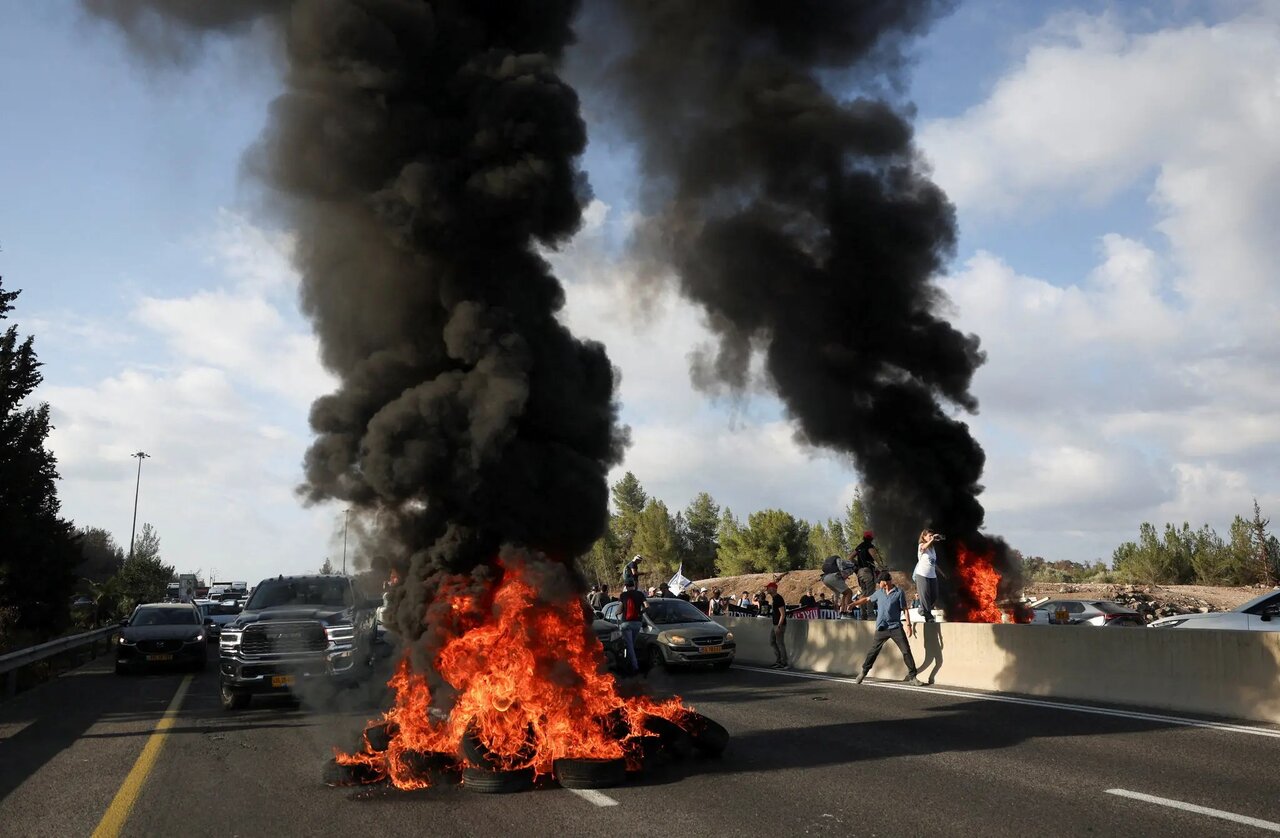
Tehran – Israel faces unprecedented domestic and international pressures as the Gaza War approaches its second year mark. On Sunday, a massive strike within the Israeli Association over Prime Minister Benjamin Netanyahu’s handling of the war exposed a deep fracture.
The “Day of Stop” organized by groups representing prisoners of war members called for an urgent deal to end the war and secure the release of Israelis, still held in Gaza. Protesters blocked roads, lit up bonfires, and gathered outside political offices, military headquarters and major highways. Police in Tel Aviv have arrested dozens of demonstrators using water cannons to disperse the crowd. Many restaurants, theatres and shops were closed in voluntary solidarity with the strike, informing the widespread public frustration.
The demonstrations take place amid fears that ongoing military operations could put around 20 prisoners of war, believed to live in Gaza, in further danger.
On October 7, 2023, Hamas launched a surprising attack in southern Israel. More than 1,100 people have been killed and about 250 have been taken prisoner. This was followed by Israel’s brutal war against Gaza. Netanyahu repeatedly vowed to continue the war until Hamas was destroyed and all prisoners were released, but these efforts have largely failed. Many prisoners have been released not through military operations but in swap deals with Hamas, while others have died in Israeli strikes in Gaza. Families continue to demand immediate negotiated releases, warning that further escalations could potentially kill them.
“Military pressure won’t regain the hostages — it’s just killing them,” former hostage Abel Yehoud said in a protest in Tel Aviv, the AP reported. Anat Anglest, the abdominal mother of Captive Matan, said, “Today, we will stop everything and save and reclaim hostages and soldiers… to remember the highest value of the holiness of life.”
The strike also highlighted deep political divisions within Israel. Far-right members of Netanyahu’s cabinet are opposed to deals that could leave Hamas to power and threaten to overthrow the government if concessions are made. Finance Minister Bezalel Smotrich described the strike as “harmful” and accused protesters of playing in Hamas’ hands, while National Security Minister Itamar Ben Gwil warned that the lawsuit would “weak Israel.” These statements reflect the growing tension between hardline elements of the government and the wider public, making them increasingly unhappy with the deadlock and human costs.
Israel’s military strategy in Gaza has attracted widespread criticism. Approximately 62,000 Palestinians were killed, tens of thousands were evacuated, and key services such as water, electricity and medical care were disrupted. According to Gaza’s Ministry of Health, corruption and starvation have been at the highest level since the conflict began. The hospital reports that children continue to die from hunger-related causes, but delivery of aid is far below what is needed due to Israeli lockdowns and restrictions.
The humanitarian crisis has fueled international condemnation. Israel has been accused of committing genocide by the International Court of Justice, rights groups operating even within Israel, and UN experts monitoring conflicts. Netanyahu himself has been appointed by the International Criminal Court for War Crimes and Crimes against Humanity in Gaza. Analysts argue that the military campaign has failed to beat Hamas, obscuring political failures and being pursued to maintain Netanyahu’s power.
More than dozens of aids were killed near Gaza’s Morag Corridor as Israeli forces were fired to disband the crowd on Sunday. More than 1,900 donors have been killed and more than 14,288 have been injured since late May, according to Gaza’s Ministry of Health. The ministry said on Sunday that 11 people have died of starvation in the last 24 hours alone, leading to starvation-related deaths during the 22-month conflict, bringing to 251 people, including 108 children. Humanitarian agencies warn that conditions could exacerbate widespread hunger without immediate relief.
Despite these warnings, Israel is preparing for a wider invasion of Gaza and other densely populated regions, with the aim of dismantling Hamas military infrastructure. Military analysts warn that such attacks could lead to higher civilian casualties and mass displacement, potentially weakening Hamas.
Ongoing conflicts and domestic protests reveal Israel’s fragile social and political environment. Demonstrations, strikes, and public outrage show the government’s struggle to harmonize military targets with prisoner security, while maintaining unity in the coalition. Sunday’s strike also shows Israel is falling from within. This is because frustration over the Gaza War deepens political and social divisions.