
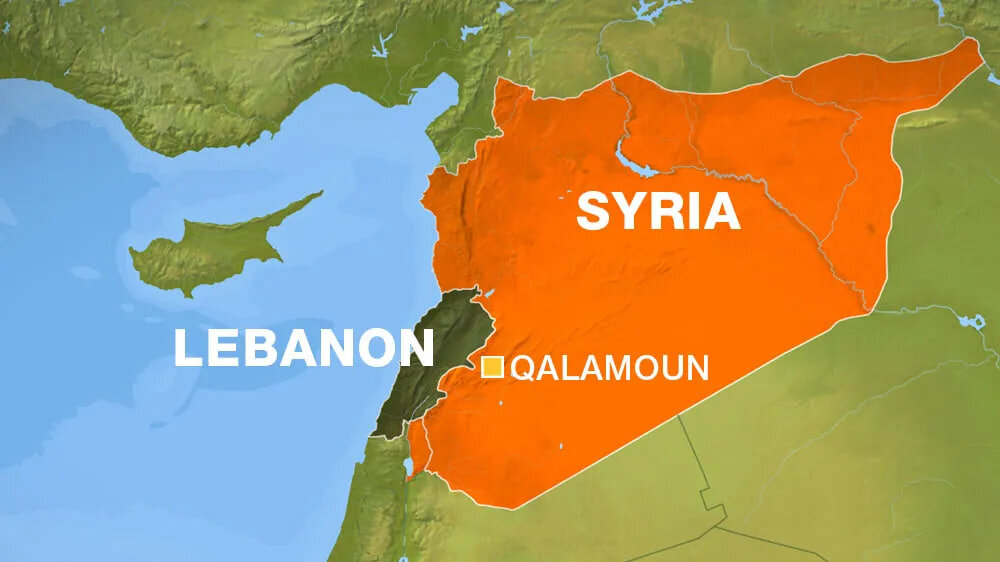
Beirut – Every day, concerns are growing over the potential threat to Lebanon’s eastern border with Syria. This is due to the failure of security and military meetings between the two countries to end repeated attacks on Lebanese villages by the HTS gangs.
In fact, this issue is not only limited to these attacks caused by Damascus’ lack of full control of the border, but also to the continuous flow of swarms and the continuous flow of Syrians (individuals) through illegal intersections.
Lebanon has been trying to ensure the return of evacuated Syrians, but the Al Jorani government (now known as Ahmed al-Sharaa) has been preventing their return, citing Syria’s difficult economic situation.
However, the Al Jolani government has shown great interest in closing the suspected illegal intersections used to transport weapons and funds to Hezbollah!
After President Donald Trump met with Al Jolani in Riyadh, Lebanon’s concerns about Damascus’ involvement in Hezbollah’s pressures rose.
Washington demanded that he deport foreign fighters (foreign extremists fighting alongside the Jolani group against the Assad government), but al Jolani “put a green light to grant them Syrian citizenship after they allegedly claimed they had ‘sacrifices and fought for the Syrian revolution against the previous regime.”
Al Jolani warned Trump that these foreign fighters belong to Syria or a country that refuses to leave their country of origin. This opens a way for ISIS to recruit them, which threatens security in Syria and the West.
A major concern in Lebanon was its mention of the potential to use them to stand up to “general enemies”: Hezbollah, popular mobilization power, and the axis of resistance in Yemen and Iran.
Lebanon’s concerns peaked after the terrorist attack on Maríaías Church in central Damascus and after the arrest of terrorist members in the southern suburbs of Beirut, in connection with ISIS and Mossads.
On Monday, General Security in Lebanon carried out a security raid outside Burj Al Balazine, with the following group of seven Syrians arrested: (2) Sections that support only ISIS but do not have direct organizational affiliation.
Lebanon’s security services are stepping up preemptive operations to dismantle terrorist networks. A few days ago, they arrested one of Lebanon’s most dangerous ISIS leaders, called Kasoula, and admitted to leading a group operating between Barbeck and the South during the investigation.
Security sources say that while most of these terrorist groups are led outside Lebanon, particularly outside Turkey, others operate within Lebanon on their own initiative.
Meanwhile, Lebanon’s general security has announced the provision of additional facilities for Syrians and Palestinians (Syrian refugees) who wish to leave until the end of September, especially after the political and security situation in Syria has improved.
Israeli Channel 12 has revealed that their political Echelons are very obsessed with Syria, signing the Abraham Agreement by the end of this year.
The Hebrew Channel proposed a so-called renewal of the release agreement (signed May 31, 1974) and strengthened intelligence security coordination against Hezbollah and Iran to prevent the establishment of resistant cells in southern Syria.
Therefore, Syria abandoned the height of the occupied Golan, and Israel acknowledged Lebanon’s Shebaa farm as Syrians in a joint plot to strip Hezbollah from the legitimate resistance to release it.
Israeli Foreign Minister Gideon Saa argued that the occupied Syrian Golan Heights “continue to be part of the Israeli state,” adding that “they are interested in including new countries such as Syria and Lebanon (…) in this circle, maintaining the security and fundamental interests of the Israeli state.”
Lebanon has yet to receive a final response to the US proposal of Emboy Tom Barrack, which not only addresses Israeli interests, but also links all internal issues to Hezbollah’s disarmament within a specific schedule (at most three months).
Barak’s proposal stipulates the surrender of weapons as a prelude to signing an “accord” to withdraw from Israel’s occupied Lebanon territory. Beforehand, Lebanon must distinguish between its borders with Syria.
Barracks reportedly suggested that the Trump administration may resort to imposing sanctions on those who block approval of reforms or prevent it from implementing them (including Shia segregation and closing Hezbollah banking institution, Al-Kurd al-Hassan).
Barack also threatened that the Western, Arab, or Islamic countries would not provide Lebanon with any kind of financial support, and that reconstruction files would not be possible unless Lebanon commits to these so-called “reforms.”