
BEIRUT — A consistent pattern of conflict links Lebanon’s past and present conflicts with U.S. power, from Safed’s mountain outpost to the Pentagon corridors.
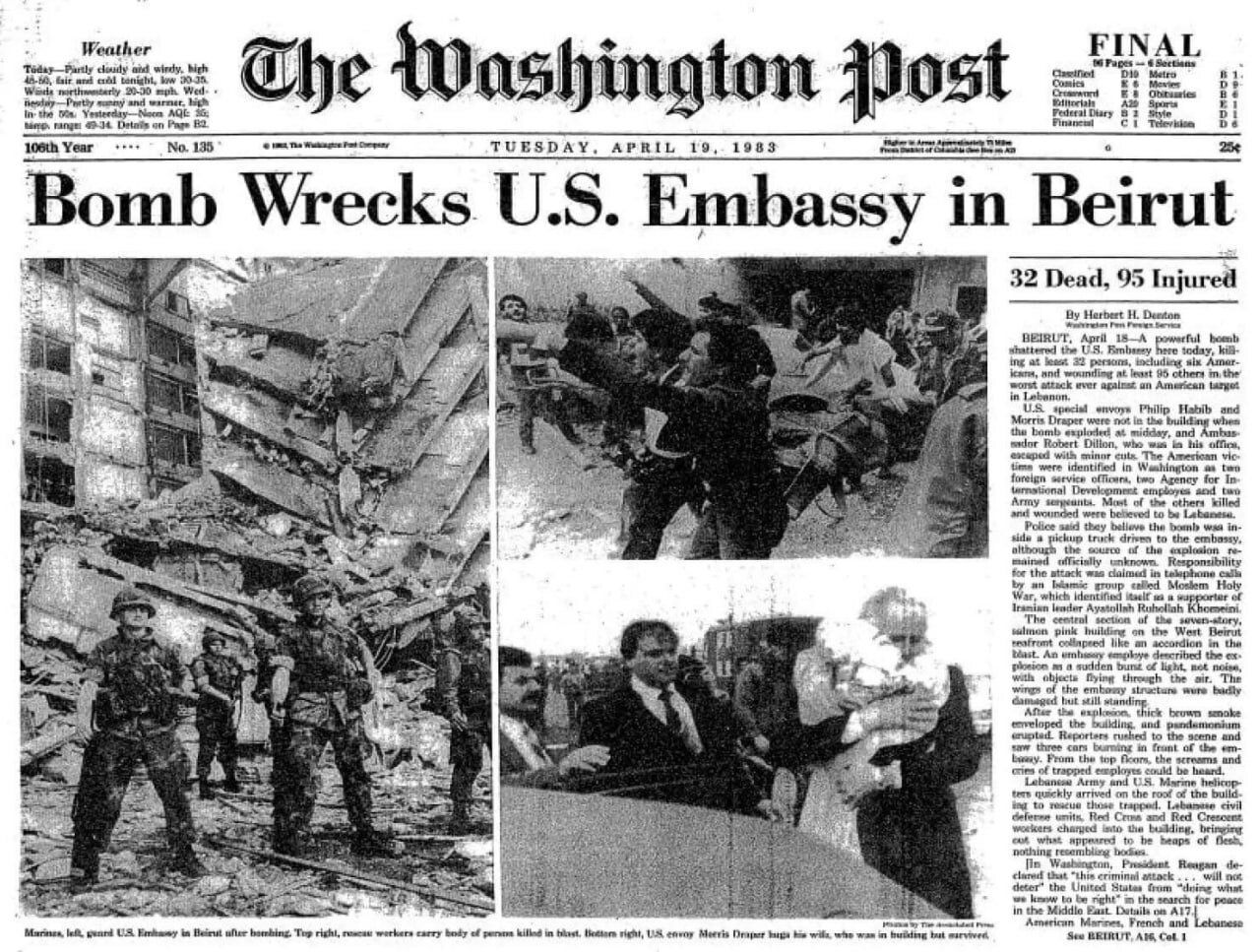
On the morning of October 23, 1983, a small group of young Lebanese operatives struck a blow against the world’s most powerful military, shocking the United States. Forty-two years later, the same basic policies drive Washington. The only things that have changed are the means and the face.
What was once done through Marines on the ground is now being organized through U.S. military officers sitting within Israeli headquarters.
What began as an occupation justified under “stability” has evolved into a digital war room where any attack on Lebanon is pre-authorized by Washington.
Recent Israeli reports have lifted the veil on a new chapter in this occupation. According to the Israeli channel “Kan”, the American military officer is currently stationed at the Israeli Northern Command headquarters in Safed, where he directly supervises the Israeli military’s operations against Lebanon.
Every missile, every drone, every invasion will be carried out under American supervision. Washington is no longer hiding behind diplomatic neutrality and has become a partner in aggression.
This marks a dangerous evolution: Washington’s role has changed from political manipulator to military co-conspirator.
Its purpose is not hidden. Rather than all-out war, the plan is to weaken Lebanon’s resistance, fragment its unity, and impose a new regional order through “gradual pressure.” But, as usual, such plans underestimate the depth of Lebanese defiance.
Lebanese security officials have warned that “Israel is considering a major invasion to change the balance of power,” while Arab diplomats have acknowledged that “the coming weeks will be the biggest test of Lebanese sovereignty since 2006.”
They point out that this escalation is about to drag official Lebanon under attack toward political normalization. This is a scenario reminiscent of any colonial strategy of dropping bombs first and negotiating later.
Prime Minister Benjamin Netanyahu, on the other hand, exploits the chaos for his own survival. Faced with a corruption trial and a shattered public image, he incites foreign war to escape domestic responsibility.
The US government nods in favor, providing both political cover and logistical support, turning Lebanese blood into fuel for Israel’s internal politics.
On the ground, Israel practices a “continuous front management” strategy of airstrikes, assassinations, and provocations that are calibrated to avoid total war.
The aim is to exhaust Lebanon’s staying power, provoke division, and maintain pressure without inviting uncontrolled escalation.
This low-intensity war is underpinned by Washington’s “incremental” strategy of strangling the economy, isolating resistance, and demoralizing it. The November 27, 2024 border agreement was touted as a step towards “stability” but instead opened the door to daily violations of Lebanese airspace and sovereignty by Israel.
Currently, Israel is attempting to integrate the Lebanese and Syrian fronts into a joint “safe zone” and claims to fight “arms smuggling,” but is actually preparing for a deeper preemptive strike under American legal and diplomatic protection.
The purpose is clear. The goal is to redraw the strategic map of the region and strengthen the joint presence of the United States and Israel in the north.
Even the United Nations seems to be paving the way. Plans to cut UNIFIL forces by 25% in the name of budget cuts will create a security vacuum that Israel is trying to fill. South Korea, which has lost international oversight, is at risk of once again becoming a field for invasion.
Echoes of the glory of October 23, 1983
Lebanon’s history has already written the answer to such arrogance. On that fateful October morning in 1983, the world dismissed a handful of young Lebanese men as “adventurers” and “reckless dreamers.”
Under the illusion of invincibility, U.S. Marines stationed in Beirut believed they were untouchable. But those “adventurers” – men of faith, conviction and foresight – refused to live under occupation.
In one bold act, they shattered the illusion of American omnipotence, drove multinational forces out of Lebanon, and sowed the first seeds of sovereign resistance.
While much of the Arab world was reveling in World Cup celebrations, Lebanon was on fire. Fighter planes bombed Bekaa, militias roamed the streets, and puppet authorities later imprisoned the very people who saved the country.
From Halde to Marine Barracks, a new chapter in history was written not by speeches but by courage.
Martyr Imad Mughniyeh, once derided as an “adventurer”, left behind tens of thousands of people who carried his spirit forward. His message was timeless. Resistance is not a choice, it is a duty.
Forty years have passed and the face has changed, but the essence of the conflict remains the same. Washington now replaces the Marines in Beirut with special envoys like Thomas Barrack and Morgan Ortagus, who roam the capital delivering orders under the guise of “economic reform” and “stabilization efforts.”
Behind their polite smiles lies the same colonial message. “Submit, disarm and normalize with the butcher!”
These operatives, like their predecessors in 1983, mistake diplomacy for control. They imagine they can buy Lebanon with loans, threaten it with sanctions, or manipulate it through NGOs. But Lebanon remembers that sovereignty is not granted by an embassy or by a signature in a conference hall. It is defended by those who are willing to resist and make sacrifices.
From the headquarters bunker in Safed to the southern outskirts of Beirut, it is clear that the American invasion continues. But what is equally clear is the continued defiance of the Lebanese people. Washington may plan the war, but Lebanon will decide its end.
1983’s “Adventurers” banished the Marines. Their spiritual descendants today endure the world’s most advanced surveillance and missile systems. The same moral equation applies to both eras. Obedience creates loss, resistance restores dignity.
What the United States and Israel still fail to understand is that Lebanon is not a chessboard, but a conscience. Each strike, each sanction, each intervention only strengthens the belief that sovereignty must survive, not be negotiated.
As new winds of conflict blow from Safed, Lebanon stands at a familiar crossroads. The name has changed, but the principles remain the same. Foreign powers always demand obedience. Only the brave will claim independence.
October 23rd is more than just an anniversary. It is both a warning and a promise. It is a warning to all arrogant invaders who underestimate this land, and a promise to all Lebanese who refuse to kneel.
From the barracks in Beirut to the watchtowers in Safed, the message remains the same. Lebanon resists – and the empire trembles!