
As a regional actor in the Middle East, the Zionist regime has been adopting a variety of strategies for managing security threats and maintaining their advantage for decades. One of these strategies known as the “grass mowing” model was an approach based on involving rivals and enemies through limited and regular military operations. This model was adopted prior to Operation Al-Aqsa Storm on October 7, 2023, and focused on maintaining the status quo to ensure the benefits of the Al-Quds occupation regime. However, developments from that day onwards have marked a paradigm shift in the foreign policy of the Zionist regime, shifting from a “containment” policy to a “complete victory” and a redefine regional order.
The “grass mowing” model, raised by Zionist military and political analysts, referred to a limited and regular attack strategy against resistance groups such as Hamas and Hezbollah, aimed at trimming the threatening “tall grass” without fundamentally changing regional structures. According to Adam Taylor of the Washington Post, “The phrase means Palestinian extremists in the Gaza Strip, and the supply of crude but effective homemade weapons is like weeds that need to be reduced.” Former Israeli Prime Minister Naphtari Bennett mentioned the idea in a 2018 speech, saying that he would consume him if he didn’t cut the grass.
This approach was dominant by October 2023 and is based on air strikes, targeted assassinations, and limited ground conflicts, and is designed to prevent escalation and long-term costs. For example, the Zionist regime’s attacks on the Gaza Strip in 2008, 2012 and 2014 were examples of this strategy aimed at weakening Hamas’ military capabilities and establishing deterrent. The reason for adopting this approach was the occupying forces’ belief that this model best secured its interest. The “grass mowing” model produced relative short-term stability, but failed in October 2023 when Hamas launched an unprecedented attack on the Zionist regime, killing or capturing many Zionists.
Since October 7, 2023, we have witnessed a transition from a “grass mowing” model to a “complete victory” strategy. The Al-Aqsa storm marked a turning point that trusted the reaping strategy and pushed Netanyahu into a revisionist approach. Called “Complete victory,” this new approach focuses on restructuring the local order based on the complete destruction of the enemy and Zionist rule. Since the attack, the occupying regime has launched extensive operations against Hamas in Gaza, Hezbollah in Lebanon, Yemen, Iran and Syria. The occupation of parts of South Syria after the collapse of Bashar al-Assad, repeated attacks on Lebanon and attacks on Iran are part of this revisionist policy aimed at redefine power relations in the region. Netanyahu sees the creation of regional stability in line with Zionist interests as the most important goal of this new approach. In this connection, Netanyahu even talks about bigger dreams such as “Great Israel.” Thomas Barrack, the US envoy to Syria, recently said that after the “October 7” attacks, the Zionist regime had new perspectives on the border, and saw the lines drawn in the Sykes-Picot agreement as “meaningless.” In an interview with the podcast, Barrack emphasized that he believes Israelis will go where they need to protect themselves, adding that the views on the border in Tel Aviv have changed since the attack on October 7, 2023.
However, this approach involves the creation of regional disruption, including rising tensions in Lebanon, Yemen and Syria. In fact, regional chaos has emerged as Netanyahu’s new tool for achieving “new orders,” but contrary to expectations, it has led to greater instability. The attacks by the occupying Gaza, which has killed more than 63,000 left, and the operations in Lebanon have led to thousands of deaths, including the assassination of Hezbollah’s executive director, Said Hassannasrara, reflecting an approach that promotes destruction and occupation rather than stability.
Despite the tactical success, the Zionist regime’s new approach has had negative strategic consequences. Arab countries, previously sought normalization of relations with the Zionist regime through the Abraham Agreement, view this process as a major strategic risk. By October 2023, approaching normalization, Saudi Arabia changed its position after the Gaza War and widespread public criticism, and conditioned the establishment of a Palestinian state. Reports from the Washington Post show that these countries underscored regional stability and distanced themselves from unilateral Zionist actions, particularly after the 12-day war and the Zionist regime’s attack on Iran.
Notably, despite all the actions and efforts of the Zionist regime, enemies such as Iran, Hezbollah, Ansalala and Hamas have been hit but still endure. This sustainability, coupled with global pressures, such as the state of the Palestinian province and the efforts of European countries to recognize the decline in the international legitimacy of the Zionist regime, created serious challenges in Netanyahu’s plans.
A well-known international relations theorist, Stephen Walt, in an analysis reflected in major media outlets such as the New York Times, argues that everything has changed in the Middle East, but nothing has changed. He believes that while the Zionist regime could weaken the enemy, regional order remains based on old conflicts and unresolved Palestinian issues. The collapse of Assad, the weakening of the axis of resistance, and the attack on Iran have strengthened the Zionist regime, but have not led to the creation of a stable order. Walt emphasizes that Netanyahu’s dream of a new order will not come true without embracing the Palestinian political solution.
Ultimately, the shift from a “grass mowing” model of the Zionist regime’s approach to a “complete victory” under Netanyahu reflects ambition to redefine the Middle East. However, this strategy reached a dead end by creating regional turmoil, diplomatic isolation and the persistence of the regime’s enemy. Arab countries, previously leaning towards normalcy, believe this process is too dangerous. Walt’s perspective confirms the reality that without the structural change in the Zionist regime’s relations with Palestine, the new Middle Eastern order is merely a continuation of the old order. This situation outlines the uncertain future of Netanyahu’s revisionist plan. This deepened the local crisis rather than leading to victory.
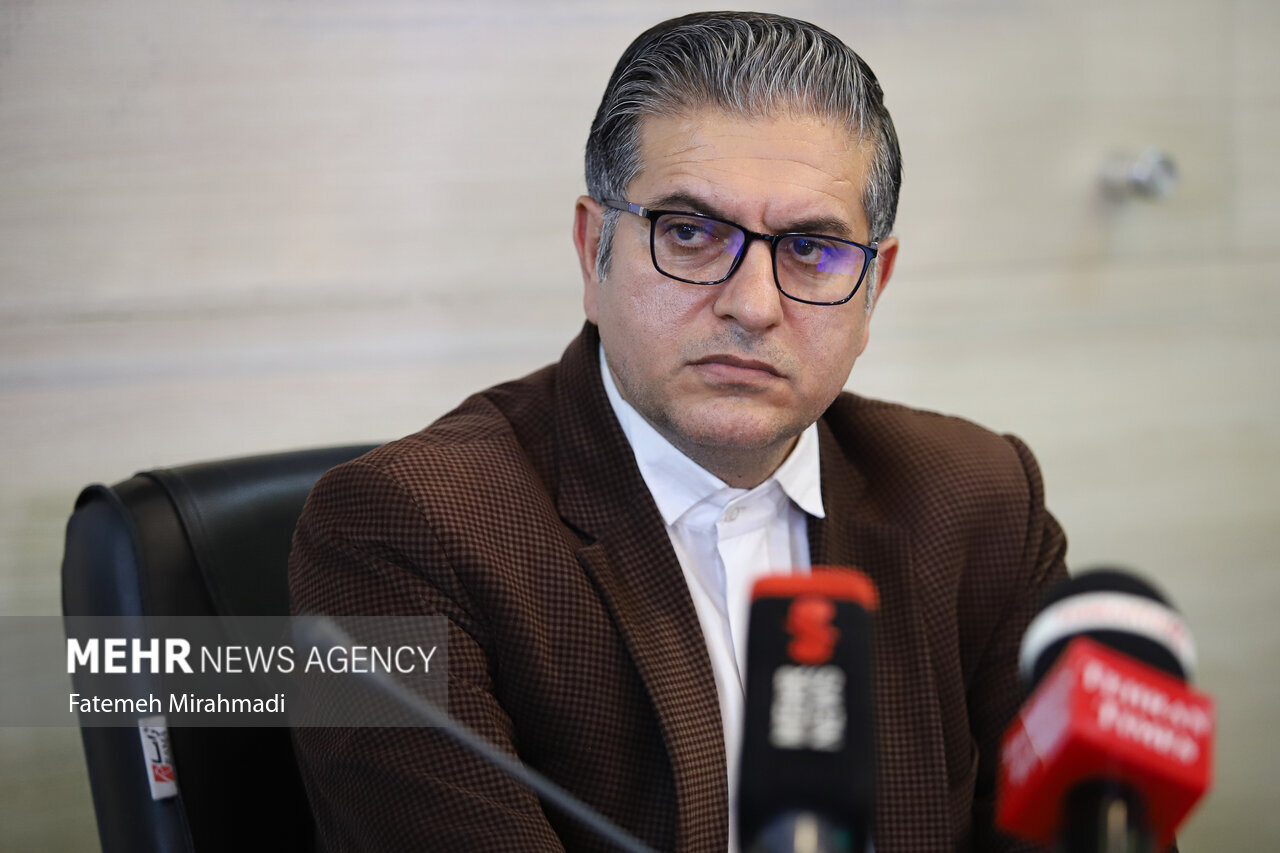
Mohammadreza Moradi is Director of International and Foreign News at Mehr News Agency