
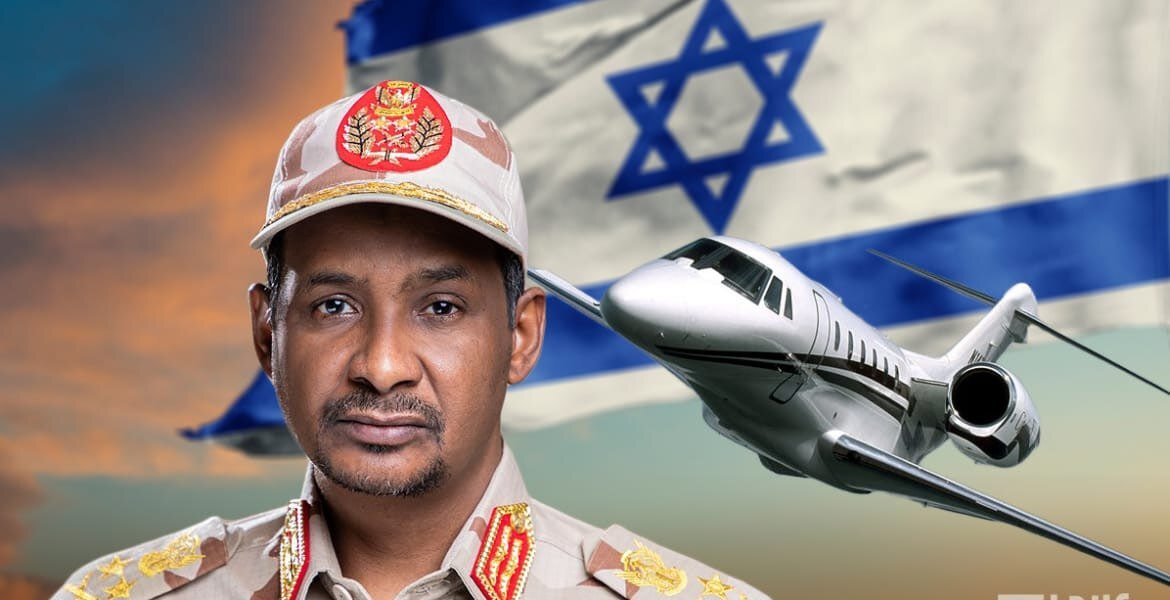
BEIRUT — In a shocking escalation, the Rapid Support Forces (RSF) reportedly massacred more than 2,000 civilians in El Fasher in western Sudan between October 26 and 27.
Victims included women, children and the elderly, with satellite images revealing the scale of the atrocities and documenting what the Sudanese military coalition describes as horrific human rights violations.
Since April 2023, Sudan has been embroiled in one of Africa’s bloodiest conflicts. The war between the Sudanese army, led by Abdel Fattah al-Burhan, and the RSF, led by Mohamed Hamdan Dagalo (Hemedi), turned the country into a center of destruction and regional maneuvering.
As of late 2025, the Sudanese civil war has killed tens of thousands of people and displaced more than 12.6 million Sudanese, making it the world’s largest displacement crisis.
The health and economic systems have completely collapsed, and the capital, Khartoum, remains divided between rival factions. Militias have taken control of Darfur and Kordofan, while the military struggles to maintain control of eastern and Red Sea ports.
Behind this harsh domestic situation, regional and international threads are intertwining, extending beyond Sudan’s borders and reshaping the balance of power in the Horn of Africa.
Israel’s ambitions in Sudan
In the shadow of this turmoil, the Zionist regime of Israel is pursuing a far-reaching plan to seize control of the Red Sea corridor under the familiar pretext of “fighting Iranian arms smuggling” towards Gaza and Yemen.
Since Sudan signed the so-called Abraham Accords in 2020, Israel has strengthened its political and security influence in Khartoum and the surrounding region.
For Tel Aviv, Sudan is by no means a frontier. Sudan is a geographical bridge to Africa and a strategic hub on the Red Sea, securing one of the world’s most important shipping links between the Suez Canal and the Bab el-Mandeb Strait.
A 2024 study published in the Israeli Army Journal by Lieutenant Colonel Gul Asir emphasized that “relationships with Sudan represent the highest strategic interest, as they allow Israel to monitor the routes used to smuggle Iranian weapons into Gaza and Yemen, as well as establish intelligence networks in the southern Red Sea.”
This security ambition soon took shape. In May 2025, Israel’s Channel 14 aired a lengthy report on “Iran’s covert expansion in Africa,” highlighting Libya and Sudan as logistical hubs for arms smuggling networks to Gaza.
The report claimed that Sudan is being used as an “auxiliary land route” for transporting Iranian missiles and drones through the Sudan-Egypt border.
Although no official confirmation has been issued, Reuters reported diplomatic leaks in June 2025 indicating that Tel Aviv, in conjunction with the US and UAE, provided “limited technical support” to the Sudanese military, particularly in communications and air surveillance.
By contrast, Haaretz claimed in August 2025 that Israel was using the war in Sudan to justify its military expansion in the Red Sea under the banner of “protecting the world’s shipping lanes from the Houthi threat.”
Haaretz also noted that the Sudan crisis presented Israel with an opportunity to deepen its alliances with Ethiopia and Eritrea as part of a broader plan to contain Iranian influence from Tehran to Sanaa and Khartoum.
Israel’s growing concerns about Yemen
Tel Aviv’s growing involvement in Sudan is inseparable from growing anxiety over Yemen. The balance of deterrence in the Red Sea has changed decisively since the Ansarala movement seized control of Yemen’s west coast.
According to the Israel Institute for National Security Studies (INSS), the Houthis’ control of the Bab al-Mandeb Strait since 2021 has “redefined Israel’s maritime threat,” with Yemeni missiles and drones potentially attacking Eilat and blocking shipping routes to the Suez Canal.
In response, Israel began treating the Red Sea as its main national security arena, second only to the Mediterranean Sea. Within this evolving strategy, Sudan is acting as a forward buffer zone.
Jane’s Defense Weekly reported in October 2025 that Israel is working with Western allies to build a maritime surveillance network stretching from Eilat through the Sudanese coast to the Gulf of Aden to ensure control of these vital sea lanes.
Israel’s interest in Sudan is therefore directly tied to securing the opposing flank of Yemen.
As the United States and the UAE operate in East Africa, Tel Aviv has found a convenient excuse for expansion, hiding its military buildup behind the rhetoric of international maritime security. The turmoil in Sudan both justifies and provides cover for Israel’s expanding presence in the Red Sea.
From the Horn of Africa to Gaza: the new geopolitical landscape
It is becoming clear that the war in Sudan is not just a domestic civil war, but part of a larger geopolitical conflict between the Axis of Resistance on the one hand and the American-Israeli Axis on the other.
Sudan offers important security advantages to Tel Aviv, particularly in monitoring arms shipments and interdicting resistance networks in Gaza and Yemen.
Foreign policy analysts in September 2025 described Israel’s approach as a “long-term strategy” aimed at gaining regional depth before facing domestic or immediate regional challenges.
In this context, the coastlines of Sudan and Yemen form a unified maritime buffer zone, strengthening Israel’s deterrence structure against the Axis of Resistance.
Tel Aviv controls, or at least monitors, these corridors, ensuring early warning and containment capabilities against any escalation.
All signs suggest that Israel views the Sudanese conflict as a rare strategic opportunity to reshape the balance of power along the Red Sea.
While the world’s attention remains focused on the wars in Gaza and Ukraine, Tel Aviv has quietly continued to build its security infrastructure from the Mediterranean Sea through Sudan, Eritrea, and Ethiopia to the Gulf of Aden.
However, this expansion comes with significant risks. The deepening turmoil in Sudan could ultimately backfire, providing Tehran and Sanaa with alternative supply lines and new platforms for asymmetric retaliation.
As the Ansarala movement intensifies its activities in the Red Sea, Israeli fears are growing over the possibility of the Yemeni and Sudanese fronts being merged into a single theater of resistance.
Sudan today serves as more than a battleground for local power struggles. Sudan is a geopolitical linchpin in a broader conflict from Gaza to Sanaa where Israeli security objectives intersect with African instability.
The struggle over the Red Sea has evolved not only into a contest over control of the sea, but also over who will define the strategic geography of the next decade.