
The Zionist regime fought a war of aggression against Iran on June 13, attacking Iranian troops, nuclear power and residential areas for 12 days, but the US carried out a military attack on three nuclear sites in Iran, Natanz, Fordau and Isfahan on June 22.
Iranian troops carried out a powerful counterattack shortly after the attack. The Islamic Revolutionary Guard Aerospace Force implemented 22 waves of retaliation missiles against the Zionist regime as part of Operation True Promise III, which caused significant losses to cities across the occupying territories.
In response to the US attack, Iranian forces fired waves of missiles at Aldead Air Force Base in Qatar, the largest US military base in West Asia.
The battle was suspended due to a ceasefire that came into effect on June 24th.
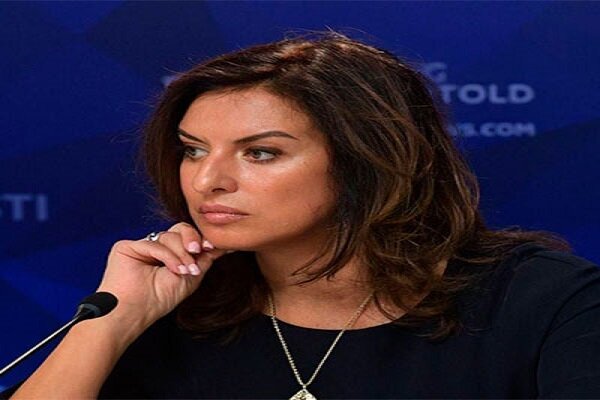
To explore this dimension of attack, Mehr New Agency contacted Lana Rawandi-Fadai, senior researcher and director at the Oriental Cultural Center at the Institute of Oriental Research at the Russian Academy of Sciences.
Introduction, what factors have inspired Israel to launch an attack on Iran?
It is not clear how objective observers will come to a conclusion other than that Prime Minister Netanyahu abandoned moral, legal and diplomatic norms, grabbed the land in the neighbouring land, and decided to rely on what he thinks is undesirable in the area to grab and capsize the land in the neighbouring land. Of course, this includes the Iranian government. It is the case of the emperor’s new clothes, and it is surprising to see an otherwise civilized nation sign it and dress up naked attacks in the language of “defense” and “need”. All of this is a massive crime against the Palestinians. Netanyahu, supported by the militants of his administration and much of the Israeli population, has longed to destroy the “Iranian goals” for a while. The measures they took towards this goal were systematic. It promotes the combination of bombings, ground action, assassinations against Hezbollah and the Iranian population, and even agreeing or promoting Islamists’ seizure of Syrian power. Destroying “Iranian targets” at his borders, simultaneously destroying more than 60% of the Gaza homes, weakening (but not completely destroying) Hamas, Netanyahuists decided to move ahead and overthrow the Iranian government. This included invasion of the territory of sovereign states and bombing of residential areas in Tehran, during which hundreds of civilians were marching. The Israeli Hawks wanted pro-Israel leadership in Iranian power led by Reza Shah Pallavi, which is less popular among Iranians. Despite lip service, it is difficult to imagine human rights and democracy thinking a lot in their calculations. The main calculus was the government that established an Iranian government that allowed the dark side of the Israeli state to do so as to be satisfied with its neighbors. Netanyahu hoped that this could be accomplished quickly, but the attempt failed. Now we will see what comes next. What is certain is that it is unlikely that the group that promotes this latest experiment to change government will accept this failure any time soon.
To what extent do you assess the initial responses of the international community and the great powers to the outbreak of war?
It may be surprising that the US, UK and the European Union have taken their full side to Israel. At least their leaders did. For example, the largest EU leaders of Prime Minister Friedrich Merz, whom Israel openly celebrated Israel with its string of shocking attacks and political assassinations, were doing “dirty work” in the West. Some EU countries condemned Israel’s attacks, but their voices were owned by “general lines.” While we can understand concerns about nuclear programs in any country, it is difficult to identify with such unilateral diplomacy and hyperopic foreign policy. Russia and China, as expected, strongly condemned Israeli invasion. They were joined by Iranian neighbours, including Armenia, Türkiye and Pakistan. The newly established Syrian authorities had stepped down a fine line between their Islamist roots and anti-Iranism, but remained silent. Some Syrian journalists close to the authorities have actually experienced the Israeli side, and as many Israelis as possible express their desire to strike Iran. These same journalists hoped Israel’s victory in the war against Hezbollah last fall, and struggled to counter clear evidence of civilian deaths caused by Israeli bombing in southern Lebanon. Qatar took a more subtle and constructive position. The country has punched diplomatically and has built good relations with both the West and Iran. Qatari authorities, together with the Russians and Chinese, helped to halt hostility.
At what stage did the United States take part in the war and what was its purpose?
The traditional story for many is that Trump joined Israel on June 22 to attack Iran’s nuclear facility, but Netanyahu’s team relied on a more intensive involvement in the bombing. However, the United States was involved in Israeli attacks from the beginning. They were involved in Israeli attacks from the start, as they helped Israeli people plan what began more than a decade ago and plan their plans. The story that the US was on its side until the critical moment was a false moment, used the US military, money, intelligence and diplomatic cover, as Israel always does.
Has this intervention led to the formation of new alignments among global forces?
It’s too early to say. We still don’t know the extent of damage in either country. But no, at least at this stage, it seems like the conflict hasn’t had a serious impact, as it is likely that it hasn’t finished. Let it pass more time and wait for “setting dust” (or stir again). So far, this alignment has appeared to be predictable. The West is always supporting Israel and opposed to Iran. Russia supports Iran, but wants trade opportunities with the US and a resolution in Ukraine, and is likely wary of an argument with the Trump administration. China also wants to increase trade with the US. Putin has made absolutely clear that he considers Iran to be the party that has plagued Iran in this conflict. And his strong statement just before the ceasefire may have been a hint that Russia was trying to get more involved.
Did the US attacks on Iran’s nuclear facilities change the military or political dynamics of the war?
The attack on US nuclear facilities was a very show, especially for the western and Israeli masses. In the US, the media is near ecstasy surrounding the difficulties, heroism and uniqueness of this feat. There are long flights, incredible accuracy of the bombing, and more. It may have been possible to change the larger military political dynamics. The US’s technically impressive long-range bombing execution may have been nothing more than a theatrical grand finale that allowed the US and Israel to close things before it gets hot. This also raises the question of what the US/Israel attacks will look like in the future.
Ultimately, what led both parties to agree to a ceasefire?
Both sides were taking deep hits from the air attack, ready to rest and lick their wounds. Large resources were marshalled to protect Israeli airlines and British fighter jets, but Iranian missiles were still passing through, causing damage that Israel had never seen before. Furthermore, the battle was expensive, with both Americans and Israelis being low on missiles. I’ve heard different estimates about how long it will be for Israel to at least partially defend the sky, but nothing will allow it for more than a few weeks. Iran was also being bombed brutally bombed, but there were no signs of it running very low in missiles or the ability to launch them. Furthermore, on the last day of the conflict, the “fire” appeared poised to spread. Houthis has announced that the previous agreement with the US (not to strike a US ship) is now invalid. US bases in Qatar were targets of Iran’s missile barrages. And the threat of Iran’s closure of the Strait of Hormuz was approaching reality. President Trump had no stomach to take on the conflict to the next dangerous level. He wanted a quick fix. Russia, China, Qatar, Turkey, Azerbaijan and other countries also pushed diplomatically to stop the conflict. Tel Aviv and Washington may have been concerned that they have overcomplicated Russia’s relations with China.
From the Kremlin’s perspective, was there a specific mediation role played to end the conflict?
Yes, President Vladimir Putin offered a role as a mediator to resolve the conflict, but Russia was only prepared to become a mediator if it was officially asked and had no intention of imposing itself. The head of the Ministry of Defense Andrei Belusov and other Russian authorities expressed support and sadness for Iran in connection with the loss of many people from the start of the conflict on June 13th. It is important to remember that Russia has many important development projects in Iran, including those relating to peaceful nuclear facilities.
MNA