
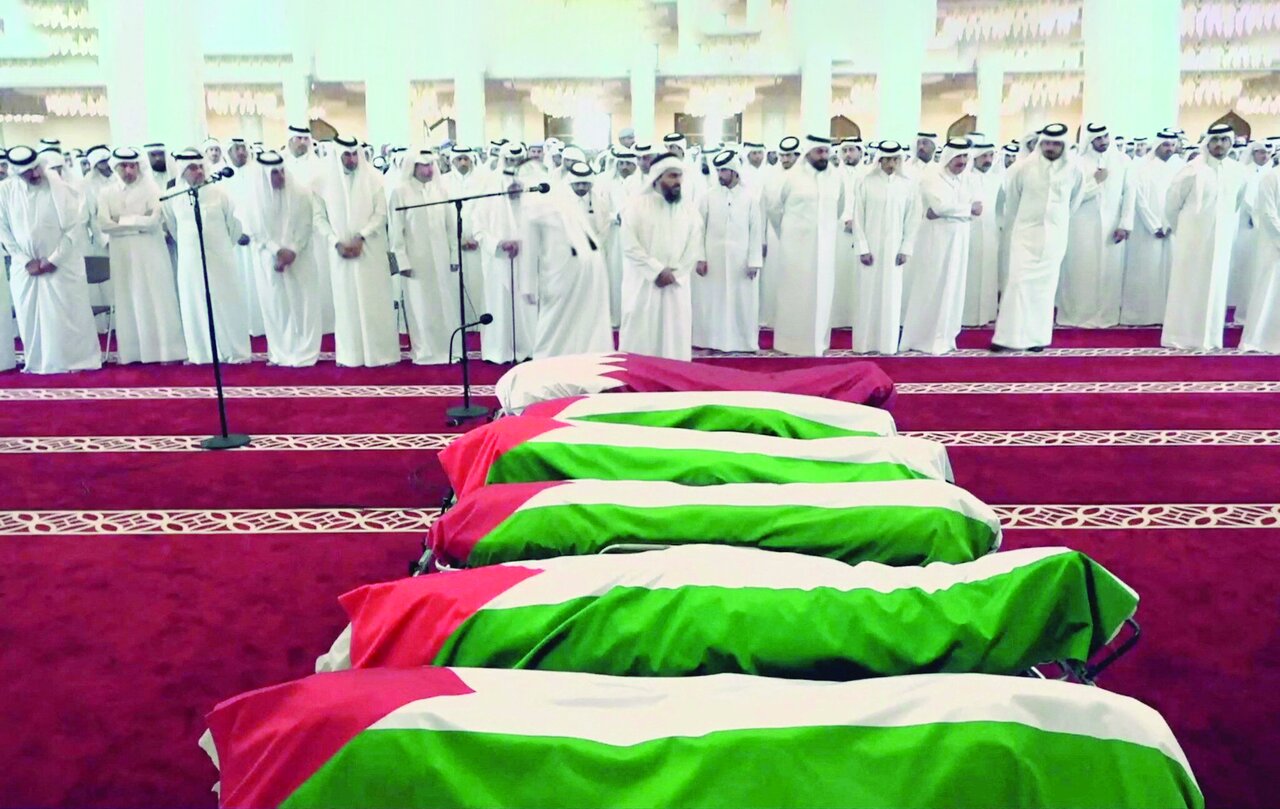
TEHRAN – Israel’s reckless airstrikes in Doha this week have changed the political landscape of West Asia. The attack attacked a residential area in Qatar’s capital on Tuesday. There, Hamas delegations met during the US proposed ceasefire talks over the Gaza conflict. The strike killed five low Hamas members while leadership was still alive. Qatar security guards also lost their lives.
This was more than an attack on political groups. It was a violation of Qatar’s sovereignty, a humiliation to the dignity of the nation, and a direct challenge to the broader Arab-Islamic society.
Dangerous escalation
For decades, Israel has fought wars in Lebanon, Gaza and Syria. But hitting Qatar’s capital (a country famous for its mediation and humanitarian efforts) has shown an unprecedented escalation. It reflects the opening up of a light emptying to the sovereignty of the state, not only ignoring Palestinian lives, but also promoting dialogue.
The illusion of normalization has been crushed
The strike also exposed restrictions on normalization. The Abraham Pact promised peace and prosperity, but the Doha attack proved that involvement did not suppress Israel. Instead of moderated Tel Aviv, normalization weakened Arab leverage and made the region more vulnerable.
Qatar resisted pressure on normalization, now proven. Its independent approach – mediation, humanitarian relief and prioritizing defense of Arab dignity – is in contrast to other state compromises.
International condemnation
The global response highlights the growing isolation of Israel. In a rare unanimous show, the UN Security Council denounced the strike, with all 15 members, including the United States, supporting the move and calling for a de-escalation.
President Donald Trump’s administration has tried to distance himself from the attack, but it has proven coordination between the Israeli military and the US Central Command (CENTCOM), including cooperation with the US air defense system. The attack on Qatar also raises concerns that Israel may target other regional countries in the future.
Qatar welcomed the denunciation of the UN Security Council. “As Qatar stressed to the Parliament, we welcome the Security Council’s condemnation of Israel’s dangerous attacks on Hamas delegations that undermine international order. We are committed to our humanitarian and diplomatic roles, as well as our right to protect sovereignty and security.”
The statement framed Qatar not only as a proprietor of its own security, but also as an administrator of international norms.
From words to actions
Doha will host the emergency Arab-Islamic Summit on Sundays and Mondays. Analysts suggest that concrete measures are likely to emerge.
“We see at least some measures that can be taken at a diplomatic level, at least in terms of specific measures,” Middle Eastern political analyst Luciano Zaccara told Al Jazeera.
Potential actions include joint diplomatic pressure, trade and technology restrictions, and coordinated efforts at international forums. The UAE’s decision to ban Israel from major defense expositions is already precedent, with confirmed attendance by Iranian President Masuud Pezeshkian showing his willingness to become a united stand.
Israel’s strategy is backfiring
The strike was intended as a psychological war that threatened mediators and showed that the Arab capital was not out of reach. Instead, it is backfiled. Rather than dividing the region, it brings the state closer. Qatar’s voice is being amplified as a victim and as a local leader.
By overreaching, Israel caused exactly what it was fearing: unprecedented Arab-Islamic solidarity.
Failure pattern
Doha’s attacks fit the wider pattern of Israel’s set-offs. In June, Israel launched a 12-day war with Iran, along with US support, but faced a horrifying Iranian missile attack on Israeli cities, exposing the limits of its defense. The campaign ended without achieving its goals.
In Gaza, the first unrelenting artillery fire since October 2023 has killed more than 64,000 Palestinians and has driven away hundreds of thousands without dismantling Hamas. The humanitarian crisis has sparked a growing international criticism.
Against this background, Doha’s strikes seem as small as strength and despair. It’s an attempt to distract you from repeated failures in Gaza and Iran.
Qatar’s Leadership Moment
For Qatar, the attack revealed the role of the region. By bringing together nations for upcoming summits and collective action, Doha shows that leadership depends not on military force but on moral clarity and principled diplomacy. Now, the summit will test whether Arab and Islamic states can translate their rage into concrete economic, political or security measures, and whether attacks on Doha will serve as wake-up calls.