
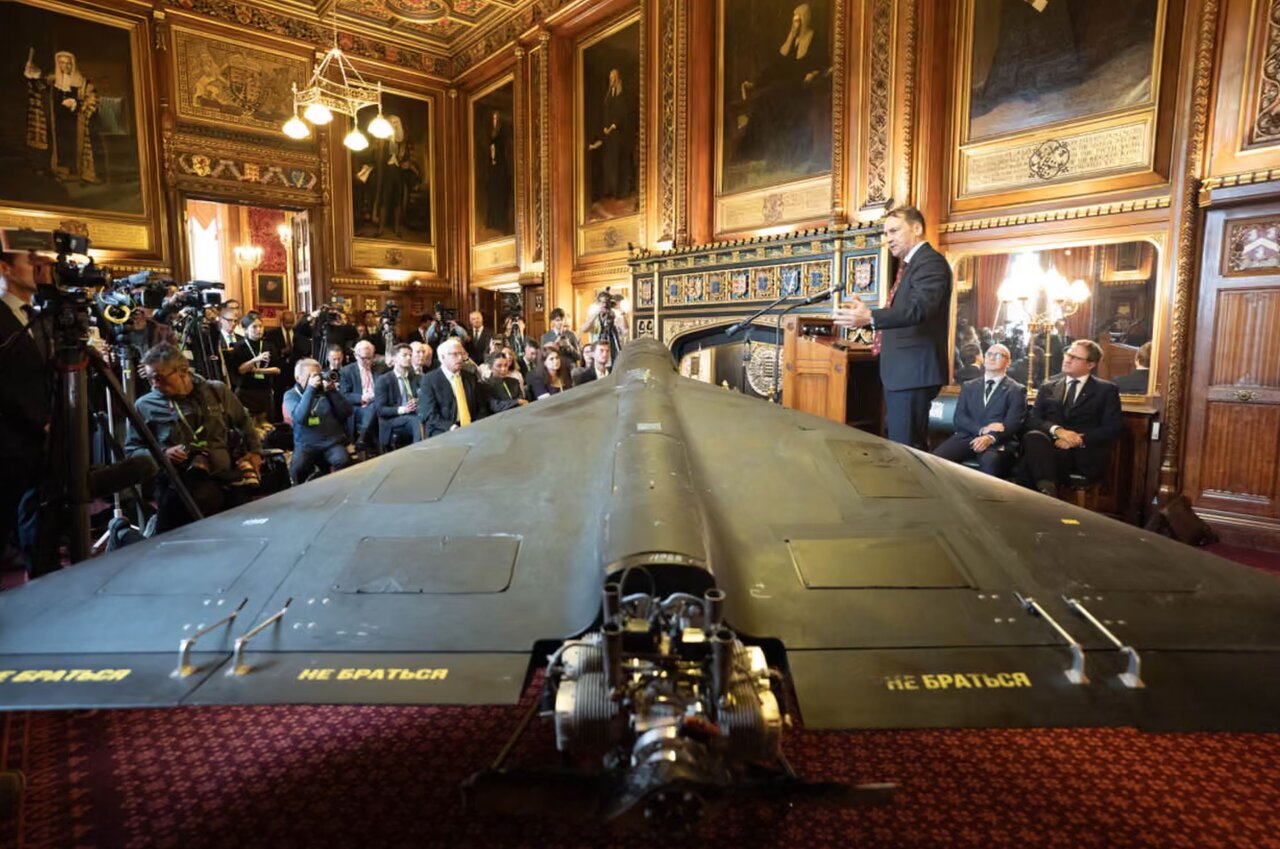
TEHRAN – Iran and Poland have traditionally had frictionless relations. However, the relationship hit a rock in October when Polish Foreign Minister Radosław Sikorski attended an anti-Iranian presentation in the British Parliament.
The event was organized by the United States-based group United Against Nuclear Iran (UANI), a notorious Zionist organization that advocates sanctions against Iran and supports the illegal US and Israeli attack on Iranian soil that killed more than 1,000 people in June.
While there, Mr. Sikorsky stood next to a drone and made a number of accusations against Tehran, claiming that Iran had sold out Russia for use in the Ukraine war. The move prompted Iran to summon Poland’s chargé d’affaires. Sikorsky then presented X with even more outrageous claims and insults against Iranians in response to accusations issued by Iranian Foreign Minister Abbas Araghchi.
In his X-Post, Poland’s foreign minister adopted a tired Israeli line and called on Iran to focus on rebuilding “Persian civilization” rather than “exporting the Islamic revolution and enriching uranium.” This position was probably the closest to Israel that foreign officials could take toward Iran.
The Tehran Times picked up the story, interviewing a prominent professor who claims that Poland has forgotten the blessings of Iran, which took in countless Polish refugees during World War II and saved them from German persecution. The cemetery, where refugees who spent the rest of their lives in Iran are buried, still stands. The professor concluded that Poland is tainting relations between Iran and Poland just to appease the Israel lobby.
Next was an exchange between Tehran Times and Poland’s Chargé d’Affaires in Tehran, Marcin Wilczek. He told the newspaper that he wanted to explain in detail Poland’s position towards the Iranian people and then sent us an article that he had written.
But what he provided, which we published in full, showed no sign that the Polish government intended to mend relations that had been damaged for no good reason. In the article, the diplomat recalled when Iranians helped Poles during World War II and insisted that his homeland would never forget that aid.
Sadly, his country seems to have forgotten it and doesn’t pay attention to this history. Poland’s foreign minister must not have been thinking about those days when he attended an event organized by an Israeli anti-Iran group just months after Israel launched a deadly war against Iran. Nor was he thinking about that history when he responded to Araghchi by recycling the Israeli regime’s old and offensive anti-Iranian narrative.
The chargé d’affaires did not say how the country plans to make amends. Instead, it sought to distort reality by claiming that the Polish foreign minister’s highly Iranophobic actions and statements were meant to address the “Russian threat.” He argued that it is Russia, not Israel, that is trying to interfere in Iran-Poland relations, and ended the article with a slogan of friendship that lacks credibility, given that the Polish government still strongly accepts Israeli propaganda about Iran.
If the Polish government really wants to mend relations with Iran, it must take concrete steps to distance itself from Iran’s sworn enemy, the Zionist group. Avoiding responsibility or trying to draw Russia into this problem will not work. It only makes Iranians more skeptical about whether Poles really remember the terrible days of World War II, when Iran helped their country despite its own difficult circumstances.