
The UN Security Council recently rejected Russia and China’s proposal to extend resolution 2231 and maintain diplomacy over Iran’s nuclear program. The resolution aimed at opening diplomatic channels to avoid conflict was supported by Russia, China, Pakistan and Algeria, with Europe and the US blocking it, exposing the limitations of a pressure-based strategy.
Even amidst regional tensions, Iran has consistently pursued all rational and constructive diplomatic paths, including the Cairo agreement and direct negotiations with Europe. However, European countries alongside Washington continued to demand action beyond Iran’s obligations. One of the most controversial measures in play is the so-called “snapback” mechanism. Tehran repeatedly emphasizes that snapback suppression is illegal and lacks legitimacy as it attempts to revive the restrictions after it has been terminated previously based on resolution 2231.
Iranian officials, including President Masudo Pezeshkian and Foreign Minister Abbas Aragut, rejected Western demands to stop the enrichment of uranium, stressing that Iran’s nuclear program remains peaceful. By remembering the ambassadors of Germany, France and the UK for consultation, Tehran signaled the beginning of a new phase of diplomacy. It asserts the right to deal with non-Gi thin pressures while maintaining diplomatic principles.
While this episode highlights the complex nature of international diplomacy where irrational demands and unilateral actions create new challenges, Tehran carefully navigates these pressures and maintains its ability to keep the doors open for negotiations.
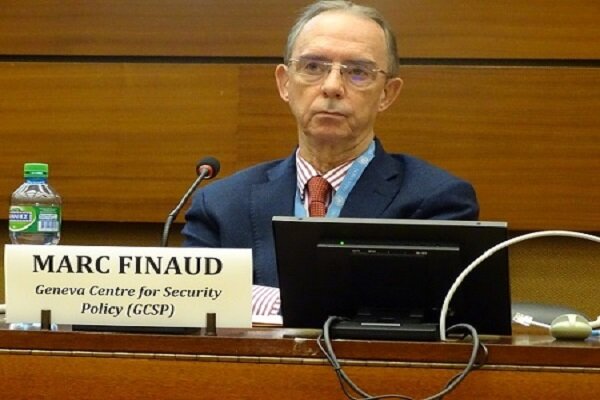
To provide further insights, Mehr News Agency interviewed Marc Finaud, a senior advisor and associate fellow at the Geneva Security Centre (GCSP) and a former spokesman for the French Ministry of Foreign Affairs.
Finaud highlighted the legal and political complexities surrounding snapbacks. He said the mechanism originally proposed during the JCPOA negotiations was intended to provide all participants with a reliable means of bypassing the veto by permanent members of the Security Council and ensuring compliance. “This mechanism proposed by Russia during the JCPOA negotiations was aimed at reassuring skeptics, especially in the US Congress. Participants in the agreement had strong pressure to ensure Iran’s compliance. The process was initiated by participants and exempted by permanent members by permanent members. Negotiations that lead to the JCPOA.”
Speaking of the clear contradiction between the withdrawal from the JCPOA in 2018 and its current role in promoting the snapback process, he said that the ongoing crisis stemmed from the Trump administration’s decision to leave the deal, and that when the US tried to trigger a snapback in 2020, other security board members opposed because the US was no longer a participant. “There is no doubt that the current crisis was launched in 2018 under the first Trump administration, with the US withdrawal. This is why other members of the Security Council opposed it when the US tried to trigger a snapback mechanism in 2020, as the US was no longer a participant in the JCPOA.
Asked about the negative signal that this situation would be sent to the international community regarding the credibility of the multilateral agreement, he said, “The withdrawal of the US sent a very negative signal, once again showing tensions between the politics of the great power and multilateralism as a solution to the global challenge. It raised doubts that its nuclear program was not peaceful.” He had mentioned the announced measures that after Washington withdrew from the JCPOA and the European Party, Tehran gradually reduced its commitments and the European Party of the deal also failed to compensate for Iran’s losses.
Voting behavior in small states during Security Council sessions reflects both political cooperation and independent judgment. Speaking of this, he said, “It appears that there is a natural linkage with Western countries in European countries (Denmark, Greece, Slovenia), but in some countries in the global southern part (Panama, Sierra Leone, Somalia), there are few decisions arising from pressure.”
Regarding the balance of power within the Security Council, Finault emphasized that the long-standing division between permanent residents of the West and Russia and China has long paralyzed the council, fulfilling its mandate and preventing it from dealing with conflict. “Unless all permanent members prioritize global peace and security interests around national interests, the Council will continue to be dysfunctional.”
Finally, the former French diplomat spoke about alternatives that go beyond sanctions and pressure to resolve the deadlock on Iran’s nuclear issue. He argued that reliance on military options or maximum pressure sanctions favored by countries such as the US and Israeli regimes undermines peaceful solutions. He said history showed that sanctions rarely achieve political objectives and often hurt the public. Conversely, the JCPOA demonstrated that the prospect of sanctions relief serves as a stronger incentive for negotiations. Following this model will help us deal with the current crisis without further detrimentalizing the global non-proliferation regime. “On the contrary, the JCPOA had demonstrated that the prospect of sanctions exemptions was a stronger incentive towards negotiated agreements, a model that should be followed to resolve the current crisis,” he concluded.
MNA/