
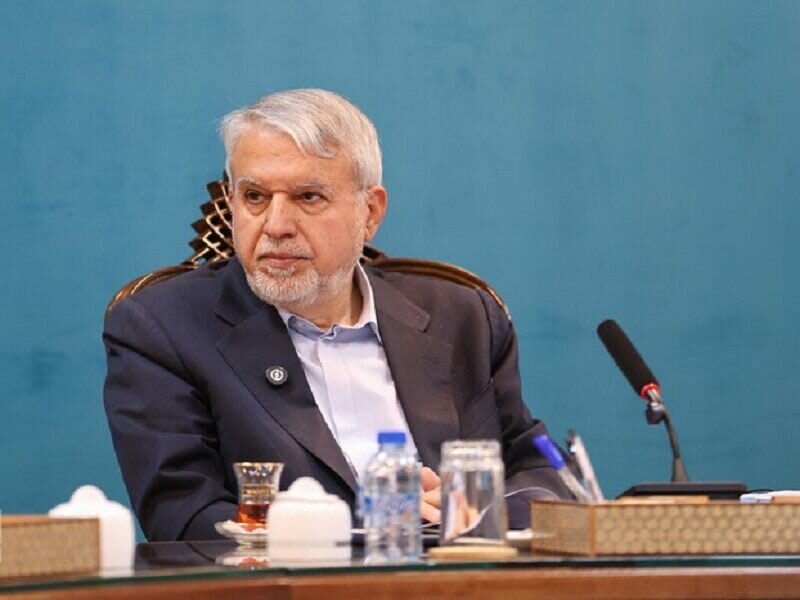
TEHRAN — The joint cultural heritage of Iran and China plays an effective role in deepening bilateral relations and should be considered as a bridge of hearts between the peoples of the two countries, said Minister of Cultural Heritage Reza Salehi Amiri.
Salehi-Amiri’s message was read out at the opening ceremony of Almaghan-e-Absham on Tuesday. A review of the Iran-China Relations Exhibition states: “Cultural diplomacy is an important strategy in securing and promoting cultural, economic and political development. Therefore, cultural diplomacy is one of the effective instruments in cultural relations between nations. Iran and China, two major countries in East and West Asia with cultural and historical similarities, have long had deep ties in the field of cultural and commercial relations. Heritage plays a special role in expanding relations between the two countries. ”
He said that this joint heritage shows the cultural influence and mutual influence of the religious roots of the Iranian world, which has played an important role in the formation and bonding of economic and political relations in the form of Zoroastrian and Manichean rituals.
“The sending of ambassadors and trade caravans in the past were also manifestations of this civilizational connection. Today’s cultural policy must pursue this fusion in such a way that relations between Iran and China are not limited only to economic aspects, but are deep ties between the hearts and cultural identities of both countries, bonds rooted in a glorious past and illuminating today’s exchanges.”
He emphasized the need to scientifically and accurately recognize the common cultural roots of the two countries, and said that properly scientific recognition of the common heritage can provide a clear picture of the common ancient identity in Iranian and Chinese culture and art, and make the current relations between the two countries more meaningful.
This recognition will create a common sense of civilizational heritage and serve as a beacon of inspiration on the path of cultural exchange between the two countries, he added. Salehi Amiri pointed out that religious exchanges in the form of Zoroastrian, Manichean, and Islamic rituals are considered religious indicators, while the Silk Road and Royal Road are symbols of commercial exchange by land and sea.
He said that the manifestations of literature, art, ceramics and metalwork in the trading posts between the two countries can be clearly identified in the cultural heritage sites and can be the subject of joint research between Iranian and Chinese researchers, research centers and universities.
Referring to the role of cultural diplomacy in the development of official relations between the two countries, he emphasized, “Cultural heritage, as an indicator of civilization, is the gateway to increasing the level of relations between Iran and China in various dimensions. One example is the holding of cultural heritage conferences and exhibitions, such as ‘Silk Gift’, hosted by the Institute of Cultural Heritage, a research base of the Ministry of Cultural Heritage.” About this targeted cultural diplomacy. ”
Salehi Amiri continued, “The ministry’s next program will be dedicated to the maritime cultural heritage of both countries. This cooperation, which focuses on understanding maritime culture and maritime technology, is expected to provide the Iranian and Chinese communities with a valuable understanding of the ancient creativity of both countries.”
He expressed his hope that such cultural exchanges will be a valuable introduction to increasing the presence of Chinese tourists in the ancient land of Iran.
The exhibition, showcasing selected archaeological and artistic treasures from Iran and China, was officially opened at the National Museum of Iran on Tuesday.
According to the organizers, the exhibition aims to highlight the long-standing cultural exchanges between Iran and China through the lens of art and history.
KD