
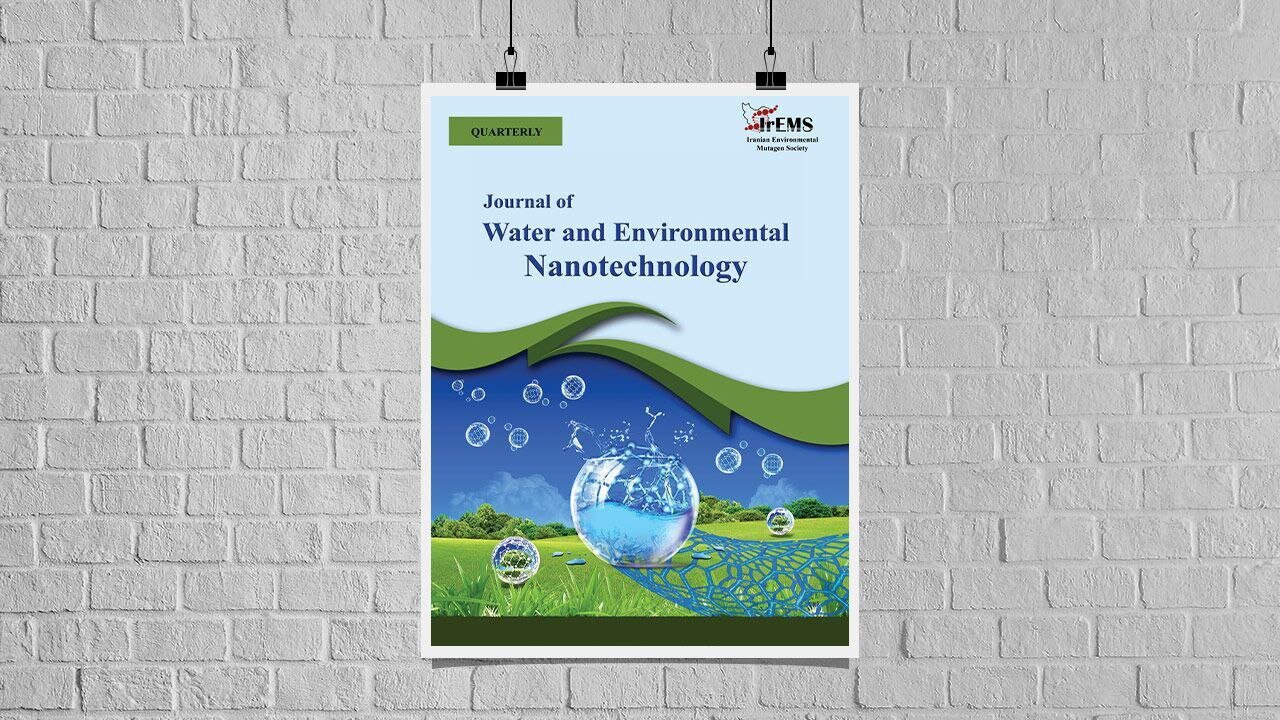
TEHRAN – The 2026 special issue of the International Journal of Water and Environmental Nanotechnology (JWENT) focuses on exploring innovative and sustainable solutions to address challenges through the convergence of artificial intelligence (AI) and nanotechnology.
IRNA reports that this issue of the magazine will feature international articles and case studies on the role of AI in scaling up and promoting innovation and sustainability in water and environmental nanotechnology.
The use of AI in the design and optimization of nanotechnology for water purification, wastewater treatment, and environmental remediation, as well as modeling, simulation, and prediction of pollutant removal and treatment efficiency are among other important topics covered in this journal.
Other topics will include nano-based smart sensors and the Internet of Things (IoT) for real-time monitoring of water and environmental quality, AI-based risk assessment of nanomaterials, AI, and the development of nanotechnology and biotechnology systems for sustainable water and environmental applications.
Leap forward in nanotechnology
Iran has made significant progress in nanotechnology over the past year (August 2024 to August 2025), with exports of nanotechnology products increasing by more than 100% and 10,860 articles indexed on the Web of Science (WoS), ranking 6th in terms of nanotechnology article publications.
Iran’s nanotechnology activities began in 2001. Two years later, the Nanotechnology Headquarters was established to promote knowledge in this field. The first national strategic plan entitled “Future Strategic Document” was developed in 2005 and focused on the continuous improvement of the country’s position in creating wealth and improving the quality of life of its people, with the aim of placing Iran among the top 15 countries in this field.
Later, the name of the organization was changed to “Nano/Micro Technology Headquarters,” and it now carries out missions and tasks in both fields.
During the past year, from August 22, 2024 to August 23, 2025, important steps were taken aimed at improving existing industries, expanding and managing sustainable export and nanoproduct markets at national, regional and global levels, promoting Iranian-made products in regional markets, promoting innovation with new technologies with significant economic and social impact, maintaining the country’s scientific status and improving its prestige in nanoscience.
Iranian nanotechnology products in various industries are divided into 13 main categories, including civil engineering and construction. optics, electronics, photonics. petroleum and petrochemicals; medicines, health and well-being; Home appliances. power and energy. raw materials; chemicals; textiles and clothing. Equipment; Automotive industry and transportation. Industrial machinery; Agriculture, livestock, and water, according to data released by the Vice President for Science and Technology.
According to data released by the National Nanotechnology Development Headquarters, about 89.6 percent of Iran’s nanotechnology products are exported to Asian countries.
Europe, Africa, America, and Australia are next at 6.8%, 2.5%, and 1% of imports, respectively.
This data relates to Iranian calendar year 1402 (March 2023 to March 2024) and also shows that neighboring countries are the main export destinations for Iranian nanotechnology products.
Iraq, Türkiye, and Afghanistan are the top three importing countries, accounting for 23.1 percent, 6.9 percent, and 6.5 percent shares of imports.
Pakistan, United Arab Emirates, Russia, China and India are next in the ranking.
MT/MG